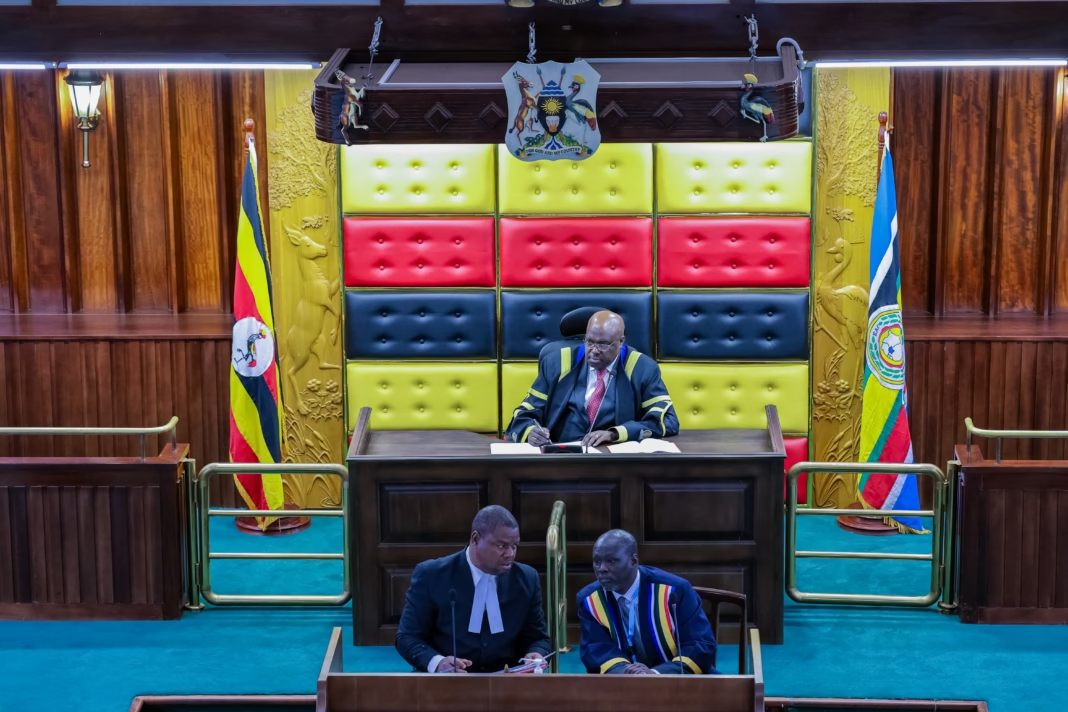

KAMPALA — As the world this week marks International Day of Persons with Disabilities (IDPD) on 3 December, lawmakers at the East African Legislative Assembly (EALA) urged renewed commitment to disability inclusion and called for concrete institutional action.
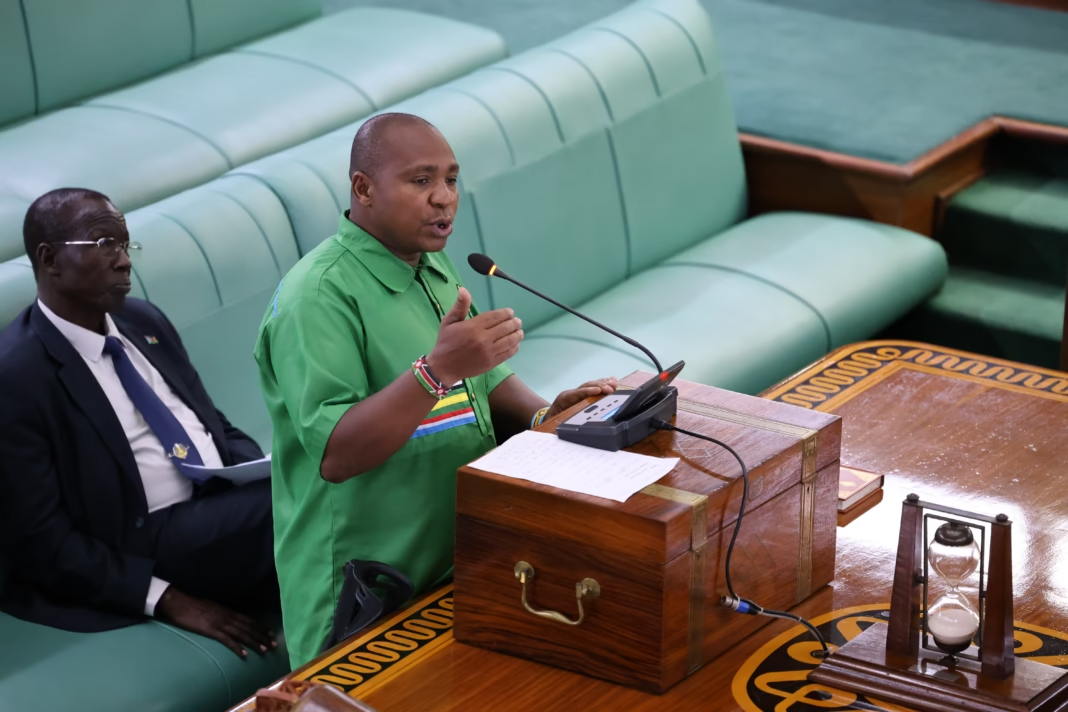
During a parliamentary sitting in Kampala on Wednesday, EALA member Paul Musamali while addressing the parliament said that “all of us are potential candidates for disability,” noting that age or changing circumstances can limit abilities. He recalled that EALA passed a “bill on disability” and resolved to create an East African Disability Council a move whose implementation he urged as long overdue.
“Even us including you, Minister may one day need access to what persons with disabilities require,” Musamali said, calling on regional leaders to act.
Also speaking was Kenyan EALA lawmaker Ole David Sankok, who spoke passionately about the need for respect, dignity and inclusion of persons with disabilities in society. “As a person with disability, we seek opportunities, not sympathy,” he said. He called for accessible infrastructure, supportive legislation such as tax exemptions for assistive devices, and societal attitudes that recognise disabled people’s worth: “We need to make the environment as friendly to persons with disabilities as possible.”
Their remarks come at a time when global attention returns to IDPD, a day established in 1992 by the United Nations General Assembly to promote awareness of disability issues and the inclusion of persons with disabilities in political, economic, social and cultural life.
This year’s theme “Fostering disability-inclusive societies for advancing social progress” calls on governments, communities and institutions worldwide to ensure equal access and opportunities for the estimated 1.3 billion people living with disabilities globally.
Advocates like Musamali and Sankok say that, in the East African context, inclusion must start with legal frameworks and concrete institutions such as a regional Disability Council and be backed by policy, accessible infrastructure and social support.
As the world observes IDPD, their voices serve as a reminder that inclusion is more than symbolic: it requires tangible commitment and action across nations to ensure persons with disabilities are not left behind.