
Burundi’s Ministry of Public Health has confirmed an outbreak of seasonal influenza affecting several parts of the country, with schools among the most impacted, health officials said Tuesday.
Health minister Lyduine Baradahana said health facilities have recorded a rise in patients presenting symptoms such as high fever and cough in recent days.
“Numerous cases of people presenting symptoms of cough accompanied by high fever have been observed in several localities across the country,” Baradahana said.
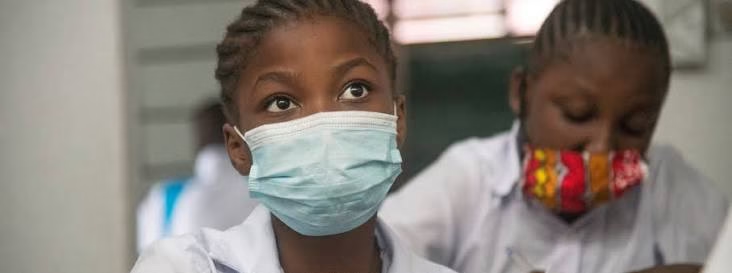
She said the cases are particularly noticeable in educational establishments, including both boarding schools and day primary schools, where illness has led to absenteeism among students and teachers.
The increase in respiratory illness has raised concerns among some residents about a possible return of COVID-19. The minister, however, said laboratory tests have ruled out that possibility.
“Analysis carried out by the National Reference Laboratory of the National Institute of Public Health confirmed that the virus responsible for the current outbreak is seasonal influenza type A (H3N2),” Baradahana said. “No cases of COVID-19 have been detected.”
She called on the population to remain calm and to avoid spreading rumors, stressing that the situation is consistent with the current influenza season.
As part of the response, the Ministry of Public Health urged anyone experiencing symptoms such as high fever, cough, sore throat, runny nose or joint pain to immediately seek care at the nearest health center and to avoid self-medication.
“People presenting these symptoms must avoid close contact with others and must not cough toward other people,” the minister said. She also advised people to use tissues or cough into the elbow and to avoid crowded places, including schools, markets and other public gathering sites.
The ministry further recommended strengthening hygiene practices nationwide, including frequent handwashing with clean water and soap or the use of alcohol-based hand sanitizers.
Administrative authorities were instructed to ensure that handwashing facilities are installed and functional in public places such as bars, restaurants, markets, shops, churches and mosques. Officials were told to issue reminders where hygiene measures are not being respected.
Additional guidance includes covering the mouth and nose when coughing or sneezing, avoiding handshakes in favor of greeting from a distance, and ensuring that sick individuals receive adequate nutrition and hydration.
In schools, administrators were asked to reinforce hygiene and ventilation in classrooms, dining halls and dormitories, to promptly report situations in which several students fall ill at the same time, and to immediately refer sick students to nearby health facilities.
The Ministry of Public Health urged the population to follow official health guidance and to “avoid rumors and misinformation” during the influenza period.