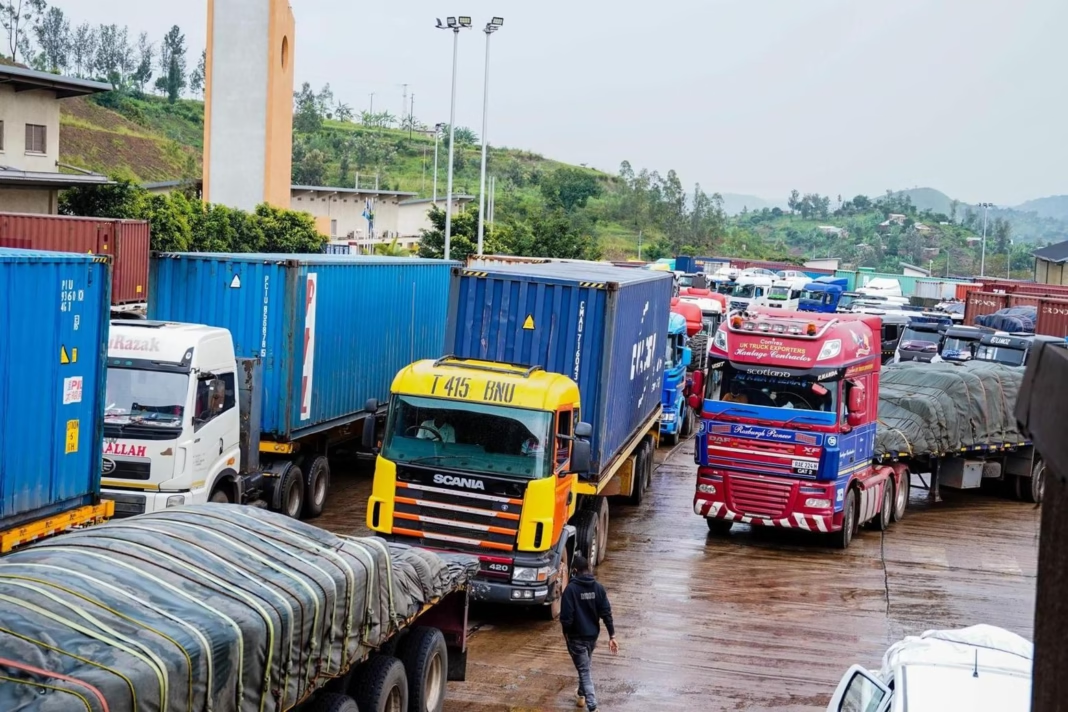

Senior officials from the East African Community met Thursday to address a persistent challenge facing the bloc, trade among member states has remained stuck at about 15% of total commerce for more than a decade well below estimates that it could reach 30% to 50%.
The issue dominated the opening of a two-day policy dialogue in Kigali, where technical experts and government representatives are reviewing why regional trade has failed to expand proportionately despite years of integration agreements and institutional reforms.
Rwanda’s trade minister, Prudence Sebahizi, told delegates the meeting was intended to assess practical constraints affecting cross-border commerce and to identify measures to improve implementation of existing regional commitments.
Officials pointed to non-tariff barriers as a major factor limiting trade growth. Yusta Kayitesi, Rwanda’s minister of state for EAC affairs, said such obstacles “increase transaction costs, disrupt supply chains, weaken private-sector confidence, and undermine the credibility of the EAC as a rules-based market.”
Among the issues cited were duplicative inspections, inconsistent application of rules of origin, domestic levies affecting imports from partner states and sanitary restrictions that vary across borders. Delegates are also examining transport costs, border management gaps and delays in implementing shared digital systems designed to streamline customs procedures.
Beatrice Askul Moe Cabinet Secretary for East African Community (EAC), Arid and Semi-Arid Lands & Regional Development of Kenya, who chairs the EAC Council of Ministers§ said improving trade efficiency would require faster clearance processes, more predictable regulations and closer coordination among national authorities.
Data presented at the meeting showed that trade within the bloc rose from $6.42 billion in 2016 to $15.25 billion in 2024, according to EAC Secretary-General Veronica Nduva. However, she noted that intra-regional trade still represents only about one-eighth of total exports, indicating that member states continue to rely heavily on markets outside the region.
Business representatives said progress will depend on whether governments follow through on commitments. Denis Karera of the East African Business Council said measurable benchmarks would be necessary, adding that “we need a scorecard to track progress and ensure we implement time-bound solutions that translate policy into real trade gains.”
Officials expect the dialogue to produce recommendations for regional policymakers, though previous efforts to remove trade barriers have faced delays in enforcement at the national level.