
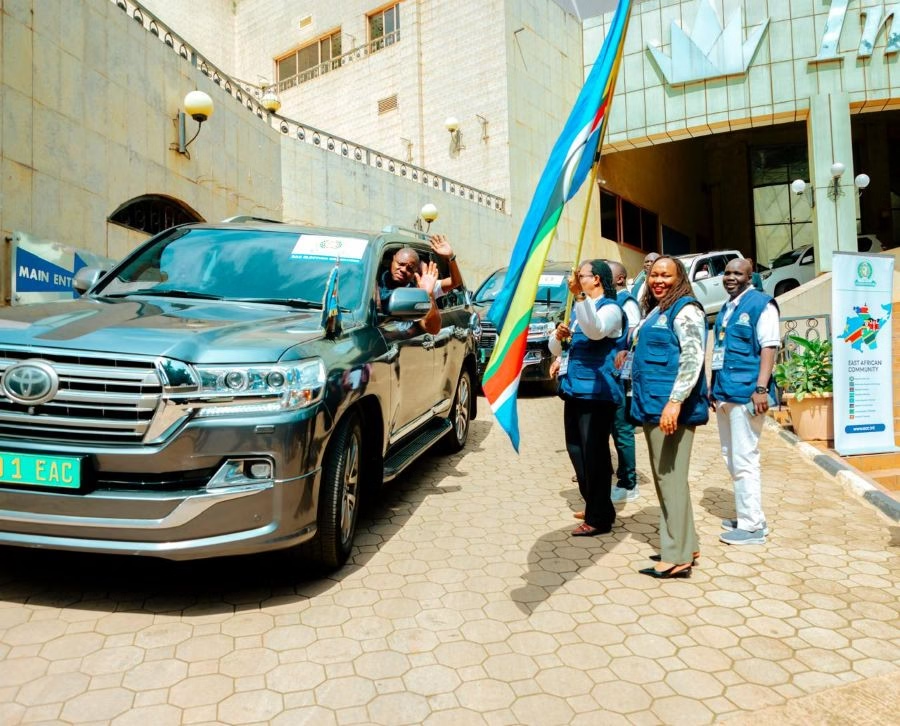

East African Community (EAC) observers said Uganda’s January 2026 general elections were “largely peaceful” but noted significant logistical challenges, late polling station openings and restrictions on internet access during the vote, according to a preliminary statement released Monday.
The EAC Election Observation Mission, deployed at the invitation of Uganda’s Electoral Commission and led by Rt. Hon. Ambassador Edda Mukabagwiza, observed voting in 184 polling stations across the country. In its statement, the mission said the electoral environment “has been largely peaceful and conducive” and commended the Electoral Commission for its preparation and management of the process. However, observers flagged delays caused by malfunctioning biometric voter verification kits, late delivery of election materials and polling stations opening an average of three hours behind schedule.
“The environment was generally calm and peaceful with a noticeable presence of party and candidate agents,” the mission said, but added that the suspension of public internet access “had a direct impact on the compilation and analysis of field reports from our observers,” a reference to a nationwide blackout ordered ahead of the vote. Authorities partially restored internet services late Saturday after incumbent President Yoweri Museveni was declared the winner with about 71.6% of the vote, extending his four-decade rule into a seventh term.
Election Day unfolded amid a nationwide internet shutdown that began days before voting, a measure widely criticised by local and international rights groups and media as limiting freedom of information and transparency. According to Al-Jazeera, opposition leader Bobi Wine, who received roughly 24.7% of the vote, claimed he escaped a raid on his home by security forces and rejected the results as “fake,” saying the vote was marred by intimidation and alleged irregularities.
Observers also highlighted increased political competition, with eight presidential candidates and 27 political parties on the ballot. The mission noted the national voters register grew by about 17% since the 2021 elections and that women made up 53% of registered voters, demonstrating “commendable women participation” in the electoral process.
In recommending improvements, the EAC called for enhanced dispute resolution mechanisms within political parties, legal reforms on campaign financing, better voter education to reduce invalid ballots and more robust shelter at polling stations.
In a separate diplomatic message, Burundi President Evariste Ndayishimiye extended congratulations to Museveni following the election outcome. “Congratulations to H.E. Yoweri Kaguta Museveni upon his re-election as President of the Republic of Uganda!” the statement read. “May your visionary leadership continue to steer the nation forward. Looking forward to continue working together to strengthen the longstanding bilateral ties between our countries.”