
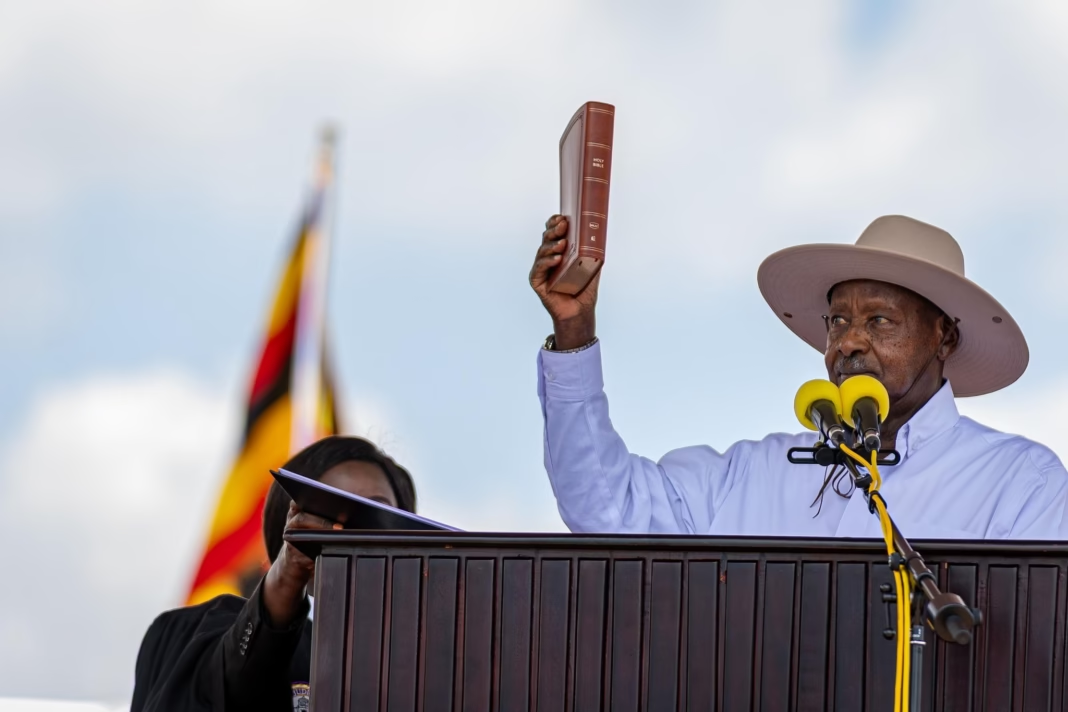

Uganda’s President Yoweri Museveni was sworn in for another term as regional leaders including Burundi’s President Évariste Ndayishimiye attended a ceremony marking nearly four decades of NRM rule.
President Yoweri Museveni was sworn in for another term on Tuesday, extending the rule of the ruling National Resistance Movement into a fifth decade as regional leaders gathered in Kampala for the inauguration ceremony.
The event, held under tight security, drew senior government officials, diplomats, political allies, and delegations from across East Africa, underscoring Uganda’s continued influence within the region.
Among the leaders attending the ceremony was Évariste Ndayishimiye, who was accompanied by senior officials from Burundi’s ruling CNDD-FDD party. The Burundian delegation joined other regional representatives in a show of diplomatic support during the inauguration.
Museveni, who first took power in 1986 after a guerrilla war, used his swearing-in speech to defend the National Resistance Movement’s legacy and pledged continued investment in infrastructure, regional trade, and industrialization.
“We shall continue to focus on transforming Uganda socially and economically,” Museveni said during remarks delivered after taking the oath of office.
The ceremony highlighted the political durability of the NRM, which has dominated Uganda’s political landscape for nearly 40 years despite recurring criticism from opposition groups and rights organizations over governance, election credibility, and restrictions on dissent.
Regional cooperation also featured prominently during the event, with officials emphasizing Uganda’s role in the East African Community and ongoing security operations in the Great Lakes region.
Burundi President Évariste Ndayishimiye praised Museveni’s regional role during the inauguration, thanking the Ugandan leader for what he described as support toward “stabilising Burundi and the African continent.”
“We thank President Museveni for his contribution to stabilising Burundi and the African continent,” Ndayishimiye said during remarks delivered at the ceremony in Kampala.
Uganda remains a key military and economic actor in East Africa, particularly through regional peacekeeping missions and joint security operations in eastern Democratic Republic of Congo.
Political analysts say the presence of regional leaders including Burundi’s president reflected both diplomatic ties and the strategic importance Kampala maintains within regional politics.
The inauguration comes as Uganda faces mounting economic and social pressures, including youth unemployment, rising public debt, and increasing demands for political reforms from opposition parties and civil society groups.
Despite those challenges, Museveni’s allies argue that his government has maintained relative stability and expanded infrastructure projects over the past decades, including roads, energy, and oil sector development.
Opposition figures, however, continue to accuse the government of shrinking democratic space and suppressing dissent during electoral periods.
The latest swearing-in ceremony reinforces the continuation of one of Africa’s longest-serving governments, with the NRM remaining firmly at the center of Uganda’s political system nearly four decades after taking power.