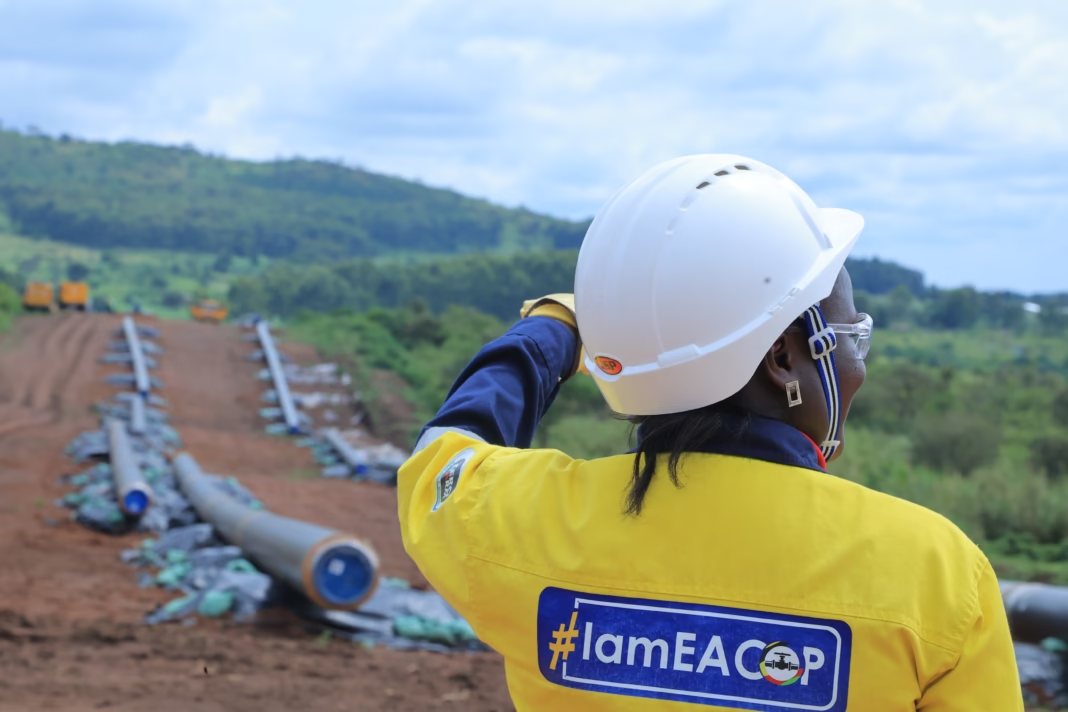

Construction of the East African Crude Oil Pipeline (EACOP), one of Africa’s largest energy projects and one of its most controversial, has passed the 80% completion mark, East African Community ministers said Tuesday, underscoring the region’s determination to push ahead despite mounting criticism from environmental groups.
Presenting the East African Community’s 2026/27 budget to the East African Legislative Assembly (EALA) in Arusha this week, EAC Council of Ministers Chairperson Rebecca Kadaga said infrastructure development across the region was gathering pace.
“Construction of the East Africa Crude Oil Pipeline (EACOP) from Hoima (Uganda) to Tanga (Tanzania) is currently over 80 percent complete and final infrastructure development is being undertaken by both the Republic of Uganda and the United Republic of Tanzania,” Kadaga told lawmakers.
The 1,443-kilometer heated pipeline, stretching from Uganda’s oil fields in Hoima to Tanzania’s Indian Ocean port of Tanga, is expected to become the world’s longest heated crude oil pipeline.
Tanzania’s energy authorities said in May that work at the export terminal had reached 85%, while overall project construction exceeded 81%, with completion expected next year.
The project, estimated at roughly $5 billion, is jointly owned by France’s TotalEnergies, China’s CNOOC, the Uganda National Oil Company and Tanzania Petroleum Development Corporation.
Supporters argue the pipeline could transform the economies of Uganda and Tanzania through export earnings, taxes, jobs and infrastructure development. Uganda plans to produce about 230,000 barrels of oil per day from the Tilenga and Kingfisher fields once operations begin.
But the project has attracted sustained criticism from environmental organizations and human rights campaigners, who say it threatens sensitive ecosystems, including areas near Lake Victoria, while contributing to global carbon emissions. Critics have also raised concerns over land acquisition and displacement of communities.
International pressure has led several major Western banks and insurers to distance themselves from the project, forcing shareholders to rely increasingly on equity financing.
The EAC’s latest endorsement signals that regional leaders continue to view EACOP as a strategic asset despite the growing global shift toward renewable energy.
For East African governments, the pipeline represents a rare opportunity to monetize newly discovered oil reserves. For climate activists, however, it embodies the tensions between Africa’s development ambitions and international calls to phase out fossil fuels.