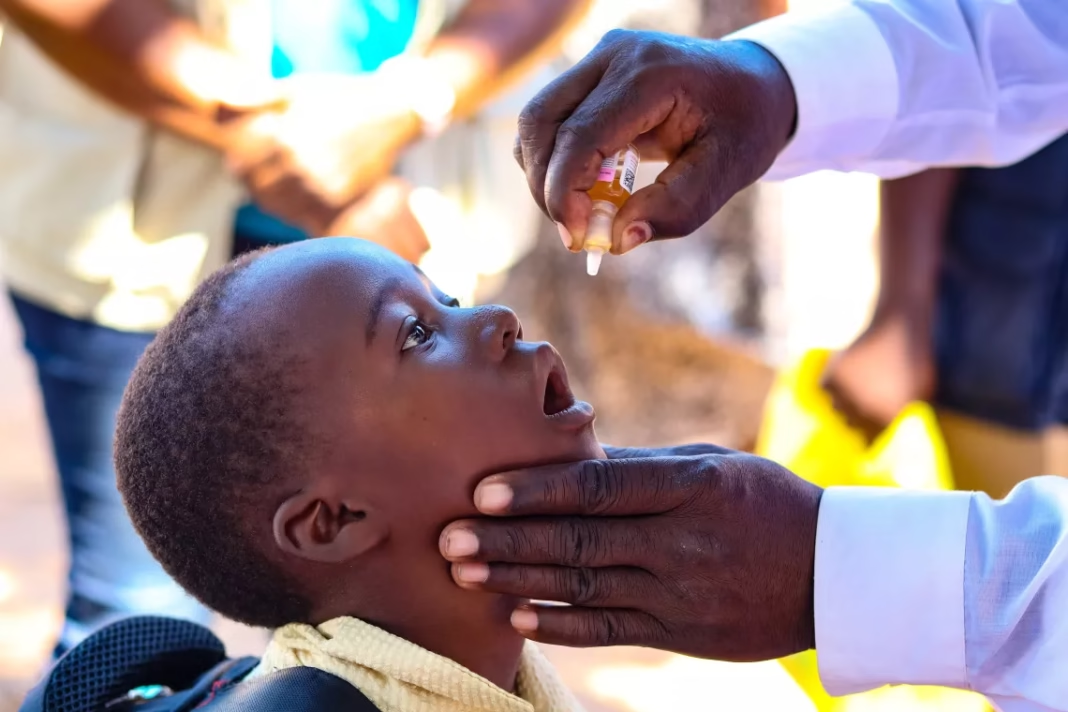

Burundi has interrupted transmission of circulating polio-virus type 2 after more than three years of outbreak response, the World Health Organisation said, marking a major milestone in the country’s efforts to protect children from a virus that can cause irreversible paralysis.
The WHO Regional Office for Africa confirmed the closure of Burundi’s polio-virus type 2 outbreak following an independent technical assessment conducted as part of a wider review of polio outbreaks in five African countries.
The assessments, carried out between January and June 2026 by teams from the Independent Outbreak Response Assessment, reviewed disease surveillance, laboratory and epidemiological data before concluding that transmission had been interrupted in Burundi, Ghana, Guinea-Bissau, the Republic of Congo and Uganda.
Burundi declared an outbreak of circulating vaccine-derived polio-virus type 2 in March 2023 after health authorities confirmed virus detections, prompting an intensified response involving vaccination, epidemiological investigations and surveillance.
According to WHO, Burundi subsequently strengthened routine immunization, conducted targeted vaccination campaigns and expanded environmental surveillance to detect the virus and identify potential transmission.
“These outbreak closures demonstrate what can be achieved through strong national leadership, dedicated health workers and close collaboration between governments, communities and partners,” said Dr. Mohamed Janabi, WHO Regional Director for Africa.
“While this is an important milestone, it is not the end of the journey. Continued vigilance, strong surveillance and high immunization coverage remain essential to protect children and prevent future outbreaks,” Janabi said.
Burundi’s three-year response
The outbreak closure follows more than three years of efforts to interrupt transmission.
WHO said Burundi intensified routine vaccination and surveillance after the 2023 outbreak declaration, with support from the Global Polio Eradication Initiative.
Targeted vaccination campaigns, epidemiological investigations and expanded environmental surveillance were among the measures used to identify and respond to polio-virus transmission, WHO said.
The country’s initial outbreak included detections from both children and environmental samples. In September 2023, Gavi reported that Burundi’s Ministry of Health had confirmed 23 polio-virus detections since the first case identified in Isale, including 21 through environmental surveillance and two infections in children.
The use of environmental surveillance has been particularly important because polio-virus can circulate without immediately causing visible cases of paralysis.
Closure does not mean the risk is gone
WHO stressed that the technical closure of Burundi’s outbreak should not be interpreted as permanent elimination of the risk.
“Outbreak closure does not eliminate the risk of future detections or importations,” WHO said in its note to editors accompanying the announcement. The agency said continued surveillance, vaccination and preparedness remain necessary to sustain the gains.
WHO pointed to Madagascar, where polio-virus was detected after a previous outbreak had been closed, as a recent reminder of the risk of reintroduction.
The warning is particularly relevant to countries in the Great Lakes region, where population movement across borders can complicate efforts to maintain high immunity and detect infections quickly.
WHO said countries across the region have been strengthening surveillance, laboratory capacity and vaccination efforts, including in hard-to-reach and border communities.
The wider regional picture also shows why continued vigilance remains necessary. The Global Polio Eradication Initiative reported in August that polio-virus type 2 transmission continues to be detected in parts of the Democratic Republic of Congo, including cases with paralysis and positive environmental samples in 2026.
Five countries reach the same milestone
Burundi’s achievement was announced alongside four other African countries — Ghana, Guinea-Bissau, the Republic of Congo and Uganda — whose polio-virus type 2 outbreaks were also closed following independent assessments.
WHO said the countries demonstrated several common elements in their responses, including rapid detection, government leadership, sustained surveillance, community engagement and quality vaccination campaigns.
The regional agency said investments in polio surveillance and laboratory systems are also strengthening countries’ ability to detect and respond to other vaccine-preventable and infectious diseases.
Mike McGovern, chair of the GPEI Polio Oversight Board and Rotary International’s International PolioPlus Committee, said each closed outbreak represented additional protection for children.
“Every outbreak closed means more children protected from a disease that can cause lifelong paralysis,” McGovern said.
The WHO announcement comes as the global polio eradication campaign continues to face the challenge of stopping transmission while preventing the reintroduction of polio-virus into areas where outbreaks have been interrupted.
For Burundi, the closure represents the end of the country’s specific type 2 outbreak response — but not the end of the surveillance and immunization work required to keep the virus from returning.