
A dispute over the leadership of the International Organisation of La Francophonie has deepened diplomatic tensions between Burundi and Rwanda, after member states agreed to delay the selection of a new secretary-general for 12 months to preserve unity within the organisation.
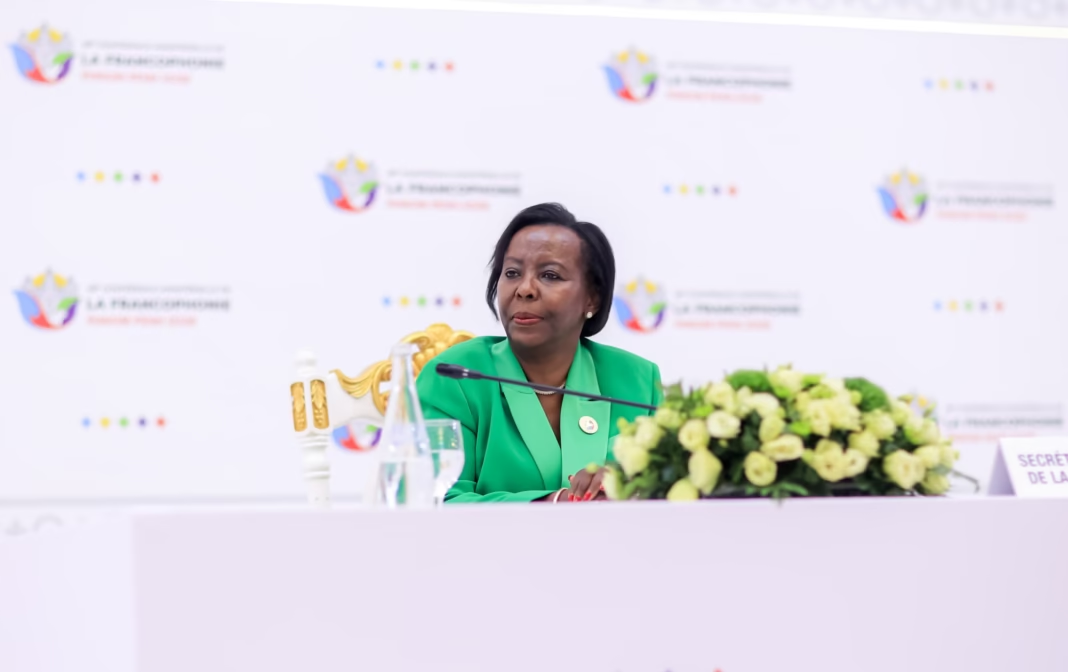
The compromise, reached Monday at the 20th Francophonie Summit in Phnom Penh, Cambodia, allows incumbent Secretary-General Louise Mushikiwabo, who has led the organisation since 2019, to remain in office for another year but rules out her participation in the next leadership election.
The Democratic Republic of Congo’s Foreign Minister, Thérèse Kayikwamba Wagner, announced the agreement in a statement on X, saying it also provides for reforms to the process of selecting the organisation’s next secretary-general.
Previously declared candidacies will remain valid, while new candidates may be submitted under the agreed framework. Rwanda, however, will not be allowed to nominate a candidate in the next electoral process, Kayikwamba said.
The arrangement follows weeks of disagreements over Mushikiwabo’s bid for a third term, with Kinshasa opposing her re-election and questioning the implications of extending her leadership.
The dispute has also drawn Burundi into an increasingly public diplomatic confrontation with Kigali, with the two countries’ foreign ministers exchanging sharp accusations over the role of the African Union and the future of the Francophonie.
Burundi’s Foreign Affairs Minister, Édouard Bizimana, criticised the prospect of Mushikiwabo securing another term, arguing that imposing candidates on an international organisation undermines its independence.
“Imposing candidates on an international organization shows contempt for its members, because it serves not the organization but narrow interests,” Bizimana wrote on X.
He added that a third term for Mushikiwabo as secretary-general would “bury the Francophonie.”
Rwanda’s Foreign Affairs Minister, Olivier Nduhungirehe, responded by questioning Bizimana’s position in light of an African Union decision adopted in July while the Burundian minister chaired the continental body’s Executive Council.
Nduhungirehe said the AU Executive Council, meeting in Addis Ababa on July 28-29, endorsed three African candidacies for the Francophonie leadership, including Mushikiwabo’s, and called on African Union member states that belong to the Francophonie to support whichever candidate they preferred.
He accused Bizimana of contradicting that position less than four months after chairing the meeting.
“The African Union has never experienced darker days than under the current presidency of the Republic of Burundi,” Nduhungirehe wrote.
He also called on the AU’s governing bodies to address what he described as institutional incompetence and disorder within the organisation.
Bizimana rejected the criticism, arguing that chairing the AU Executive Council did not require him to remain silent over developments he considered a threat to regional stability.
“Chairing the African Union does not mean turning a blind eye to or becoming insensitive to the danger threatening the continent’s stability; quite the contrary!” he replied.
The Burundian minister also referred to comments previously made by Rwandan President Paul Kagame about the origins of Mushikiwabo’s candidacy, arguing that Kagame had acknowledged that her nomination was not initially Rwanda’s initiative.
AU endorsement becomes part of the dispute
The AU Executive Council’s July 28-29 decision endorsed three African candidates for the Francophonie leadership: Rwanda’s Louise Mushikiwabo, the DRC’s Juliana Amato Lumumba and Mauritania’s Coumba Bâ. However, paragraph 9 also called on member states to consult and agree on one African candidate. The resolution therefore both recognised the three candidacies and called for further consultations to establish a common African position.
The leadership contest has unfolded against strained relations between Rwanda and the Democratic Republic of Congo over the conflict in eastern Congo. Kinshasa accuses Kigali of supporting the M23 armed group, allegations Rwanda denies.
The Francophonie brings together 90 member states and governments, and the 12-month transition postpones the succession decision while providing time for reforms to the selection process.
The next electoral process is expected in 2027 under the revised arrangements announced at the Phnom Penh summit.