
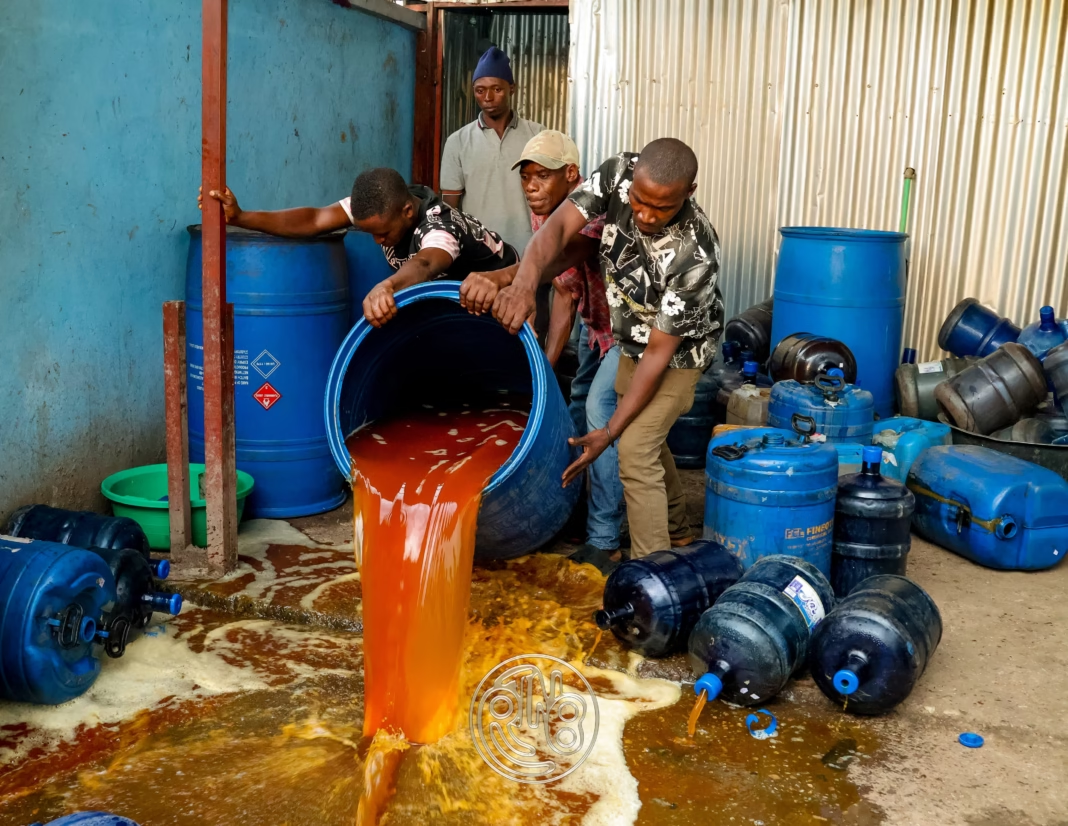

Burundi’s standards regulator has shut down two beverage manufacturers in Bujumbura after inspectors found unhygienic production conditions and violations of manufacturing requirements, including the production of ginger-based drinks that failed to meet applicable standards.
The Burundi Bureau of Standards (BBN) ordered SABUCOM and Tutarudi Company to suspend operations following inspections on the evening of Nov. 11 at their premises in Ngagara’s Quarter 10, the agency said.
At SABUCOM, inspectors found that the company had relocated its operations without obtaining prior authorization from BBN or the local administration.
They also found that the company was producing ginger-based beverages known as “Tangawizi” under unsatisfactory hygiene conditions and without complying with applicable regulatory standards. BBN said it destroyed the products before ordering the company to close.
Inspectors found similar violations at Tutarudi Company, where “Tangawizi” beverages were also being produced outside the required standards. The agency said the products were destroyed and the company was ordered to suspend operations.
The inspection at SABUCOM also uncovered beverages whose sale had previously been suspended nationwide. BBN said the products were suspected of being intended for illicit sale and were placed under the supervision of local authorities and security personnel to prevent their distribution.
The discovery raises questions about the enforcement of nationwide sales suspensions and whether products previously withdrawn from the market may still be circulating.
BBN did not identify the suspended beverages, explain why their sale had been prohibited or disclose whether any had already reached consumers.
The operation was conducted jointly with local administrative authorities, police and the Burundi Revenue Authority (OBR).
BBN Director General Samuel Ndayiragije said the two companies would have to regularize their operations before seeking authorization to resume production.
“To resume operations, both companies would have to regularize their status and submit a new application for authorization to the ministry responsible for industry,” the agency said.
BBN did not disclose whether the companies had previously received warnings, whether laboratory tests had confirmed the reported violations or whether additional penalties would be imposed.
It was also unclear whether the regulator had ordered checks at retail outlets to determine whether products from the two manufacturers remained on sale.