
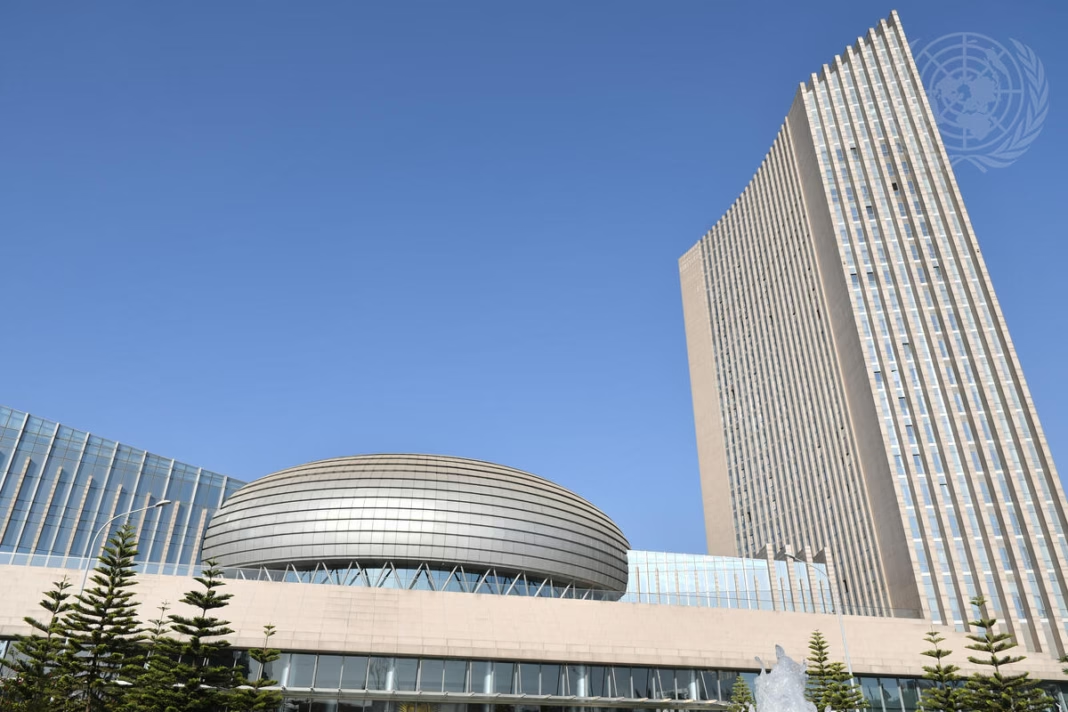

The African Union Commission has rejected reports of tensions between its chairperson, Mahmoud Ali Youssouf, and Deputy Chairperson Selma Malika Haddadi, saying the two officials maintain a close working relationship.
In a statement Wednesday, the spokesperson for the AU Commission chairperson, Nuur Mohamud Sheekh, responded to an article published by Africa Intelligence on Nov. 3 concerning the relationship between the two senior officials.
“The article presents a misleading account of their professional relationship,” Sheekh said.
The Commission said Youssouf and Haddadi maintain a working relationship based on mutual respect, collegiality and a shared commitment to the institution’s effective functioning.
It added that the two officials hold weekly consultations to review institutional matters, coordinate priorities and ensure consistency in the Commission’s work.
“The Chairperson remains fully committed to working closely with the Deputy Chairperson in the discharge of their respective mandates,” the statement said.
However, the AU response did not address specific allegations in the Africa Intelligence report or explain which aspects of its account it considered misleading.
The report examined tensions between Youssouf, a former Djiboutian foreign affairs minister, and Haddadi, an Algerian diplomat. It also raised questions about Algeria’s ambitions ahead of the next AU Commission leadership election, scheduled for 2029.
Leadership and institutional responsibilities
Youssouf and Haddadi were elected in February 2025 during the African Union’s 38th Ordinary Session of the Assembly of Heads of State and Government in Addis Ababa. They officially assumed office on March 13, 2025, for four-year terms, renewable once.
Youssouf succeeded Chad’s Moussa Faki Mahamat, who served two consecutive terms as Commission chairperson from 2017.
The chairperson serves as the Commission’s chief executive, legal representative and accounting officer, while the deputy oversees administration and finance and assists in ensuring the institution’s effective functioning.
The African Union Commission is responsible for implementing decisions and policies adopted by the continental organization’s member states.
Its work covers key continental priorities, including peace and security, economic integration, trade, governance and the implementation of Agenda 2063, the AU’s long-term development framework.
The next leadership election in 2029 will determine who heads the Commission for the following four-year term.