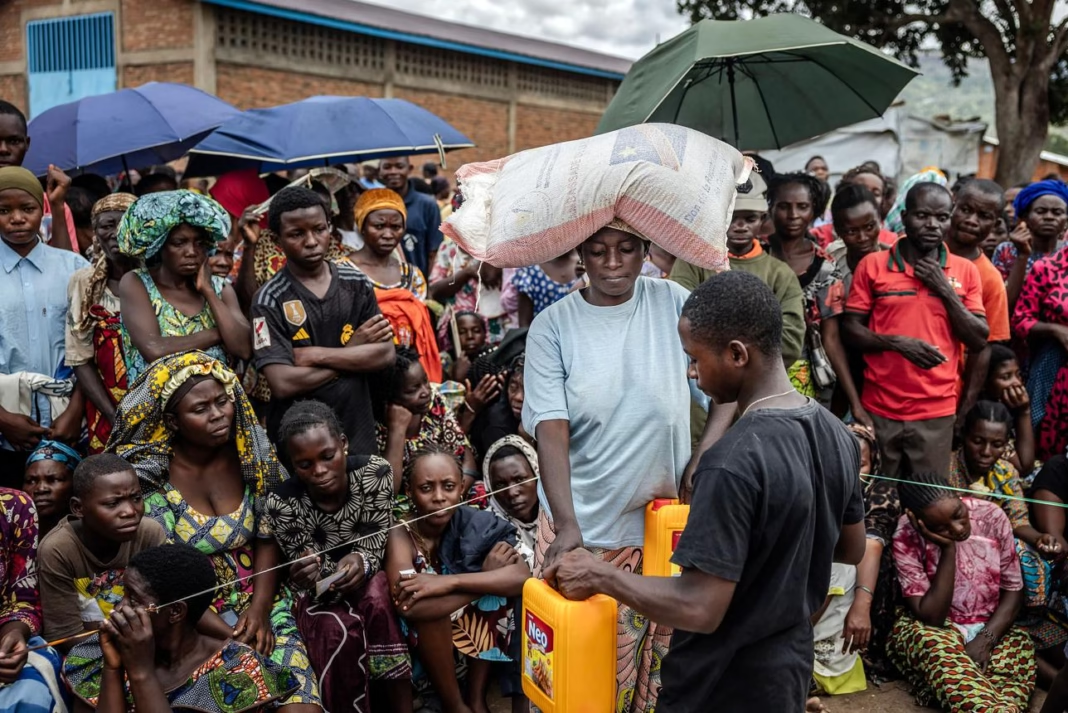

Burundi’s efforts to support nearly 125,000 refugees face a new funding challenge, with the United Nations World Food Programme (WFP) warning that food assistance could be suspended from January 2027 unless it secures an additional $40 million.
Most of the refugees have fled persistent conflict in the Democratic Republic of Congo (DRC), seeking safety and food in Burundi. Without new funding, WFP says it will be forced to halt food assistance at the beginning of next year, potentially cutting off a major source of food for thousands of vulnerable families.
The warning highlights the financial pressures facing Burundi’s refugee response, which relies heavily on international humanitarian support to meet refugees’ basic needs.
Contributions from the United States and Belgium helped avert an interruption that had been expected in October, allowing WFP to continue providing assistance through December. However, the latest funding shortfall raises questions about the sustainability of that support beyond the end of 2026.
“Most refugees in Burundi rely on WFP assistance as their main source of food. Continued insecurity prevents many from returning home safely, while limited livelihood opportunities make it difficult to earn an income and support their families,” said Arduino Mangoni, WFP acting country director in Burundi.
He called on the international community to provide additional funding to ensure refugees can continue meeting their basic needs, including access to food.
WFP currently provides assistance equivalent to 45% of refugees’ minimum food needs and wants to increase that level to 100% through September 2027. The agency says it needs $40 million to prevent an interruption and expand assistance for nearly 125,000 refugees.
The funding challenge also extends to education. WFP is seeking an additional $1 million to maintain school meals for 16,000 children from refugee and host communities attending schools around refugee camps through September 2027.
Beyond emergency food distribution, WFP is working with the Burundian government, the U.N. refugee agency (UNHCR) and other partners to improve refugees’ access to livelihoods, social protection and opportunities to participate in the local economy.
The initiatives are intended to reduce long-term dependence on humanitarian assistance while supporting host communities and strengthening social cohesion.
However, limited livelihood opportunities remain a major obstacle to refugees becoming self-reliant, according to WFP.
The agency’s warning puts renewed attention on the role of international donors in sustaining humanitarian programmes in Burundi and the government’s capacity to respond if external funding falls short.