
Burundi’s foreign affairs minister Edouard Bizimana accused neighboring Rwanda on Monday of fueling a sharp deterioration in security along the border with the Democratic Republic of the Congo, citing alleged cross-border attacks, drone strikes and a surge of refugees fleeing renewed violence in eastern Congo.
Speaking after a meeting with foreign ambassadors in Bujumbura, Foreign Minister Edouard Bizimana said Rwanda has continued deploying troops and military equipment into eastern Congo despite a recently signed ceasefire agreement in Washington DC meant to restore calm to the conflict-ravaged region.
“Rwanda signed a ceasefire for peace, but at the same time continues to move its army and military trucks into Congolese territory,” Edouard said. He accused Kigali of backing the M23 rebel group and seeking to capture strategic areas, including Uvira and surrounding territories.
Rwanda has repeatedly denied supporting M23, though United Nations experts and Western governments in recent years have accused Kigali of providing the group with troops, weapons and logistical support.
Claims of attacks and civilian casualties
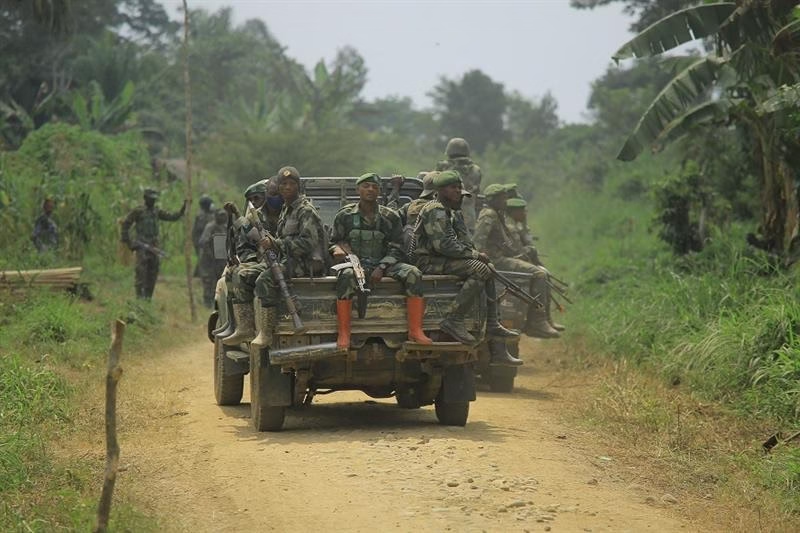
Edouard told reporters that Burundian military positions inside eastern Congo where Burundi has deployed troops at the request of the Congolese government , have come under repeated attack. He also alleged that drones were used in recent fighting, resulting in civilian deaths.
He said Burundian territory itself was struck by bombs in recent days, injuring two civilians, including a 12-year-old child and a woman. Burundi’s army responded, he said, but the attacks triggered panic and displacement in border communities.
Independent humanitarian organizations operating in eastern Congo have reported rising civilian casualties and widespread displacement as clashes intensify between Congolese forces, allied troops and M23 fighters. Aid groups say access to some frontline areas remains limited because of ongoing insecurity.
Refugee pressure grows
Burundi has received more than 1,500 new refugees from Congo in recent 3 days alone, Edouard said, adding to an already heavy humanitarian burden. Burundi is hosting more than one hundred thousand Congolese refugees who fled earlier waves of fighting in North Kivu and South Kivu provinces.
“We already have more than 100,000 refugees,” he said, warning that continued instability could overwhelm local communities and government resources.
The U.N. refugee agency and international relief groups have repeatedly warned that renewed fighting in eastern Congo risks triggering a broader regional displacement crisis affecting Burundi, Rwanda, Uganda and Tanzania.
Burundi rejects calls to withdraw troops from Congo
Edouard firmly rejected calls for Burundi to withdraw its troops from eastern Congo, saying their presence is based on a formal agreement with the Congolese government.
“We cannot leave when the mission that took us there is not yet finished,” he said. “Burundians have the right to be there until the agreement comes to an end.”
Burundian troops have been deployed in eastern Congo as part of a regional effort to help Kinshasa combat armed groups, including M23, which has seized large swaths of territory in recent years.
Warning to Rwanda, appeal to diplomacy
While accusing Rwanda of being behind the latest attacks, Edouard Bizimana said Burundi remains committed to respecting international borders and avoiding a wider war.
“Burundians are ready to protect their country while respecting the borders of sovereign states,” he said.
Diplomats who attended the briefing did not publicly comment on the allegations, but several Western and African envoys have in recent months urged both Rwanda and Congo along with their regional allies to de-escalate and fully implement ceasefire commitments.
Independent conflict analysts warn that the renewed accusations and cross-border incidents risk turning eastern Congo’s long-running internal conflict into a direct interstate confrontation, with serious consequences for civilians across the Great Lakes region.
For now, Burundi is pressing its case before the diplomatic community, seeking international pressure on Rwanda as refugees continue to arrive and tensions along the border remain high.