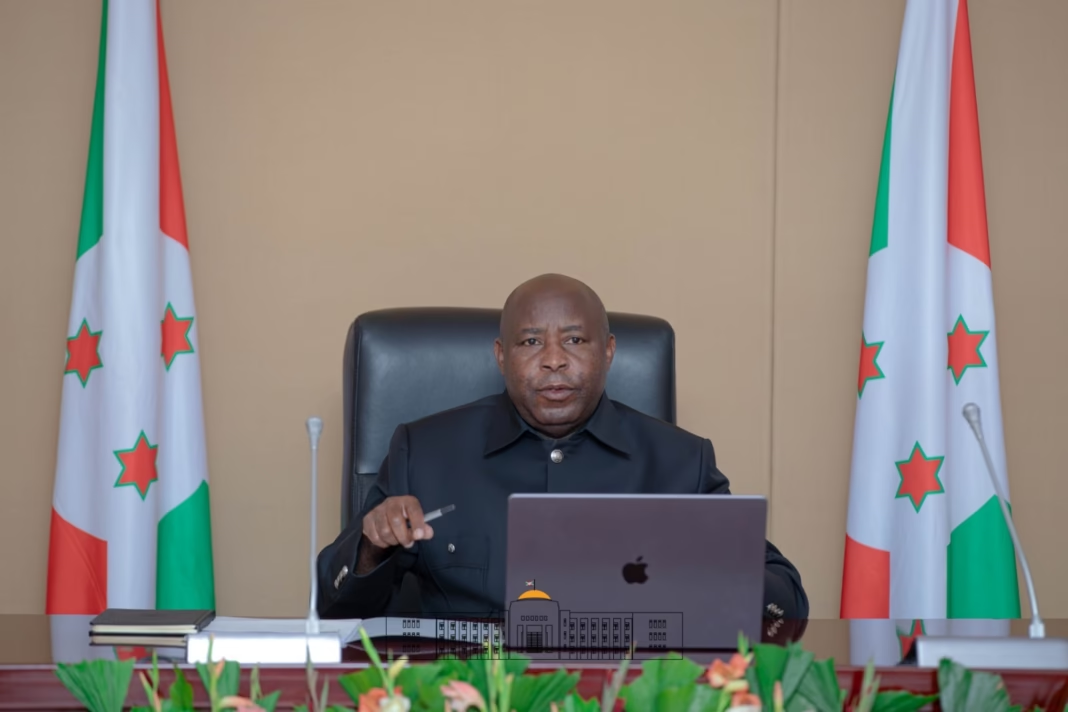

President Évariste Ndayishimiye on Friday appointed two new ministers, continuing a pattern of cabinet adjustments that has, in several instances, resulted in relatively short ministerial tenures since he took office in 2020.
According to a statement from the Office of the President, Alfred Ahingejeje was appointed Minister of Justice, Human Rights and Gender, while Damien Niyonkuru was named Minister of Infrastructures, Social Housing, Transport and Equipment.
The appointments were made on the proposal of the Prime Minister and after consultation with the Vice-President, and took effect immediately.
The new ministers replace Arthémon Katihabwa at Justice and Jean Claude Nzobaneza at Infrastructure, both of whom were appointed in August 2025 during the formation of the current government.
Their tenure of approximately six months places them among the shortest-serving ministers during President Ndayishimiye’s administration.
“All previous provisions contrary to the present appointments are hereby repealed,” the President’s Office said, adding that the Prime Minister has been tasked with implementing the changes.
Short Tenures in the Current Administration
Since assuming office in June 2020, President Ndayishimiye has overseen multiple cabinet reshuffles linked to government reorganization, changes in executive leadership, and performance-based adjustments. While many ministers have served for several years, others have held office for comparatively brief periods.
Among earlier examples is Immaculate Ndabaneze, who served as Minister of Commerce, Transport, Industry and Tourism for less than one year between 2020 and 2021. However, the ministers replaced in the January 2026 reshuffle served for an even shorter period, reflecting how recent government formations particularly the August 2025 cabinet have produced some of the briefest tenures of the current presidency.
The government has not provided specific reasons for individual changes, and officials routinely describe cabinet adjustments as part of normal executive management.
The latest appointments underline the evolving composition of Burundi’s cabinet and the continued recalibration of leadership in key sectors such as justice and infrastructure.
Fact Box: Short Ministerial Tenures Under President Ndayishimiye
- President: Évariste Ndayishimiye (since June 2020)
- Most recent cabinet formation: August 2025
- Tenure of ministers replaced in Jan. 2026: ~6 months
- Earlier short tenure example:
- Immaculate Ndabaneze — less than 1 year (2020–2021)
- Main drivers of short tenures: Cabinet reshuffles, government reorganization, executive leadership changes