
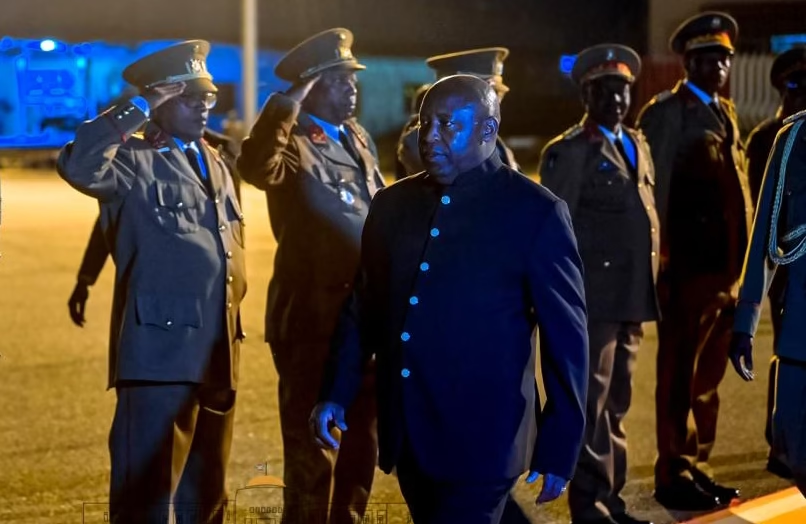
Burundi’s presidency announced Monday that President Évariste Ndayishimiye has travelled to Washington, D.C., on Dec. 2 to attend the signing of what officials describe as a “historic peace accord” between the Democratic Republic of the Congo and Rwanda. The ceremony, set for Dec. 4, follows an invitation from U.S. President Donald Trump, according to a communiqué issued by the Burundian presidency.
The visit places Burundi among regional leaders backing renewed diplomatic efforts to stabilize eastern DRC, where violence has escalated in recent months amid clashes between the Congolese army and the Rwandan-backed M23 rebel group. The Washington ceremony aims to reinforce commitments made in an earlier agreement brokered in June, which called for the withdrawal of Rwandan forces from Congolese territory, the neutralization of the FDLR rebel group, and joint security and economic coordination mechanisms. Implementation has stalled, however, with continued fighting and little movement on disarmament.
In Kigali last week, Rwandan President Paul Kagame said Rwanda had fulfilled its obligations under the deal and insisted that delays were coming from Kinshasa. He accused the Congolese government of shifting positions after signing commitments, saying such reversals undermined the diplomatic progress made in Washington and Doha. Kagame added that while the U.S.-led process “offers real hope,” durable peace would require consistency from all sides and genuine regional responsibility rather than symbolic signatures.
Kinshasa maintains that any agreement must guarantee the full withdrawal of Rwandan troops and an end to Kigali’s alleged support for M23, positions the Congolese government says are essential for restoring sovereignty and long-term stability. Congo has also pushed for stronger international monitoring mechanisms to ensure compliance.
Burundi’s participation in the Washington ceremony signals growing regional investment in the process. Instability in eastern Congo has repeatedly spilled across borders, affecting security and displacing civilians in Burundi and other neighboring states. Ndayishimiye’s attendance adds diplomatic weight to the effort, as regional actors seek to prevent yet another collapsed agreement in a conflict marked by decades of failed peace initiatives.
Whether the ceremony can deliver a breakthrough will depend on the willingness of Kigali and Kinshasa to act on their commitments. With fighting still ongoing and mistrust running high, analysts warn that the signing must be followed by concrete steps on demobilization, troop movements and political cooperation if the deal is to hold.


