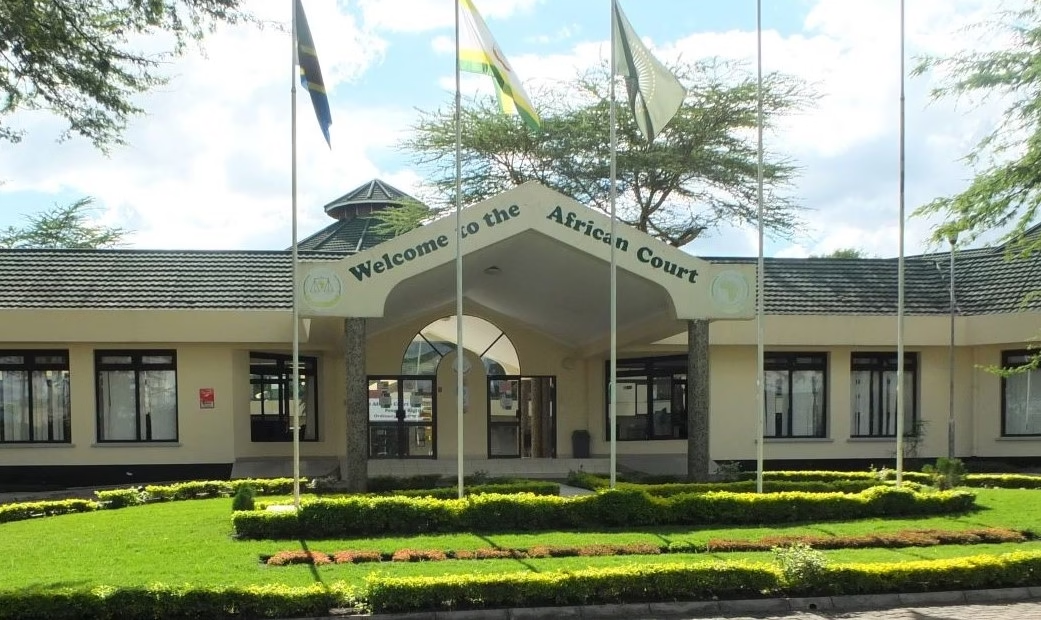

The African Court on Human and Peoples’ Rights has received or is expected to receive a record 107 submissions in a landmark climate change case that could help define the legal obligations of African states to address global warming, protect vulnerable communities and uphold human rights.
The case, initiated by the Pan African Lawyers Union (PALU), seeks an advisory opinion from the court on how African governments should respond to climate change under regional and international human rights obligations. The opinion is expected to address issues ranging from environmental protection and sustainable development to intergenerational equity and the rights of communities disproportionately affected by climate-related disasters.
In the latest development, the court acknowledged submissions from seven African states Comoros, the Democratic Republic of Congo, Ghana, Namibia, Senegal, Somalia and the Sahrawi Arab Democratic Republic while granting four other countries an additional 45 days to file their observations. Burkina Faso, Mauritius, Nigeria and Sierra Leone now have until mid-July to submit their positions.
The court has also received briefs from major African and international institutions, including the African Commission on Human and Peoples’ Rights, the African Committee of Experts on the Rights and Welfare of the Child, the Commission of Small Island States on Climate Change and International Law, the Organisation of African, Caribbean and Pacific States, and several United Nations agencies and special rapporteurs.
Three additional UN entities, including the Office of the High Commissioner for Human Rights and two special rapporteurs, have been admitted as friends of the court and granted time to file submissions.
Civil society participation has been particularly extensive. The court said it had acknowledged receipt of 50 amicus briefs from civil society organizations, researchers and other interested parties, while admitting dozens more participants to the proceedings. Once all approved briefs are filed, the total number of submissions will reach 107.
PALU described the proceedings as one of the most consequential legal processes in the history of Africa’s human rights system because of their potential impact on climate governance, environmental protection and climate justice across the continent.
The advisory opinion, while not a judgment in a dispute between parties, could carry significant legal and political weight. Legal experts say it may help clarify how existing African human rights instruments apply to climate change and could influence future legislation, policymaking and climate-related litigation across the continent.
The proceedings come as African countries face increasing pressure from more frequent droughts, floods, heatwaves and other climate-related disasters despite contributing only a small share of global greenhouse gas emissions. Many African governments have also called for greater climate finance and stronger international action to help vulnerable countries adapt to the impacts of climate change.
PALU has urged consideration of a public hearing process to increase transparency and public participation as the case moves forward.
The court’s eventual advisory opinion is expected to become a key reference point in Africa’s evolving climate justice landscape and could shape how governments, courts and policymakers approach climate-related human rights obligations for years to come.