
The Democratic Republic of Congo and Rwanda are moving toward creating a mechanism to verify compliance with their U.S.-backed peace agreement, a step aimed at addressing one of the biggest challenges in previous efforts to end conflict in eastern Congo: deep mistrust between the two governments.
The two countries agreed to explore possible verification arrangements during the fifth meeting of the Joint Security Coordination Mechanism (JSCM), held July 15-16 in Geneva, Switzerland, with participation from the United States, Qatar, Togo as the African Union mediator and the African Union Commission.
The mechanism is expected to help monitor implementation of the Washington Accords, including commitments related to the neutralization of the Democratic Forces for the Liberation of Rwanda (FDLR) and Rwanda’s disengagement of forces and lifting of defensive measures.
The participants said the process would require greater transparency and coordination, but details of how the verification system would operate, who would oversee it and whether findings would be made public remain unclear.
In a joint statement after the meeting, the parties said they had agreed to “explore possible verification mechanisms to facilitate implementation of the Washington Accords.”
They also said the DRC and Rwanda committed to “regular information sharing to maintain an accurate picture of developments on the ground in eastern DRC.”
The move comes after years of tensions between Kinshasa and Kigali over security issues in eastern Congo.
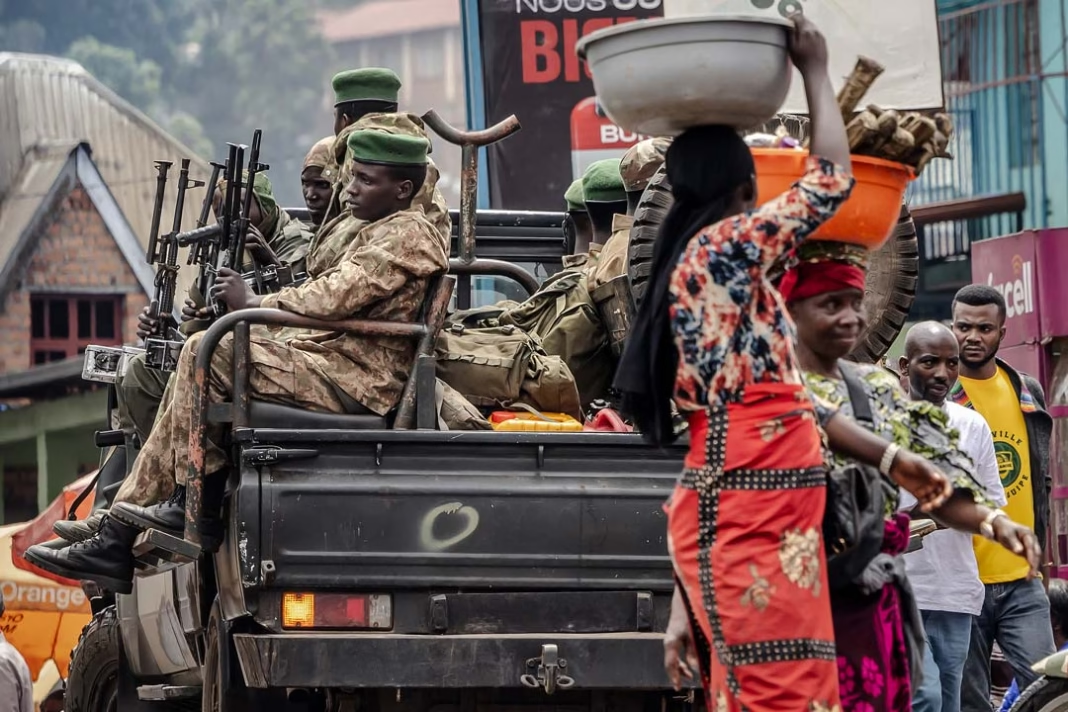
The Congolese government has accused Rwanda of supporting the M23 rebel movement, allegations Rwanda denies. Kigali has instead cited the presence of the FDLR an armed group founded by former members of forces responsible for the 1994 genocide against the Tutsi in Rwanda as a continuing security threat.
The latest discussions focused on the FDLR and measures linked to Rwanda’s security concerns, but eastern Congo’s conflict remains complicated by the presence of multiple armed groups, including M23, which has controlled significant territory in parts of North Kivu.
Participants also discussed the role of the United Nations peacekeeping mission MONUSCO and its disarmament, demobilisation and reintegration programs.
The statement said the meeting examined how MONUSCO’s work could support the peace process through “FDLR repatriation” and improved coordination among actors involved in implementation.
MONUSCO has operated in eastern Congo for more than two decades, although its mission has faced criticism from Congolese communities and officials over limited progress in ending insecurity.
The United States, Qatar, the African Union and Togo were thanked for supporting the negotiations, with participants describing the Washington Accords as an opportunity to improve security and stability in the Great Lakes region.
But analysts say the credibility of the agreement will depend on whether the new verification mechanism can provide independent confirmation of compliance and prevent renewed accusations between the parties.
The next phase of the peace process will test whether diplomatic commitments reached in Geneva can translate into measurable changes on the ground in eastern Congo.