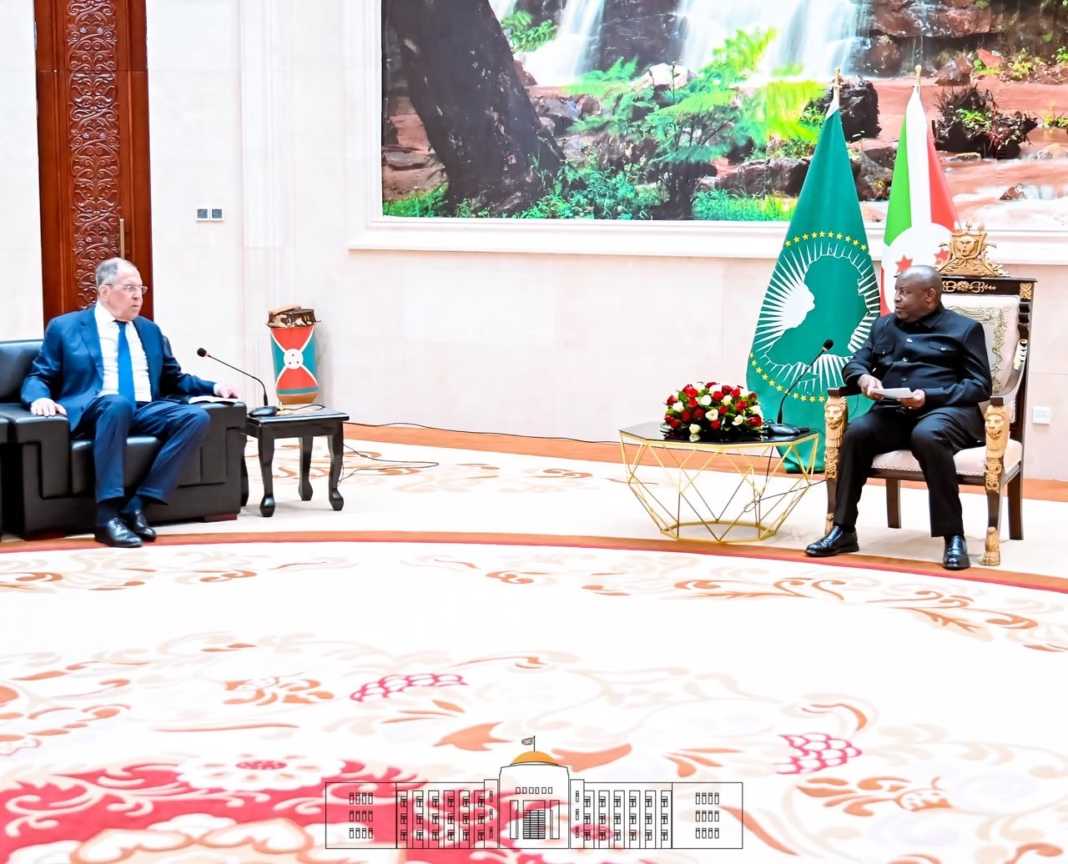

Russian Foreign Minister Sergey Lavrov met President Évariste Ndayishimiye on Friday during a visit to Burundi that underscored Moscow’s efforts to deepen its engagement in East Africa and strengthen ties with a country that currently holds the chairmanship of the African Union.
Lavrov, who arrived in Bujumbura earlier in the day on a working visit, held talks with Ndayishimiye at the Ntare Rushatsi Presidential Palace after being received at Melchior Ndadaye International Airport by Foreign Minister Edouard Bizimana.
According to Burundi’s presidency, the leaders discussed expanding bilateral cooperation in agriculture, energy, health, education, infrastructure, transport, trade and technology transfer. They also reviewed regional security challenges, including the conflict in eastern Democratic Republic of Congo, instability in the Sahel and the Ebola outbreak in parts of Central and East Africa.
In a statement, the presidency said both sides “reaffirmed their willingness to further develop their cooperation in key sectors such as agriculture, energy, health, education, infrastructure, transport, trade exchanges, and technology transfer.”
The meeting also highlighted Burundi’s growing diplomatic role on the continent since President Ndayishimiye assumed the rotating chairmanship of the African Union.
The presidency said Ndayishimiye used the meeting to outline Africa’s priorities and called for “fairer representation of Africa on the United Nations Security Council, both in permanent and non-permanent seats.”
On regional security, the Burundian leader reiterated his support for diplomatic solutions to African conflicts. “The Head of State reaffirmed his commitment to dialogue and the search for African solutions to African problems,” the presidency said.
Lavrov’s visit comes as Russia continues to expand its diplomatic outreach across Africa through high-level visits and broader political and economic engagement. Since Russia’s full-scale invasion of Ukraine in 2022, Moscow has sought to reinforce partnerships across the continent, presenting itself as an alternative partner while pursuing cooperation in sectors including energy, agriculture, mining, education and security.
Burundi has increasingly diversified its foreign relations in recent years, maintaining ties with Western countries, China, Türkiye, Gulf states and Russia as it seeks investment and development partnerships.
While trade between Russia and Burundi remains relatively limited, officials from both countries have repeatedly expressed interest in expanding economic cooperation and increasing investment.
Earlier Friday, Burundi’s Foreign Ministry said Lavrov’s visit provided “an opportunity for both parties to exchange views on several areas of common interest and examine prospects for strengthening bilateral cooperation.”
The discussions also touched on broader continental issues. According to the presidency, Lavrov invited Ndayishimiye to attend the third Russia-Africa Summit scheduled for Oct. 28-29 in Moscow. Ndayishimiye accepted the invitation and is expected to co-chair the summit in his capacity as the current chairperson of the African Union.
The planned participation places Burundi at the center of one of Russia’s flagship diplomatic engagements with Africa this year, reflecting the country’s elevated regional profile as Moscow seeks closer ties with African governments amid intensifying geopolitical competition on the continent.
Analysts say the significance of Lavrov’s visit will ultimately depend on whether it leads to concrete agreements or investment projects. For now, it signals Russia’s continued efforts to broaden its influence in East Africa while engaging more closely with Burundi as it plays a more prominent role in continental diplomacy under the African Union.