
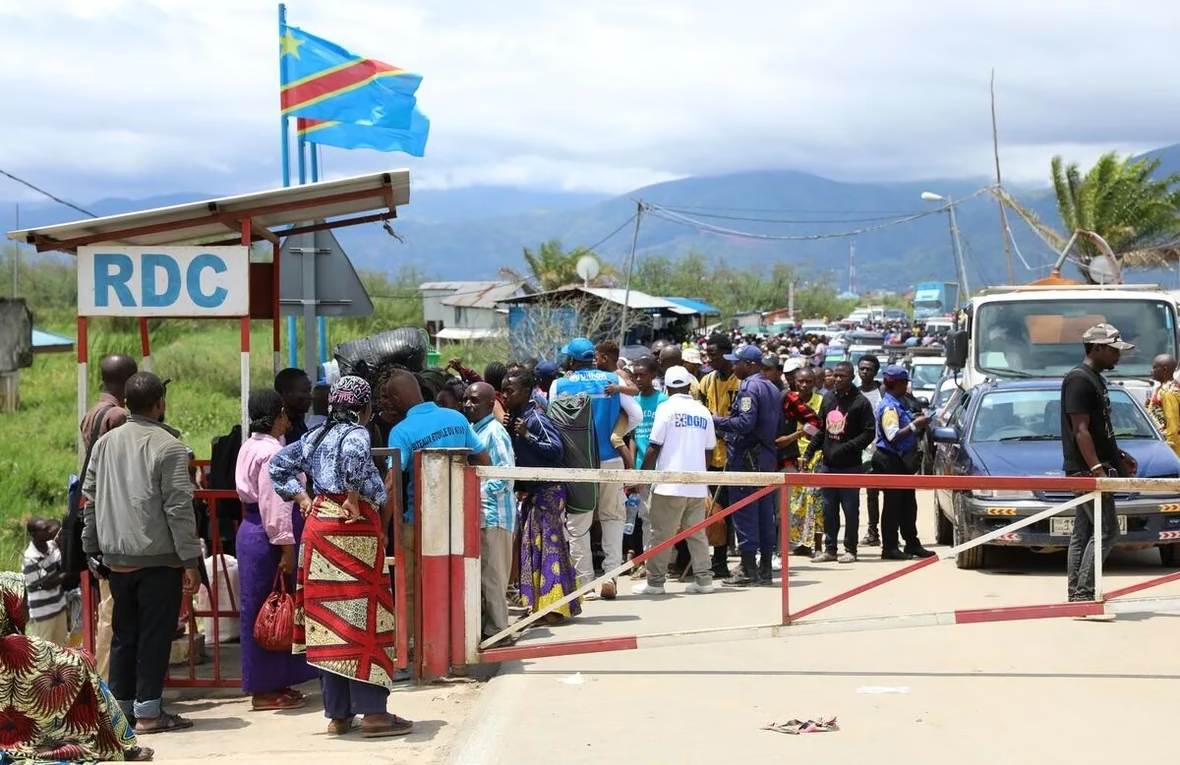
Burundi and the Democratic Republic of Congo (DRC) reopened the Gatumba–Kavimvira border crossing on Monday, restoring a key commercial corridor between Bujumbura and Uvira after nearly two months of closure triggered by fighting in eastern Congo.
The frontier had been shut since Dec. 10, 2025, when Burundi closed crossings after M23 rebels advanced into Uvira, a strategic city just across the border from Burundi’s economic capital.
M23 fighters captured Uvira in December in one of the group’s most consequential offensives in eastern DRC, raising fears of regional escalation.
The fighting sparked a major humanitarian crisis. Since early December 2025, more than 100,000 people have fled violence in eastern Congo into Burundi, according to UNHCR figures.
Government officials said refugee sites quickly became overwhelmed. Interior Minister Léonidas Ndaruzaniye warned in December that facilities were “operating beyond capacity,” straining services and posing safety risks.
At the peak of the influx, UNICEF estimated nearly 95,000 people had crossed into Burundi within weeks, many through Gatumba and nearby entry points.
Before the closure, hundreds of traders, transporters and families crossed daily between Gatumba and Kavimvira, exchanging food, clothing, medicines and manufactured goods that sustained livelihoods on both sides of the border.
The shutdown brought local economies to a standstill. In Uvira, daily life slowed dramatically and streets that once buzzed with cross-border commerce fell largely empty.
Analysts say reopening the crossing is likely to immediately revive informal and small-scale trade, which dominates commerce between Burundi and eastern Congo. The crossing serves as one of the region’s most important entry points for small traders who depend on short-distance transactions rather than large formal exports.
The decision comes weeks after Congolese authorities said their army retook Uvira following the withdrawal of M23 fighters in January, adding that troops were deploying to secure the city and surrounding areas.
The reopening signals cautious confidence from regional authorities but also carries risks. Uvira’s fall had heightened tensions across the Great Lakes region and raised fears of a broader confrontation involving neighboring states.
Security analysts say reopening the crossing suggests governments believe the immediate threat of rebel advance toward Burundi has diminished. However, the persistence of armed groups in eastern DRC means the border could again become a flashpoint if hostilities intensify.
Uvira is a key commercial hub and gateway linking eastern Congo to Lake Tanganyika trade routes and markets in Burundi.
For many traders, the reopening restores not just mobility but survival. Informal cross-border commerce forms the backbone of local economies in both Uvira and Bujumbura’s outskirts, especially for women traders and transport workers.


