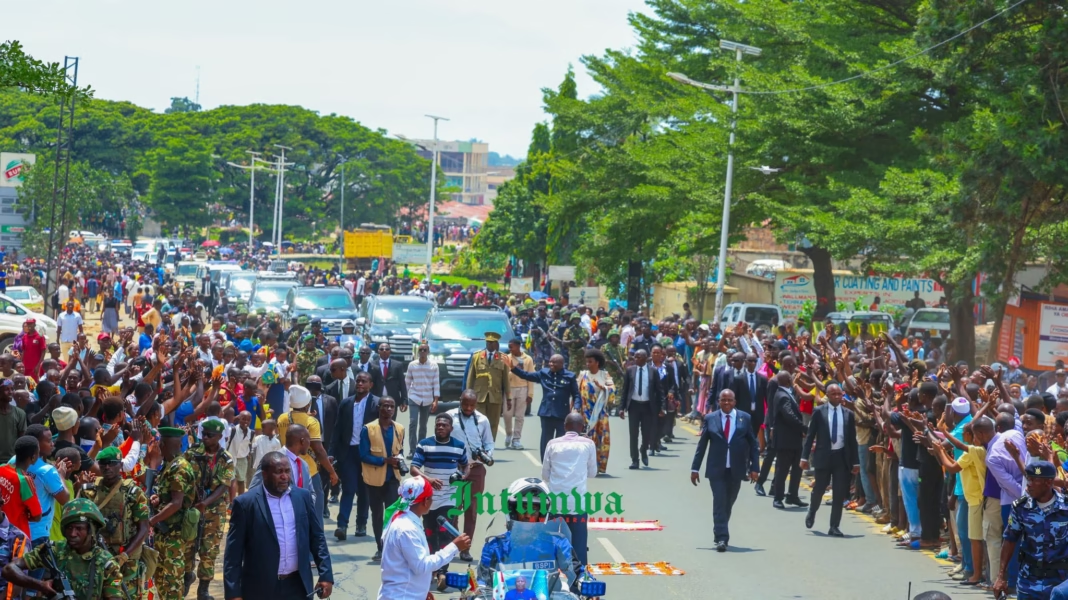

Burundi’s president returned home Sunday after being elected chairperson of the African Union, greeted along the route from the international airport by government officials, supporters of the ruling party and students in a show of public welcome.
President Évariste Ndayishimiye arrived from Addis Ababa, Ethiopia, where he formally assumed the rotating chairmanship of the 55‑member continental bloc during the 39th Ordinary Session of the Assembly of Heads of State and Government of the African Union. The summit, which concluded Saturday at the AU headquarters, focused on water security, sanitation and continental unity.
At the Addis Ababa summit, Ndayishimiye succeeded Angolan President João Lourenço in the year‑long leadership role. “I want to assure you that Burundi will exercise its presidency in a spirit of listening, impartiality and cooperation with all, and for the good of all member states,” he said in his acceptance speech, pledging to strengthen Africa’s voice on the international stage.
The AU chairmanship rotates annually among member states. As chairperson, Ndayishimiye will represent the African Union in major international forums and help guide its strategic agenda throughout 2026.
In Burundi, scenes of welcome at the airport and along the road to the country’s economic city Bujumbura reflected the government’s framing of the moment as a milestone for the nation, with banners and cheers marking the president’s return. Government officials and hundreds of supporters of the current administration flooded the streets to welcome the incumbent president.
lined key thoroughfares, according to spokespeople accompanying the delegation.
At the summit in Ethiopia, Ndayishimiye underscored the priorities of his term, including advancing peace, integration and sustainable development under the AU Agenda 2063 blueprint. “The Burundi presidency will work with all AU members to reach common consensus,” he told assembled leaders.
The president’s return comes amid high expectations for his leadership of the continental body at a time of persistent security and economic challenges across Africa and Burundi in particular.