

Countries in the Great Lakes region hosted approximately 5.5 million refugees and asylum-seekers in 2025, underscoring the scale of a displacement crisis that regional governments are seeking to address through a new nine-year strategy.
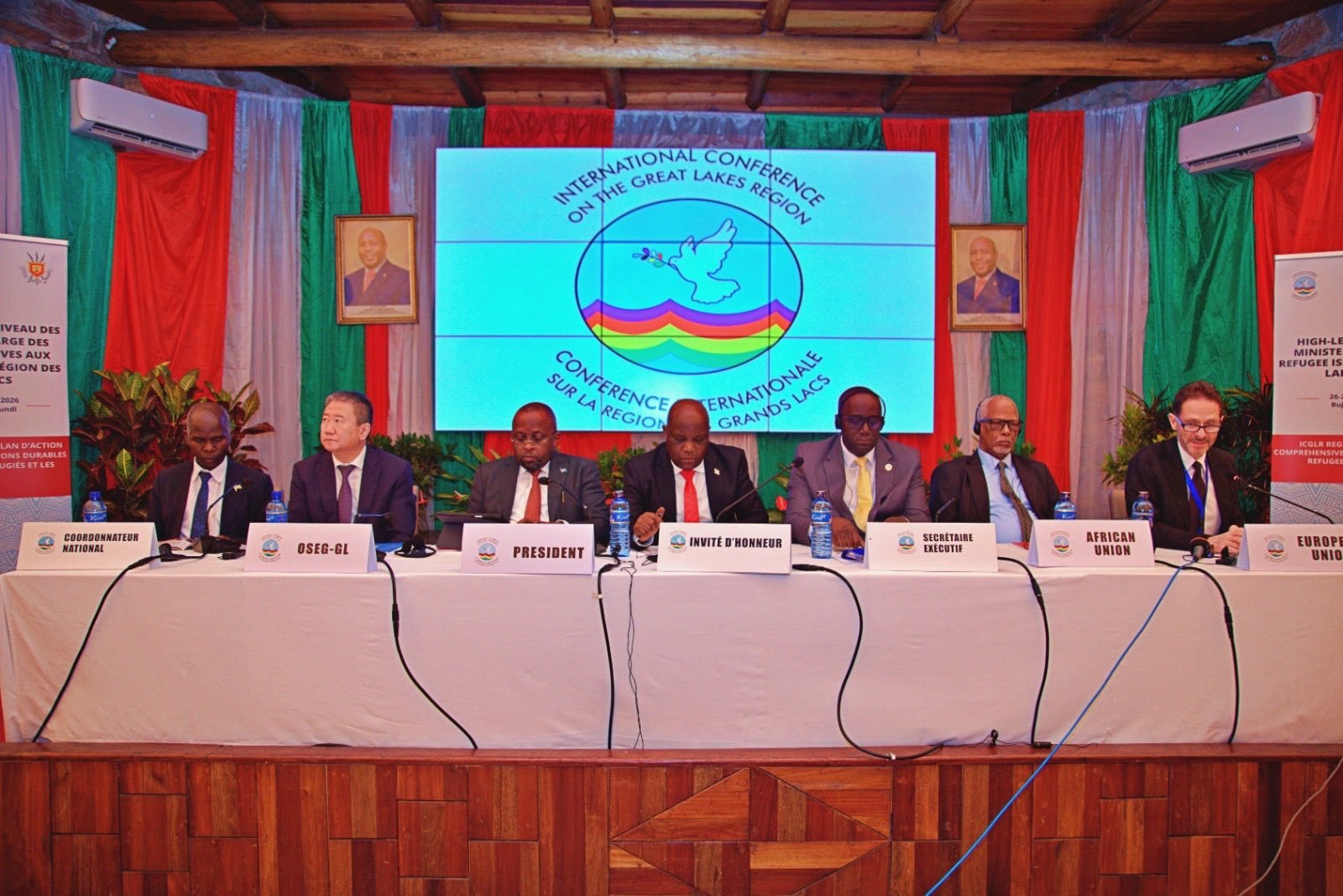
Ministers responsible for refugee affairs from member states of the International Conference on the Great Lakes Region (ICGLR) met in Bujumbura on Nov. 27 to consider a regional strategy and action plan covering 2027 to 2035, aimed at finding lasting solutions for refugees, returnees and host communities.
“The meeting today is evidence of the willingness of member states to adopt this strategy that cuts across which focuses on refugees and returnees. There should be no refugee or returnee who is not looked after across member states even when they cross boarders,” said the ICGLR Executive Secretary Dr. Mubita Luwabelwa.
“There is political will, there are honest and candid discussions, we will make sure these discussions end up with actions on ground which includes raising more finances,” he added.
According to figures from the United Nations High Commissioner for Refugees (UNHCR), cited by the ICGLR, approximately 8.52 million refugees and asylum-seekers originating from member states were displaced worldwide in 2025. About 4.56 million remained within the Great Lakes region.
The figures highlight the regional dimension of forced displacement, with countries facing the challenge of protecting people fleeing conflict while supporting their integration into host communities and facilitating the return of those who choose to go home.
The proposed strategy seeks to strengthen cooperation among member states and move beyond political commitments towards coordinated national action.
It is built around five pillars: national ownership and regional coordination; solutions pathways; legal identity, status and mobility; protection and inclusion in local systems; and economic inclusion, financial systems and social protection.
The framework also seeks to improve refugees’ access to education, health care, social protection and livelihood opportunities. It calls for greater participation of refugees and returnees in decisions affecting their lives.
Burundi faces growing refugee pressure
The discussions carry particular significance for Burundi, which has received a substantial influx of refugees fleeing conflict in neighbouring Democratic Republic of the Congo.
UNHCR data show that Burundi hosted 156,829 refugees and asylum-seekers as of Oct. 31, 2026. Congolese nationals accounted for 155,656, or 99.3% of the total.
About two-thirds of the refugee population live in camps in eastern Burundi, according to UNHCR’s October operational overview.
The influx has added to the country’s humanitarian responsibilities as it continues to support Burundian refugees returning from neighbouring countries.
UNHCR reported that approximately 373,000 Burundian refugees had been repatriated since 2017, as the agency continued to support the government in facilitating voluntary returns.
The situation illustrates the region’s overlapping displacement challenges: countries must provide protection and assistance to people arriving from neighbouring states while supporting the safe and voluntary return of their own citizens.
Financing and implementation remain key questions
The ICGLR strategy follows a recommendation made at a high-level ministerial meeting in Kampala, Uganda, in 2019.
Its development was led by the ICGLR Secretariat through consultations involving member states, refugee-led organisations, regional organisations, development partners and United Nations agencies.
The European Union funded the process, while the Regional Durable Solutions Secretariat (ReDSS) and UNHCR provided technical support.
A technical experts’ meeting was held in Bujumbura on Nov. 26 to consolidate recommendations ahead of the ministerial session.
The strategy and its accompanying action plan were submitted to ministers for consideration and adoption.
The ICGLR is an intergovernmental organisation comprising 12 member states. Its secretariat is based in Bujumbura, Burundi.

