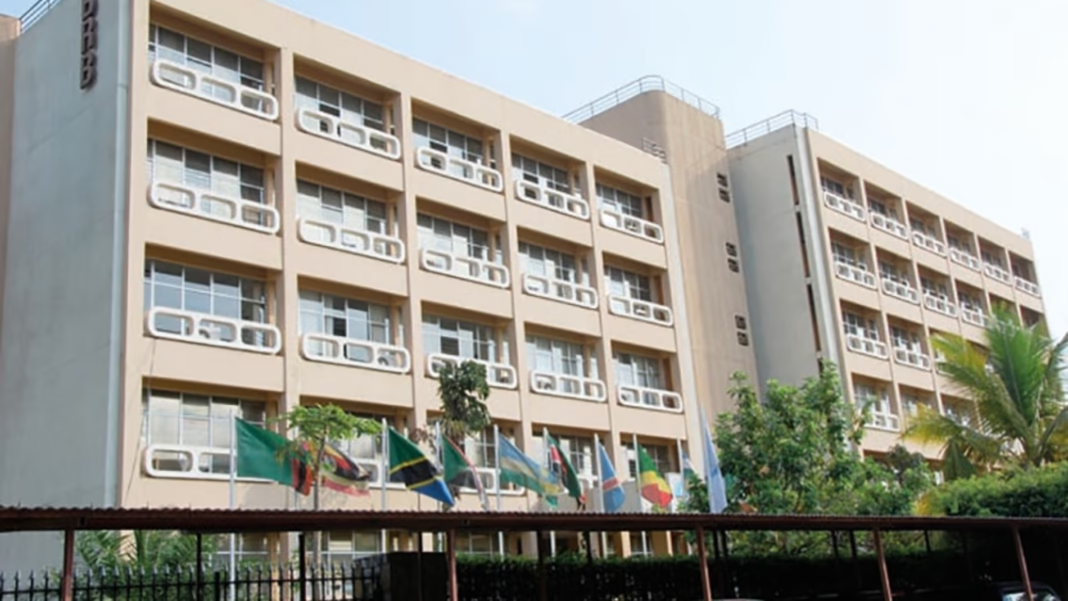
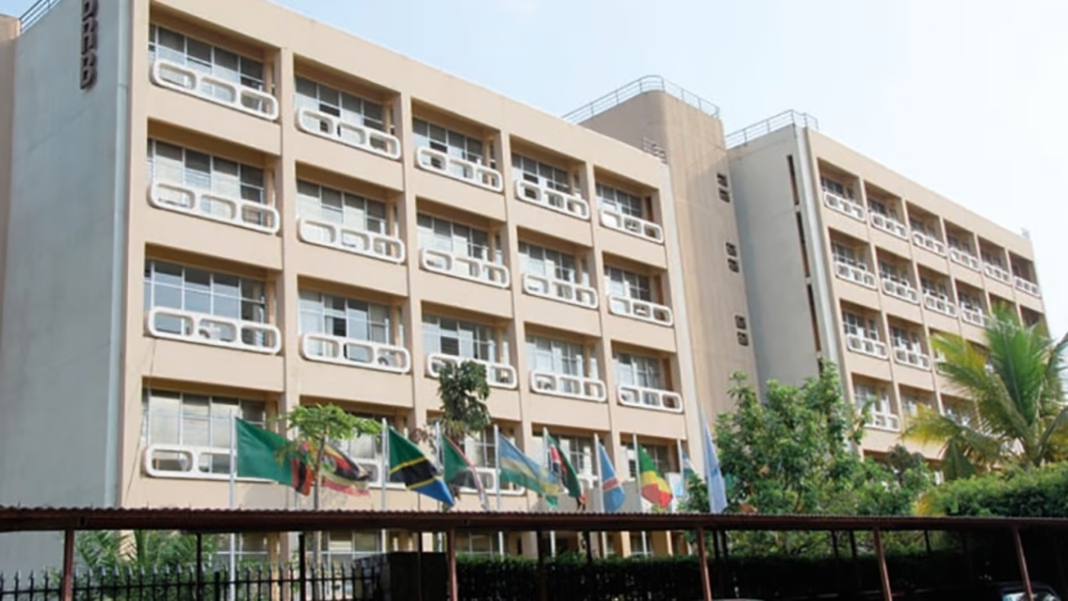

Burundi’s Central Bank (BRB) needs stronger data systems and specialized expertise to assess risks in the banking sector, according to an International Monetary Fund technical assistance report published this month.
The IMF’s Statistics Department said a 2025 mission to the Bank of the Republic of Burundi, or BRB, found inconsistencies in some banking data and gaps in the quantitative skills needed to assess banks’ credit-risk models.
The mission, conducted from April 28 to May 9, 2025, found that some banks had failed to provide required breakdowns of accrued interest, while detailed statements at other institutions did not match balance-sheet figures. Some regulatory statements also had incomplete headings.
The IMF recommended stronger automated validation, including “blocking” rules that would reject noncompliant submissions.
The findings come as the BRB has been strengthening its supervisory and market infrastructure. At the end of 2024, commercial banks accounted for 57.5% of the total balance sheet of Burundi’s financial sector, compared with 28.7% for the central bank and 10.6% for deposit-taking microfinance institutions.
Credit-risk concerns
The IMF also raised concerns about the BRB’s ability to independently assess banks’ expected-credit-loss models under IFRS 9, an international accounting standard for recognizing credit losses.
The report said the BRB’s statistics unit lacked the tools and technical expertise to rigorously assess the models banks are developing. The IMF recommended assigning or recruiting at least two staff members with expertise in areas including econometrics, statistics, data science and risk management.
The report set March 2026 as the target for the staffing measure, though another section gives December 2025 as the deadline.
The IMF had identified credit-quality risks earlier, in its March 2025 financial-sector stability review, citing rapid lending growth, weaknesses in IFRS 9 implementation and banks’ exposure to the government.
By the end of 2025, government debt accounted for about 28% of banks’ total assets, according to the IMF’s June 2026 Article IV staff report.
The IMF said Burundi’s banking sector was “broadly resilient” but warned that vulnerabilities warranted continued vigilance.
Reforms and remaining gaps
The BRB has taken steps to strengthen supervision. Twenty-five BRB supervisors took part in an August 2025 workshop on financial-system resilience, macroprudential supervision and crisis management.
The central bank also launched the Refinitiv platform for money-market operations in July 2025 and issued regulations governing the local-currency interbank market in January 2026.
But some reforms remain incomplete.
The IMF’s June 2026 assessment said most recommendations from its financial-sector stability review had been implemented, while progress on measuring and managing foreign-exchange risk remained limited.
An asset-quality review of banks had not yet started. The IMF said the BRB cited severe capacity constraints as the reason.
The IMF’s technical report also highlighted a longstanding reporting gap: regular transmission of financial soundness indicators to the IMF had been suspended since 2019. BRB staff generated indicators covering 2019 through 2025, with regular transmission expected to resume in January 2026.
The report said about 80% of the required bank-data annexes had been incorporated into an automated system for producing monetary and financial statistics.
Taken together, the IMF assessments point to progress in Burundi’s financial-sector reforms, while data quality, specialized supervisory capacity and the assessment of bank asset quality remain among the regulator’s outstanding challenges