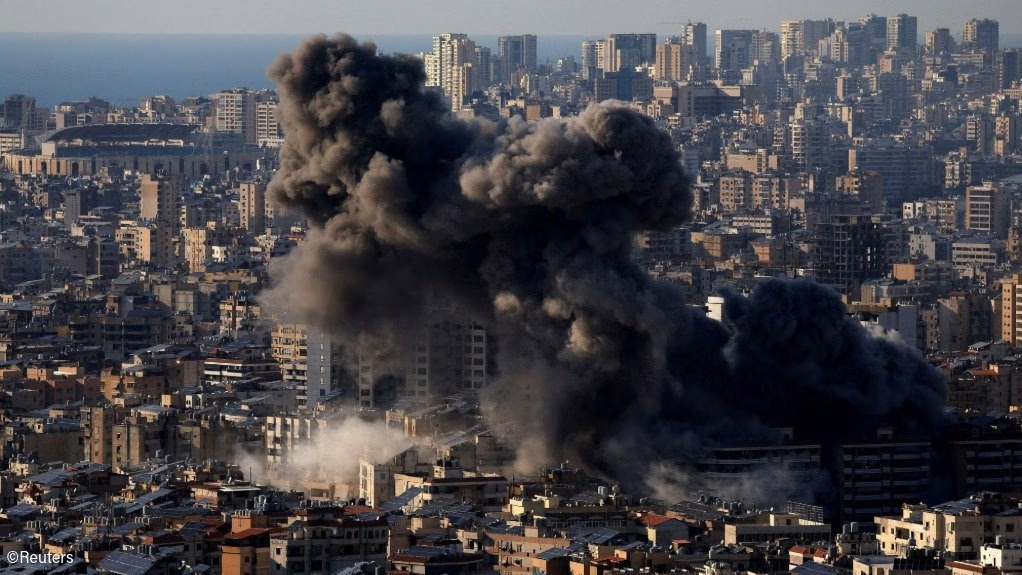

The heads of the International Monetary Fund, World Bank Group and International Energy Agency said Wednesday they are forming a coordination group to address the mounting global economic and energy fallout from the war in the Middle East, warning of severe disruptions already rippling through markets worldwide.
In a joint statement issued April 1, the three institutions said the conflict “has caused major disruptions to lives and livelihoods in the region and triggered one of the largest supply shortages in global energy market history.”
They added that the consequences are “substantial, global, and highly asymmetric,” with energy-importing nations particularly low-income countries bearing the brunt of the shock.
According to the statement, the crisis is already being transmitted through rising oil, gas and fertiliser prices, while also fuelling concerns over food costs. The institutions warned that global supply chains have been affected, including key commodities such as helium, phosphate and alminium, alongside disruptions to tourism linked to flight interruptions at major Gulf transit hubs.
“The resulting market volatility, weakening of currencies in emerging economies, and concerns about inflation expectations raise the prospect of tighter monetary stances and weaker growth,” the statement said.
The three organizations said closer coordination is critical “at these times of high uncertainty,” particularly for countries with limited fiscal space and high debt burdens that are most vulnerable to the downstream effects of the crisis.
To that end, they agreed to establish a joint group tasked with assessing the severity of the crisis across countries and regions through shared data on energy markets, trade flows, inflation trends and supply chain disruptions.
The group will also coordinate policy responses, including “targeted policy advice, assessment of potential financing needs and related provision of financial support, including through concessional financing, and use of risk mitigation tools as appropriate,” the statement said.
In addition, the institutions pledged to mobilize other multilateral, regional and bilateral partners to ensure a more “coordinated and efficient support to countries in need,” while drawing on expertise from other international organizations.
“We are committed to working together to safeguard global economic and financial stability, strengthen energy security, and support affected countries and people on their path to sustained recovery, growth, and job creation through reforms,” the statement said.