
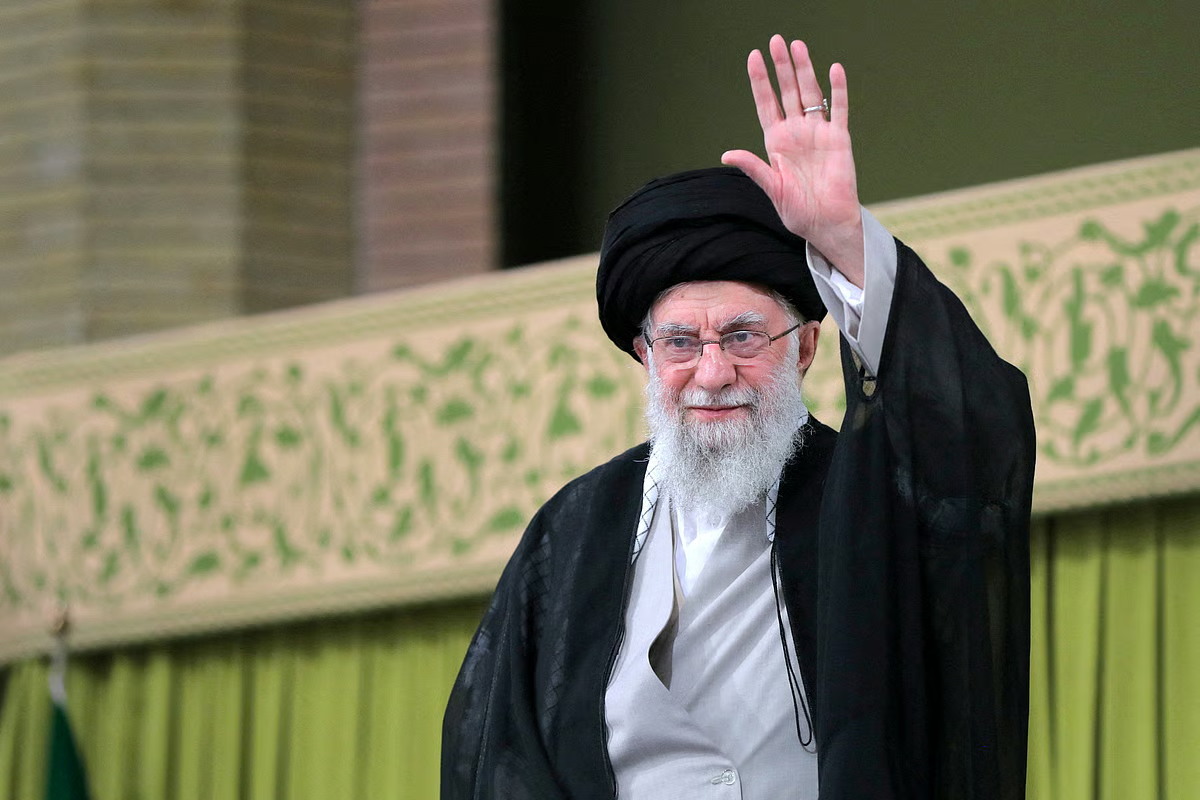
Iran’s Supreme Leader Ali Khamenei, who ruled the Islamic Republic for more than three decades and shaped its domestic and foreign policy with an iron grip, has died at age 86 following a major military strike on Tehran, according to Iranian state media and multiple international news agencies.
Iranian broadcasters confirmed his death after a joint U.S.–Israeli operation targeted sites linked to Iran’s leadership. U.S. President Donald Trump earlier said the strike had killed Khamenei, while Iranian authorities later announced a 40-day mourning period for the longtime leader.
Khamenei had served as supreme leader since 1989, when he succeeded revolutionary founder Ruhollah Khomeini. Over decades in power, he transformed the office into the dominant force in Iran’s political system, overseeing the military, judiciary, media, and foreign policy while consolidating influence through the powerful Revolutionary Guard.
The strike that killed him came amid a widening conflict following years of confrontation over Iran’s nuclear program and regional activities. Western governments long accused Tehran of seeking nuclear weapons, an allegation Iran denied, insisting its program was for civilian purposes.
Khamenei’s tenure was marked by both geopolitical ambition and domestic repression. He backed regional armed groups and expanded Iran’s influence across the Middle East, while security forces violently suppressed protests, including major uprisings in 2009, 2022, and 2026 tied to economic hardship and political restrictions.
Despite his hard-line stance, Khamenei occasionally permitted tactical engagement with Western powers, including approving the 2015 nuclear agreement that temporarily eased sanctions. Still, he remained deeply suspicious of the United States and Israel and framed his rule as resistance to foreign pressure.
Born in 1939 in Mashhad, Khamenei rose from clerical ranks to become president in the 1980s before ascending to supreme leader, a role that made him Iran’s ultimate authority and one of the Middle East’s most influential figures.
His death creates immediate uncertainty over Iran’s political future. The constitution assigns the clerical Assembly of Experts the task of choosing a successor, though analysts say the Revolutionary Guard is likely to play a decisive role in shaping the transition.
Officials have not yet named a replacement, leaving a power vacuum at the top of the Islamic Republic during a period of heightened regional tension and internal unrest.