
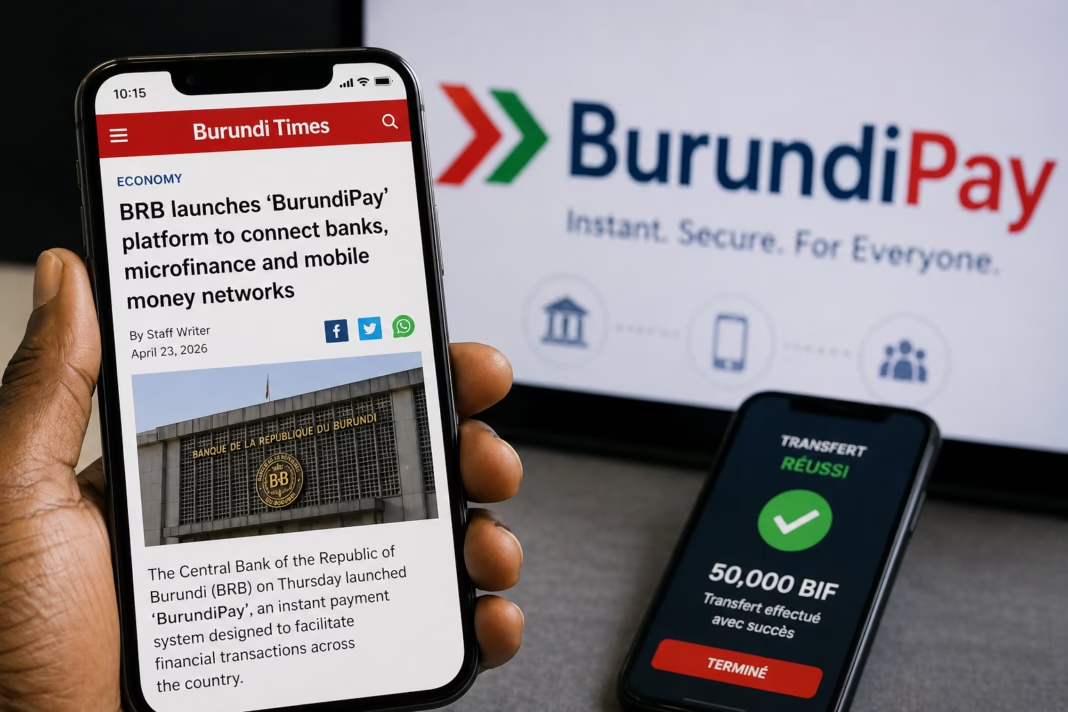

Bank of the Republic of Burundi has launched a national instant payments platform, “BurundiPay,” in a move authorities say is aimed at improving interoperability across the country’s fragmented financial system and accelerating digital transactions.
The platform was officially unveiled Thursday, April 23, during a ceremony led by central bank governor Normand Bigendako, who said the system is designed to connect rather than replace existing financial service providers.
“‘BurundiPay’ serves as a bridge for interoperability, enabling different players in the financial system to communicate with each other efficiently,” Bigendako said.
The system allows users to transfer funds across banks, microfinance institutions and mobile money networks, using bank accounts, electronic wallets or phone numbers. It is also expected to support merchant payments at shops and points of sale regardless of the service provider.
“With this platform, users will be able to make transfers between different financial networks without constraints linked to the institution they use,” Bigendako added.
Officials say the infrastructure can process up to 1,000 transactions per second and will operate continuously, 24 hours a day, seven days a week.
Libère Nduwimana, director of digital payments at the central bank, said the system is built to be secure and reliable while reducing the time and cost associated with traditional transactions.
“It is now possible to use money available in one’s bank account directly via a phone,” he said. “This innovation helps avoid long lines and time losses.”
He acknowledged that transaction fees may apply but said the system reduces indirect costs such as travel and delays.
The launch comes as Burundi seeks to expand financial inclusion and modernize its payments ecosystem. According to the World Bank, access to formal financial services remains limited in many low-income countries, where mobile money and interoperable payment systems have become key drivers of inclusion and economic participation.
Across sub-Saharan Africa, instant payment platforms have gained traction in recent years, with countries such as Kenya and Rwanda expanding real-time digital payment systems to link banks and telecom operators, improving transaction speed and reducing costs.
Burundi’s central bank says the new platform aligns with its long-term development goals, targeting wider adoption of electronic payments. Authorities project that about 78% of the population will be using digital payment services by 2040, rising to nearly universal usage by 2060.
Analysts say the success of BurundiPay will depend on uptake by financial institutions and public trust in the system, as well as pricing and network reliability in a country where cash transactions still dominate.