

Health authorities in Burundi have renewed calls for stronger malaria prevention and awareness efforts as the country marks World Malaria Day, against a backdrop of high national case numbers and a continuing global health challenge, according to the World Health Organization.
Burundi is commemorating the 19th edition of the day under the theme “Motivated to End Malaria: Now We Can, Now We Must,” with national activities scheduled in Ntahangwa commune, Kinama zone, in Bujumbura province.
Officials say malaria remains the leading cause of illness and death in the country.
Speaking at a media workshop on Friday, Dr. Josiane Nitereka from the Ministry of Public Health said more than 5.1 million malaria cases have been recorded in 2025. These include over 101,000 cases among pregnant women and nearly 1.9 million among children under five. The disease has caused close to 2,000 deaths nationwide this year.
Health authorities say these figures highlight the continued vulnerability of high-risk groups, particularly young children and pregnant women.
Dr. Mathias Nsabimana, director of the National Malaria Control Program, said recent data shows a decline in weekly cases across health districts.
“A few years ago, some districts recorded between 8,000 and 9,000 cases per week. Today, even the most affected districts report around 2,000 cases weekly,” he said.
He added that while the trend is encouraging, sustained efforts are needed to consolidate gains and reduce transmission further.
Globally, malaria remains a major public health concern, particularly in sub-Saharan Africa.
According to the World Health Organisation, there were an estimated 282 million malaria cases and about 610,000 deaths worldwide in 2024, an increase compared with the previous year.
The WHO says the African region accounts for about 94% to 95% of global malaria cases and deaths, with children under five years old bearing the greatest burden.
Despite progress over the past two decades, the agency warns that gains have slowed in recent years due to factors including funding gaps, climate change, conflict and growing resistance to drugs and insecticides.
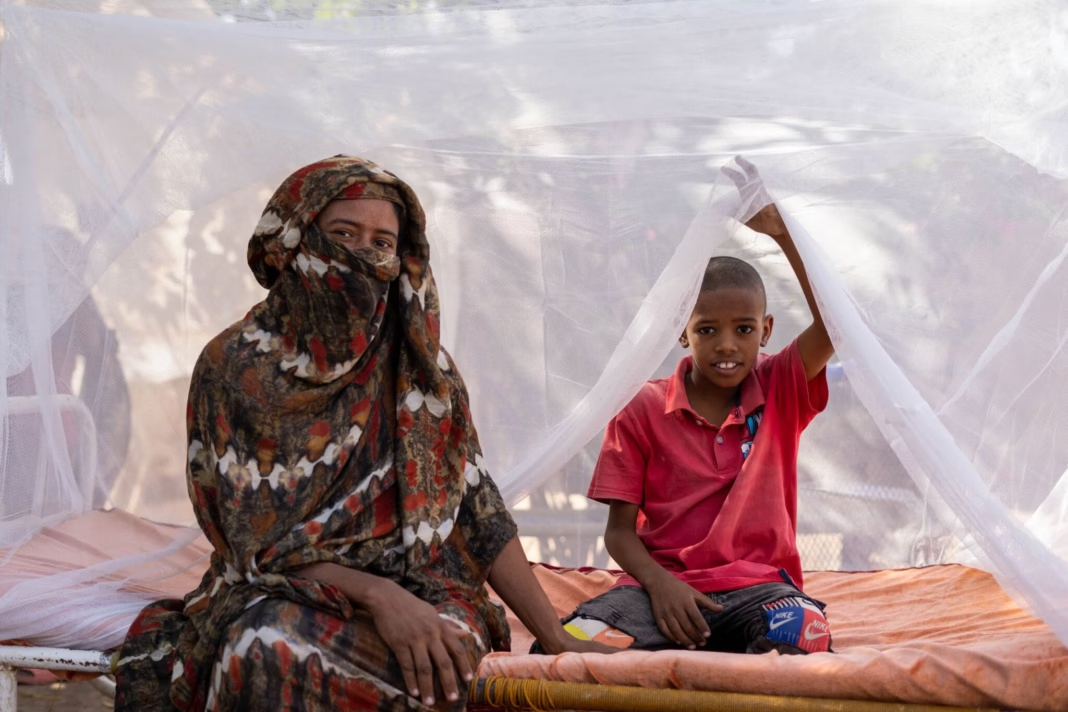
In Burundi, authorities are urging stronger collaboration between health institutions, media and communities to improve prevention efforts, including the use of insecticide-treated mosquito nets, early diagnosis and timely treatment.
Officials say intensified public awareness campaigns will be key to reducing infections and sustaining the downward trend observed in recent months.
While progress is being reported in some areas, health experts stress that malaria remains both preventable and treatable, and that sustained commitment will be essential to achieving long-term control and eventual elimination.