
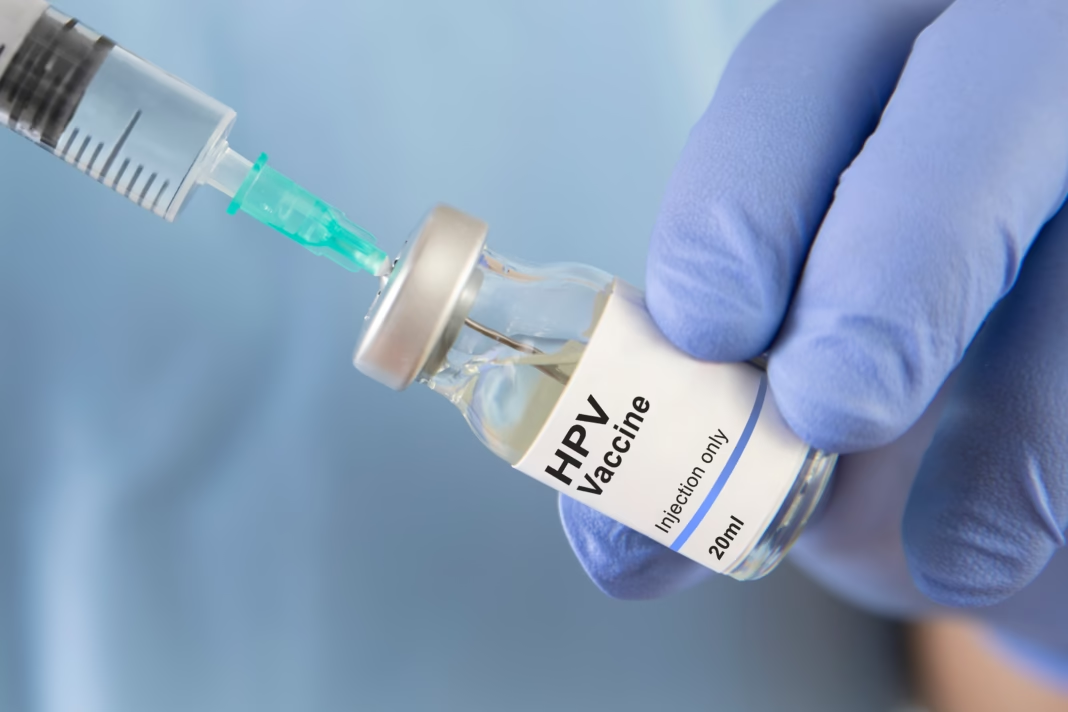

Burundi’s Minister of Public Health, Dr. Lydwine Baradahana, on April 15 officially launched a nationwide mobilisation campaign to introduce the human papillomavirus (HPV) vaccine into the country’s routine immunisation schedule, targeting girls aged 9 to 14.
The initiative marks a significant step in Burundi’s public health strategy to prevent cervical cancer, one of the leading causes of cancer-related deaths among women in the country.
Speaking at the launch, Baradahana called for coordinated action across government institutions, health professionals, educators and communities to ensure broad uptake of the vaccine. She emphasized that the integration of the HPV vaccine into routine services represents a long-term investment in disease prevention and women’s health.
“This major public health advancement aims to effectively prevent cervical cancer,” she said, urging “the mobilization of all stakeholders” to support the rollout.
Human papillomavirus is the most common sexually transmitted infection globally and is directly linked to several cancers, including cervical cancer. Vaccines targeting high-risk HPV strains particularly types 16 and 18 have been shown to prevent the majority of cervical cancer cases.
According to global health data, HPV vaccination is a cornerstone of efforts to eliminate cervical cancer, a disease that remains the fourth most common cancer among women worldwide and disproportionately affects low- and middle-income countries.
In Burundi, access to cervical cancer prevention services has historically been limited. Data from the International Agency for Research on Cancer indicate that HPV vaccination had not yet been widely introduced into routine immunisation as of recent years, and screening coverage among women has remained low.
The new campaign aligns Burundi with a growing number of countries integrating HPV vaccination into national immunisation programs, often with support from global partners such as Gavi, the Vaccine Alliance, UNICEF and the World Health Organization. Funding and technical assistance for HPV vaccine rollout in Burundi have been documented in recent years, including investments to support vaccine procurement and delivery systems.
The World Health Organisation recommends HPV vaccination for girls aged 9 to 14 as the most effective strategy to prevent infection before exposure, with some countries now adopting simplified single-dose schedules to improve coverage.
Health experts say high vaccination coverage, combined with screening and treatment, is essential to reducing cervical cancer incidence and mortality.
Through the introduction of the HPV vaccine, Burundi’s government says it is reinforcing its commitment to preventive healthcare, aiming to protect adolescent girls and significantly reduce deaths from a largely preventable disease.