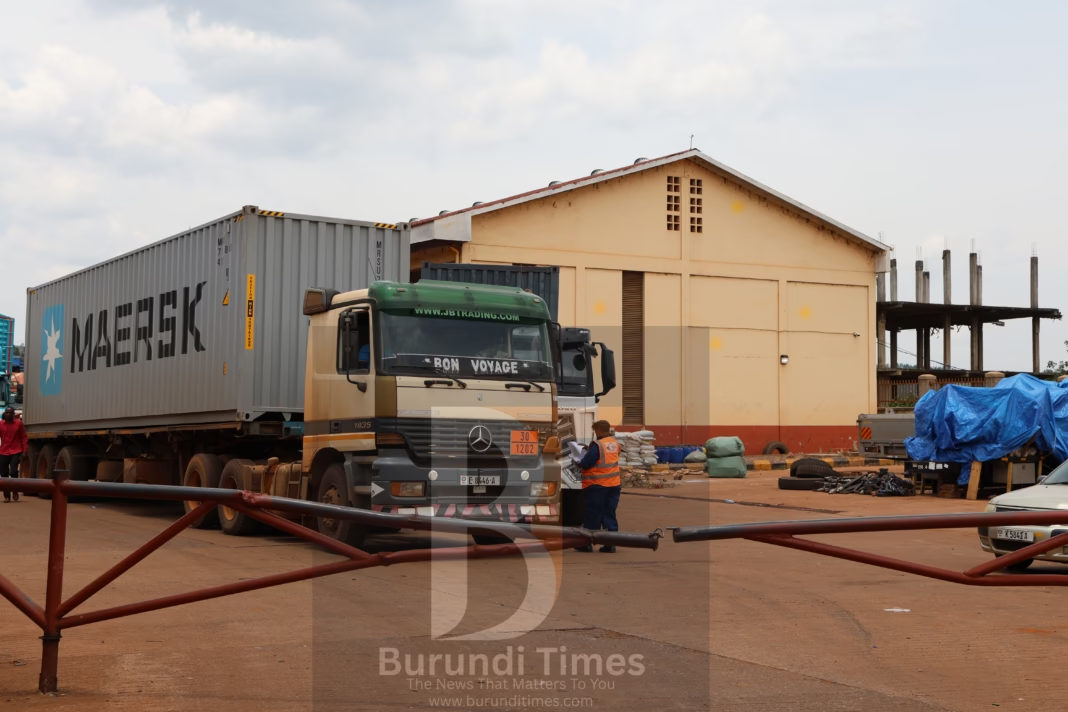
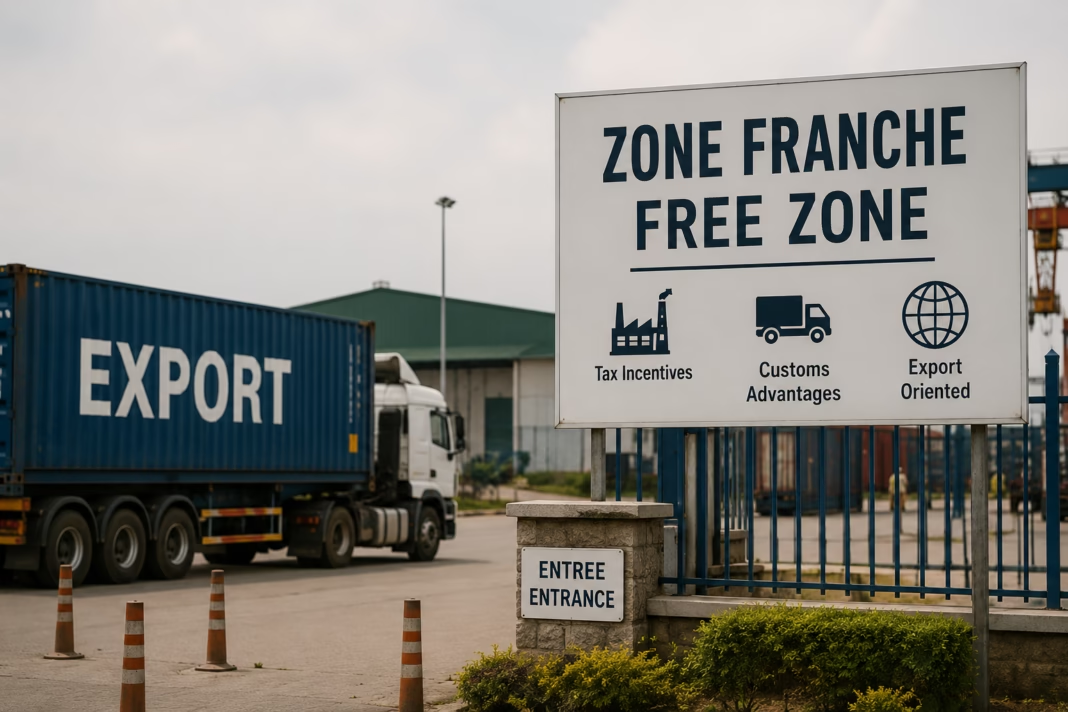

Burundi’s efforts to stimulate industrial investment through free zone incentives appear to be gaining little traction, with new government statistics showing that uptake of the scheme remained almost nonexistent in 2024 despite growing trade activity.
Data contained in the Statistical Yearbook of the Ministry of Commerce, Transport, Industry and Tourism shows that only one free zone certificate was issued in 2024, unchanged from 2023, raising questions about the effectiveness of one of the country’s principal instruments for attracting export-oriented industries.
The ministry defines a free zone enterprise as “a company operating in a free zone benefiting from specific tax and customs advantages.” It adds that such businesses are allowed to “import, store, process and export goods while benefiting from customs exemptions and other fiscal incentives.”
According to the report, “free zone certificates are documents issued to operators of enterprises governed under the free zone regime,” yet only one certificate was delivered in each of the last two years.
The limited uptake contrasts sharply with broader trade indicators contained in the same report.
Importer registrations increased from 130 in 2023 to 197 in 2024, while exporter registrations rose from 170 to 222 over the same period, suggesting growing participation in cross-border commerce even as industrial incentive mechanisms remain underutilized.
Certificates linked to preferential trade access showed mixed performance. Certificates of origin issued under COMESA arrangements declined slightly from 26 to 25, while Generalized System of Preferences certificates dropped sharply to two in 2024 from 12 a year earlier. Meanwhile, certificates related to trade with China declined from 54 to 41.
The yearbook describes the free zone regime as “a legal and economic framework that allows companies to establish themselves in a specific geographic area where they benefit from customs and fiscal advantages.” However, the latest figures suggest that businesses may not be taking advantage of these incentives at scale.
The data does not explain why free zone uptake remains low. However, the contrast between increasing trade registrations and stagnant industrial incentive use is likely to intensify debate over whether existing investment mechanisms are sufficient to support industrial expansion.
The report provides no indication that additional free zone operators entered the system in 2024 beyond the single certificate recorded, leaving open questions about investor appetite for Burundi’s industrial incentive framework.
This version stays anchored in the document, uses translated quotes from the definitions section, and keeps the framing analytical rather than speculative.