
The East African Community (EAC) is advancing plans to establish its first regional framework for the accelerated approval of Ebola vaccines, therapeutics and diagnostics as East African governments seek to strengthen preparedness against a growing outbreak linked to the rare Bundibugyo strain of the virus.
The initiative will be among the key issues discussed during an extraordinary virtual meeting of EAC health ministers scheduled for June 1-2, according to the regional bloc. The meeting comes as authorities in the Democratic Republic of Congo (DRC) and Uganda continue to respond to cases associated with the outbreak.
In a statement, the EAC said heads of national medicines regulatory authorities had already met in Arusha to discuss the establishment of the bloc’s first joint regional vaccine approval framework in coordination with the African Medicines Agency, the World Health Organization (WHO) and national health authorities.
The proposed mechanism aims to streamline regulatory processes across member states, potentially shortening the time needed to assess and authorize vaccines, treatments and diagnostic tools during public health emergencies.
“The EAC remains committed to ensuring that every outbreak meets a prepared community,” EAC Secretary General Stephen Mbundi said in the statement. “Our focus is to support Partner States to prevent cross-border transmission while safeguarding the health, social wellbeing, and economic stability of East Africans.”
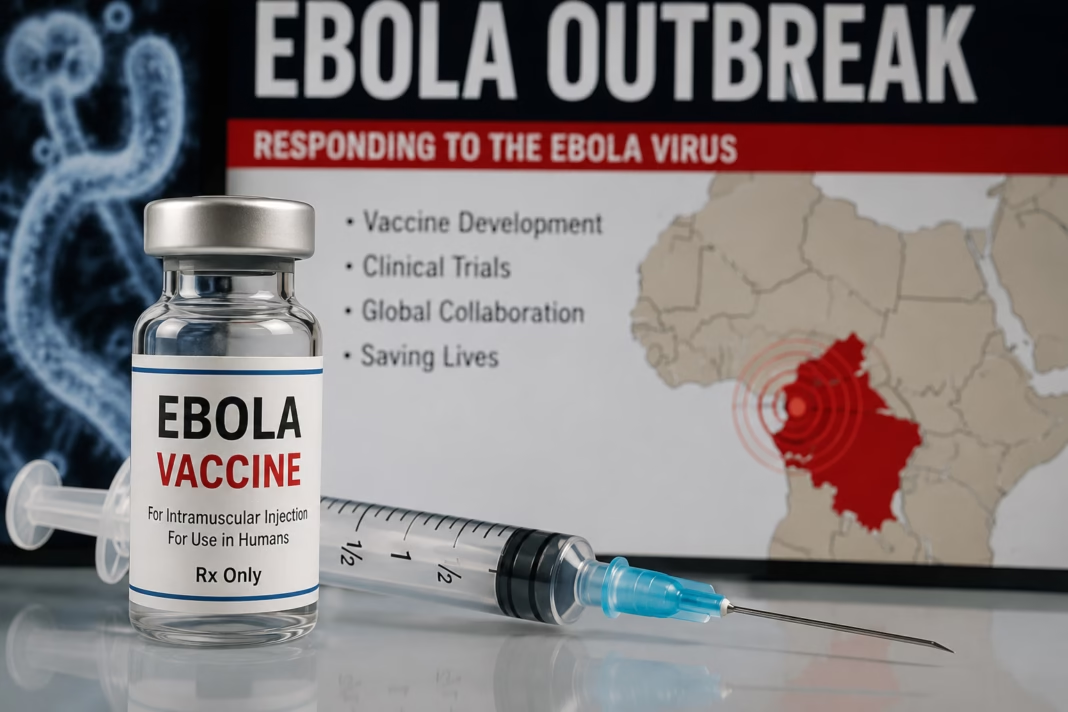
The push for a common approval framework comes as health authorities face a significant challenge: there is currently no licensed vaccine or specific treatment approved for the Bundibugyo strain of Ebola responsible for the current outbreak. WHO has said the strain differs from the more common Zaire ebolavirus, for which licensed vaccines already exist.
According to the EAC, the DRC had reported 121 confirmed cases and 17 confirmed deaths as of May 26, alongside 1,077 suspected cases and 246 suspected deaths. Uganda had recorded seven confirmed cases and one death by May 25, with the first infections linked to travelers arriving from the DRC.
The outbreak, officially declared on May 15, is centered in eastern DRC, particularly Ituri Province, an area marked by heavy population movement and cross-border trade, raising concerns about regional transmission.
As part of its preparedness efforts, the EAC is deploying nine mobile laboratories at strategic border locations and activating a pool of more than 180 emergency response experts. The regional bloc is also conducting specialized training for health workers and procuring personal protective equipment for affected countries.
The Bundibugyo strain was first identified in Uganda in 2007 and is one of several species that cause Ebola disease. Unlike the Zaire strain, no licensed vaccine or targeted treatment has yet been approved, although WHO and international partners are evaluating candidate vaccines and therapeutics for potential clinical trials.
WHO has classified the current outbreak as a Public Health Emergency of International Concern and says the disease has spread across parts of eastern DRC and into neighboring Uganda. Health experts have warned that conflict, population displacement and cross-border movement could complicate containment efforts.
Public health agencies including WHO, the Africa Centres for Disease Control and Prevention and regional governments are racing to strengthen surveillance, testing and preparedness measures while researchers work to identify effective vaccines and treatments for the Bundibugyo strain.