

Burundi must accelerate economic reforms to withstand mounting fiscal pressures and external shocks, the International Monetary Fund (IMF) warned in its April 2026 Regional Economic Outlook.
The report identifies Burundi among countries facing multiple macroeconomic imbalances, with limited buffers to absorb new shocks despite recent stabilization gains across sub-Saharan Africa.
“For countries facing multiple imbalances, such as Burundi… deeper reforms are necessary,” the IMF said, cautioning that recent improvements offer only temporary relief.
Revenue and spending reforms critical
The IMF emphasizes that Burundi’s path to stability depends heavily on strengthening domestic revenues and improving public spending efficiency.
“Domestic revenue mobilization remains central to a sound medium-term fiscal strategy,” the report said, noting that current revenue levels remain insufficient to meet development needs while maintaining debt sustainability.
The Fund also urged authorities to tighten expenditure controls and prioritize high-impact sectors such as healthcare, education and basic services.
As a low-income, non-resource-intensive and oil-importing economy, Burundi remains highly exposed to global shocks, particularly rising fuel and food prices.
The IMF notes that such countries face worsening trade balances and higher cost of living, especially as global energy, fertilizer and shipping prices increase.
“Oil-importing, non-resource-rich countries face a deterioration in trade balance and higher cost of living,” the report said.
Burundi’s fiscal options are constrained by existing vulnerabilities, including debt pressures and limited foreign exchange reserves.
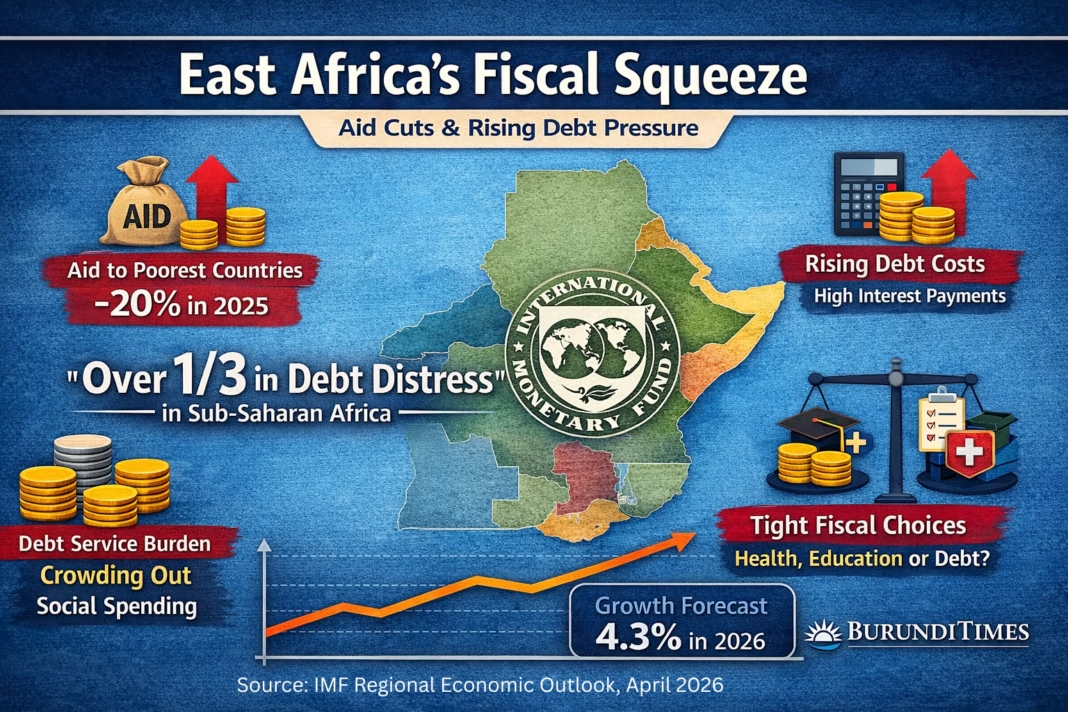
Across sub-Saharan Africa, the IMF estimates that more than one-third of countries are at high risk of, or already in, debt distress, limiting governments’ ability to respond to crises.
In this context, the Fund warns against broad subsidies, recommending instead targeted, time-bound support for vulnerable populations.
“Generalized price subsidies… are fiscally costly, distortionary, and hard to unwind,” the IMF said.
Beyond short-term stabilization, the IMF calls on Burundi to accelerate structural reforms to unlock private-sector growth and reduce reliance on external support.
These include improving governance, strengthening the business environment, and investing in productivity-enhancing sectors.
“Countries should accelerate structural reforms for growth and diversification,” the report said.
Outlook remains fragile
The warning comes as the regional outlook weakens. The IMF projects sub-Saharan Africa’s growth at 4.3 percent in 2026, down from 4.5 percent in 2025, as global shocks weigh on recovery.
For Burundi, without sustained reforms, economic vulnerabilities could deepen in an increasingly uncertain global environment according to the IMF.