
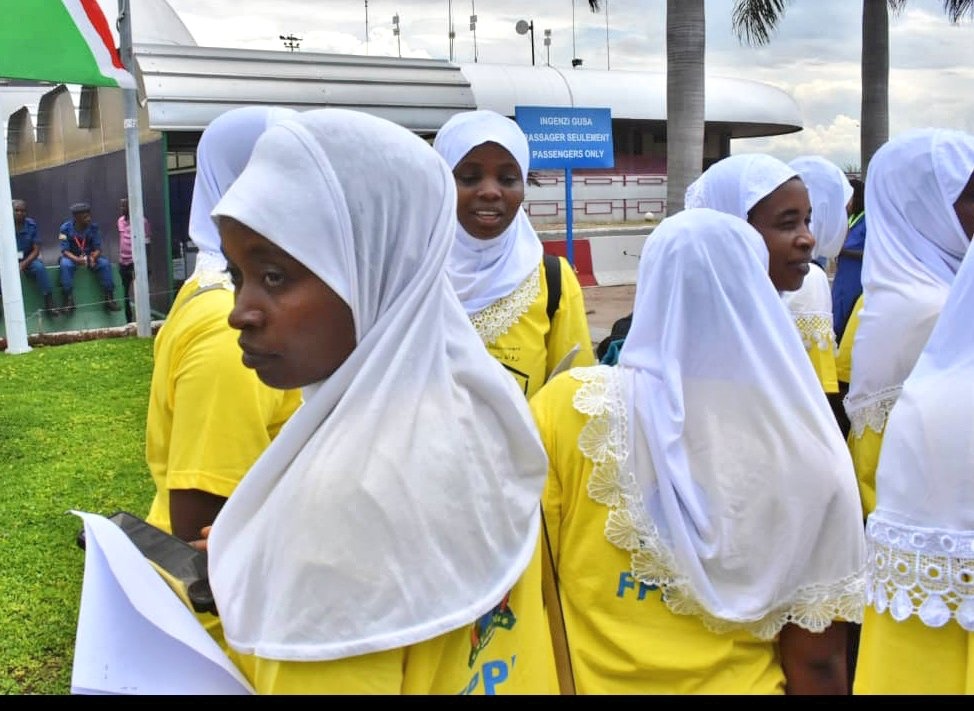
More than 20,000 Burundian women and girls have left the country for domestic work in Saudi Arabia since 2023, a migration trend that advocates say offers economic opportunity but also exposes some workers to exploitation and abuse.
The figure was released on Monday by the National Observatory for the Fight Against Transnational Crime (ONLCT) in a statement marking International Women’s Day.
According to the group, the migration has expanded rapidly since Burundi began legally deploying domestic workers to the Saudi Arabia on March 17, 2023.
“More than 20,000 women and girls have already been recruited and placed in various Saudi households for domestic work,” the organization said in the statement.
The movement is part of a government-backed labor migration program that has licensed dozens of recruitment agencies to send workers abroad. The ONLCT said 61 legal recruitment agencies have been approved in Burundi to place workers — mostly women and girls — in domestic jobs in Saudi Arabia.
Burundian officials have promoted the initiative as a way to reduce unemployment and create opportunities abroad. When the first group of workers departed in 2023, authorities said the program could eventually open tens of thousands of jobs for Burundians.
Reports of abuse and exploitation
But advocacy groups say the growing migration flow has also exposed workers to significant risks.
The ONLCT said some Burundian migrant domestic workers have faced conditions “analogous to trafficking or slavery,” citing cases where workers’ identity documents were confiscated upon arrival, where they were deprived of food or sleep, or subjected to physical violence.
“Some experience serious beatings, derisory monthly salaries not proportional to the heavy work performed, undeclared sexual abuse, and sometimes even death,” the organization said.
The group attributed many of the problems to insufficient monitoring of workers after they leave Burundi.
Similar concerns have been raised by researchers and civil society groups examining the migration corridor between Burundi and Saudi Arabia. A bilateral labor agreement signed in October 2021 was intended to regulate recruitment, guarantee contracts and ensure workers’ rights.
Under Saudi regulations, domestic workers are also entitled to keep their personal identification documents, including passports.
Yet investigations and testimonies from returnees suggest that some workers encounter abusive conditions once they arrive. Reports have documented cases of underpayment, heavy workloads and psychological trauma among migrants who returned home early.
Online recruitment scams
The ONLCT also warned about a growing number of fraudulent recruitment schemes targeting Burundian women and young people through social media.
“These fictitious agencies are misleading women, girls and youth by promising them a ‘land of plenty’ abroad,” the statement said.
The organization said many of the scams are carried out through platforms such as WhatsApp, Facebook and TikTok.
Advocates are urging the Burundian government to strengthen public awareness campaigns and create a specialized agency to regulate recruitment companies and monitor migrant workers once they are deployed abroad.
Such oversight, the group said, would help “prevent deceptive recruitment and better protect Burundian migrant workers facing serious difficulties and violations of their fundamental rights.”
A growing migration corridor
Saudi Arabia has expanded recruitment of domestic workers from dozens of countries, including Burundi, as part of efforts to meet demand for household labor.
Saudi authorities have also introduced regulations governing recruitment costs and contracts through an electronic platform known as Musaned.
Still, rights groups say stronger monitoring and enforcement remain essential as thousands of Burundian women continue to seek employment abroad.
For many migrants, the decision to leave reflects limited economic opportunities at home — and the hope that working overseas can provide income for families left behind.
But as migration expands, advocates say ensuring their safety has become an urgent challenge.
“The government must strengthen oversight and awareness,” ONLCT President Maître Prime Mbarubukeye said in the statement, “so that Burundian women and girls are not deceived by false promises of employment abroad.”


