

Global leaders marked World AIDS Day on Dec. 1 by urging countries to adopt a rights-based approach to combating HIV/AIDS, with a focus on addressing stark inequalities in access to treatment and prevention services, particularly in Africa.
“Every 25 seconds, someone in the world is infected with HIV,” U.N. Secretary-General António Guterres said. “One-quarter of people living with HIV — more than 9 million people — lack access to lifesaving treatment.”
Guterres called on leaders to dismantle discriminatory laws and practices that stigmatize women, girls and minorities, emphasizing that ending AIDS is possible if everyone has access to necessary services. “We will overcome AIDS if the rights of everyone, everywhere, are protected,” he said.
Disparities in Africa
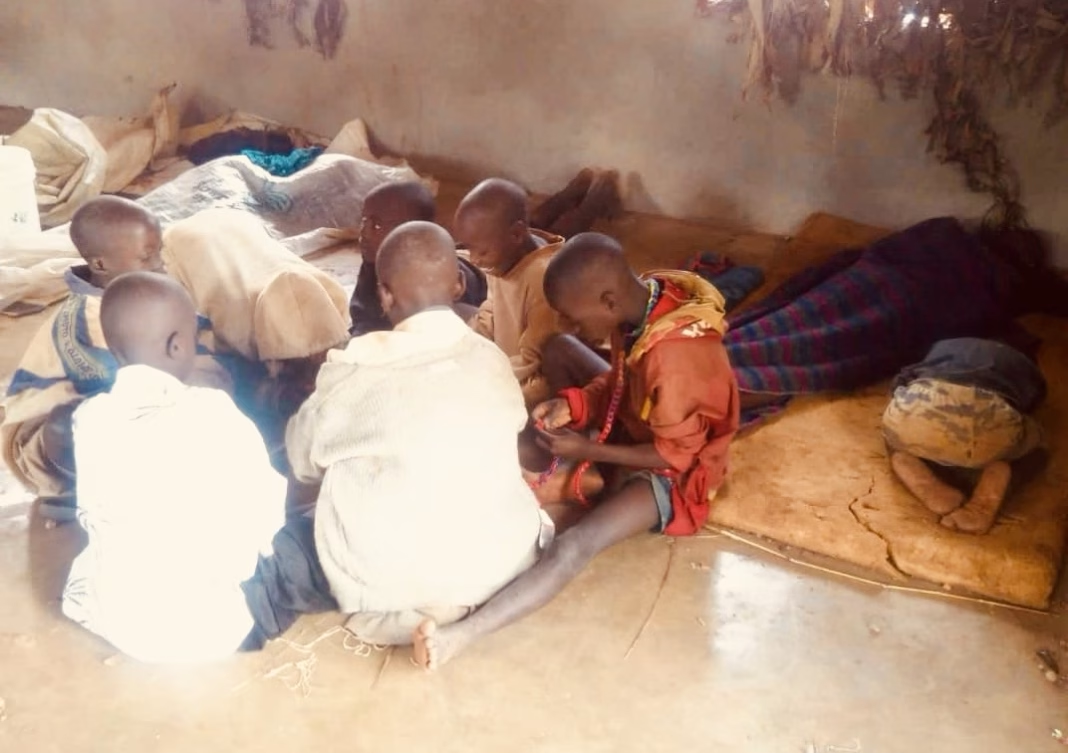
Sub-Saharan Africa continues to bear the brunt of the epidemic, with women and girls accounting for 62% of new infections in the region last year, according to UNICEF. Among 15- to 19-year-olds, girls represented 90% of new infections, a reflection of gender inequalities that leave women and girls more vulnerable to HIV.
“Children and adolescents are not fully reaping the benefits of scaled-up access to treatment and prevention services,” said Anurita Bains, UNICEF’s associate director of HIV/AIDS.
While 77% of adults living with HIV globally are on antiretroviral therapy, only 57% of children ages 0 to 14 and 65% of adolescents ages 15 to 19 are receiving treatment, UNICEF reported.
Barriers to Healthcare
Winnie Byanyima, executive director of UNAIDS, said systemic barriers, including criminalization and stigma, continue to undermine progress. “To protect everyone’s health, we need to protect everyone’s rights,” she said.
The UNAIDS report revealed that 63 countries still criminalize LGBTQ+ people, while gender-based violence and limited educational opportunities for women and girls increase their vulnerability to infection.
The report also highlighted that new infections reached 1.3 million globally in 2023 — three times the 2025 target of no more than 370,000 annual infections — underscoring the urgency of addressing inequalities.
A Call to Action
This year’s theme, *Take the Rights Path to End AIDS,* calls on governments to adopt policies that prioritize human rights and ensure equitable access to HIV services.
“A rights-based approach is critical to achieving global HIV targets,” Guterres said. “The fight against AIDS can be won if leaders ensure everyone — especially the most vulnerable — can access services without fear.”
For African leaders, the call for action comes with heightened urgency. As the continent grapples with the world’s highest rates of infection, advocates are pushing for inclusive policies that tackle the structural barriers fueling the epidemic.