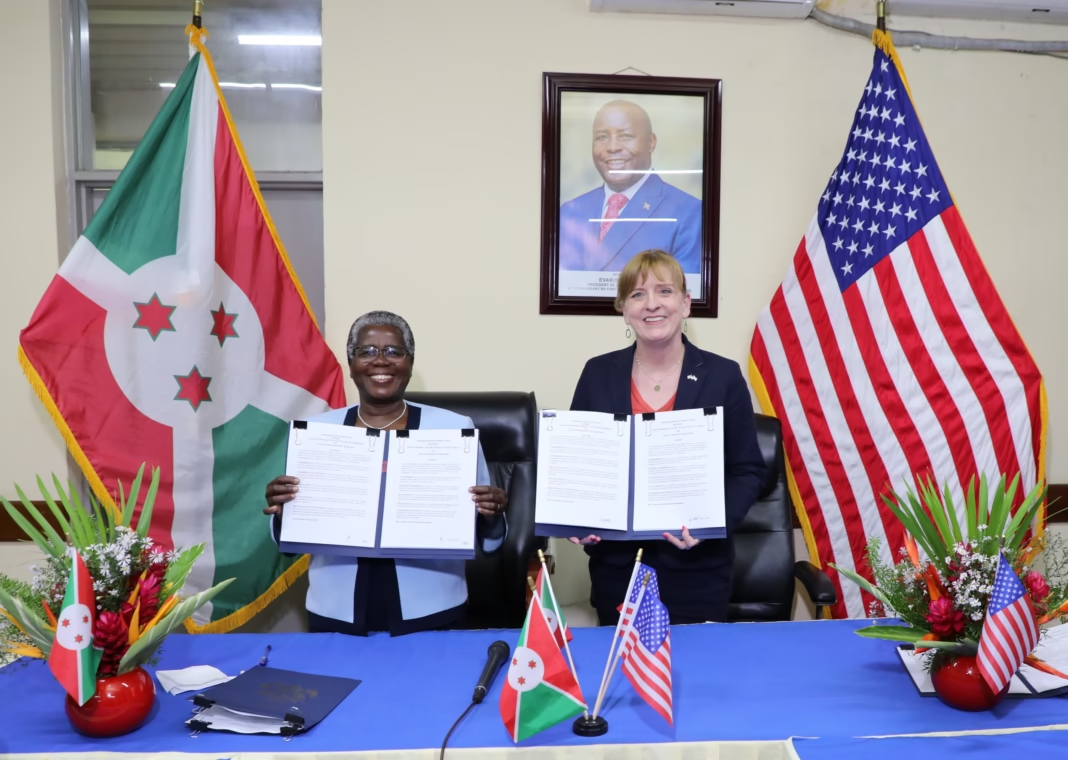

The United States and Burundi have signed a five-year health cooperation agreement worth nearly $156 million aimed at strengthening the country’s health system, expanding treatment and prevention programs for major infectious diseases, and reinforcing outbreak surveillance capacity.
The Memorandum of Understanding (MOU) was signed Feb. 6, 2026, according to the U.S. Embassy in Burundi, marking one of the latest bilateral health cooperation agreements between Washington and African partner countries.
Under the agreement, the U.S. State Department, working with the U.S. Congress, intends to provide more than $129 million in health assistance to Burundi over the next five years. The funding will support programs targeting HIV/AIDS, malaria prevention and treatment, as well as systems designed to detect, prepare for and respond to infectious disease outbreaks.
The U.S. Embassy said the agreement “pledges support to resilient, self-reliant, and durable health systems, while also protecting American safety by funding infectious disease outbreak surveillance mechanisms.”
The Government of Burundi has committed to increasing domestic health expenditures by about $26 million during the same period. The embassy said the increase is intended to help the country “assume greater financial responsibility of its own health system and demonstrate Burundi’s commitment to greater national autonomy and self-reliance in the health sector.”
Through the agreement, U.S.-funded programs will continue supporting outbreak surveillance and response operations, supply of laboratory commodities, frontline health care workers, and improvements in health data management systems. The cooperation also seeks to expand access to malaria prevention tools, diagnostic testing and treatment services, as well as HIV rapid diagnostic testing and antiretroviral treatment.
Burundi has also agreed to share health data and consult with U.S. authorities when responding to infectious disease outbreaks with epidemic or pandemic potential. According to the embassy, such cooperation “protects the health of the people in Burundi, Africa, and around the world.”
The agreement forms part of U.S. global health engagement guided by the America First Global Health Strategy. The strategy promotes bilateral cooperation agreements that include financial participation from partner governments and focuses on disease prevention, response coordination and strengthening national health systems.
U.S. officials said the five-year agreement is among several similar health cooperation partnerships signed with African countries receiving American health assistance under the strategy.
The United States has supported Burundi’s health sector for years through programs addressing HIV/AIDS, malaria and broader public health system strengthening, making health cooperation a key component of bilateral relations between the two countries.