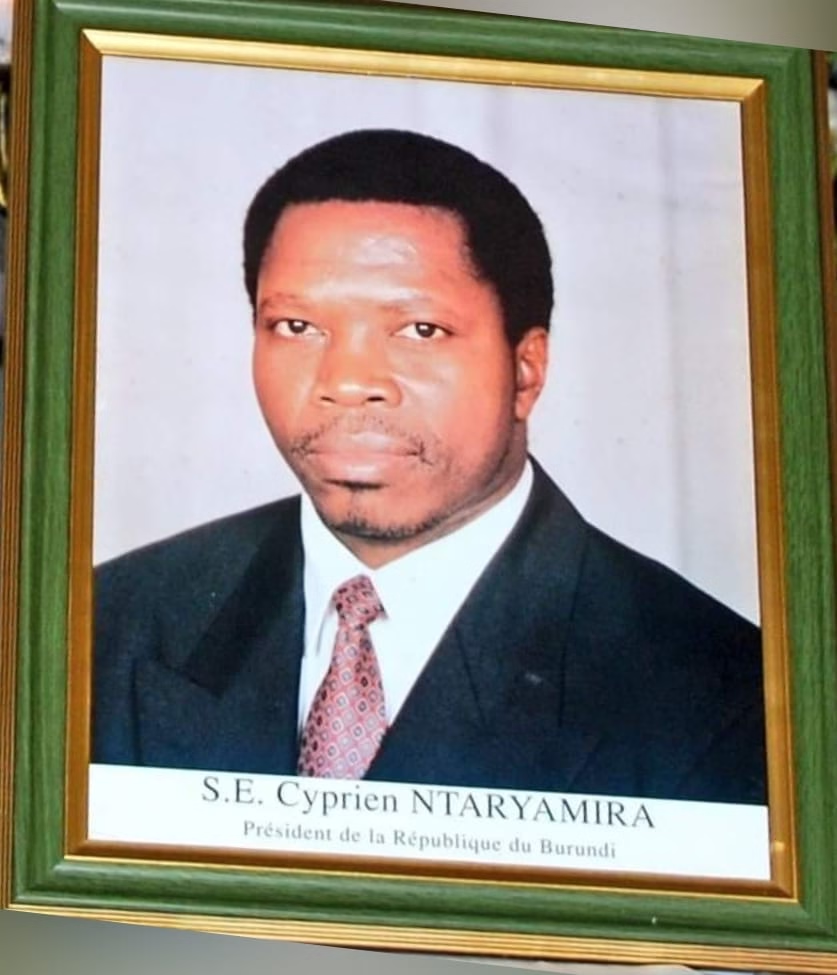

Burundi on Monday commemorated the 32nd anniversary of the assassination of former President Cyprien Ntaryamira, with a wreath-laying ceremony led by President Évariste Ndayishimiye and attended by top state officials and former heads of state.
Ndayishimiye laid a wreath at Ntaryamira’s tomb during what officials described as a solemn moment of remembrance, emphasizing the importance of honoring the country’s history and promoting unity.
The April 6 commemoration recalls the 1994 plane crash that killed Ntaryamira alongside Rwandan President Juvénal Habyarimana, an event widely seen as a trigger for the Rwandan genocide. Ntaryamira had been in office for just two months at the time of his death.
Monday’s ceremony brought together senior government figures, including the heads of the National Assembly and Senate, the vice president, and the prime minister. Former Burundian presidents Sylvestre Ntibantunganya and Domitien Ndayizeye also attended, underscoring what authorities described as a shared national commitment to remembrance.
Cyprien Ntaryamira was sworn in as president in February 1994 following the death of his predecessor, Melchior Ndadaye, the country’s first democratically elected leader who was killed in a coup attempt in October 1993. Ndadaye’s assassination plunged Burundi into a cycle of ethnic violence between Hutu and Tutsi communities, setting the stage for years of instability.
Ntaryamira, a member of the Front for Democracy in Burundi (FRODEBU), sought to restore calm and rebuild state institutions, but his tenure was cut short when the plane carrying him and Habyarimana was shot down over Kigali on April 6, 1994. The attack remains officially unresolved and continues to be a subject of regional and international investigations.
His death further destabilized Burundi, contributing to the outbreak of a civil war that lasted from 1993 to 2005 and left an estimated 300,000 people dead, according to United Nations figures. The conflict ended with a series of peace agreements, including the 2000 Arusha Accords, which laid the foundation for power-sharing arrangements and long-term reconciliation efforts.
Today, Burundian authorities say annual commemorations of Ntaryamira’s assassination serve not only to honor his memory but also to remind citizens of the consequences of division and the importance of safeguarding peace.