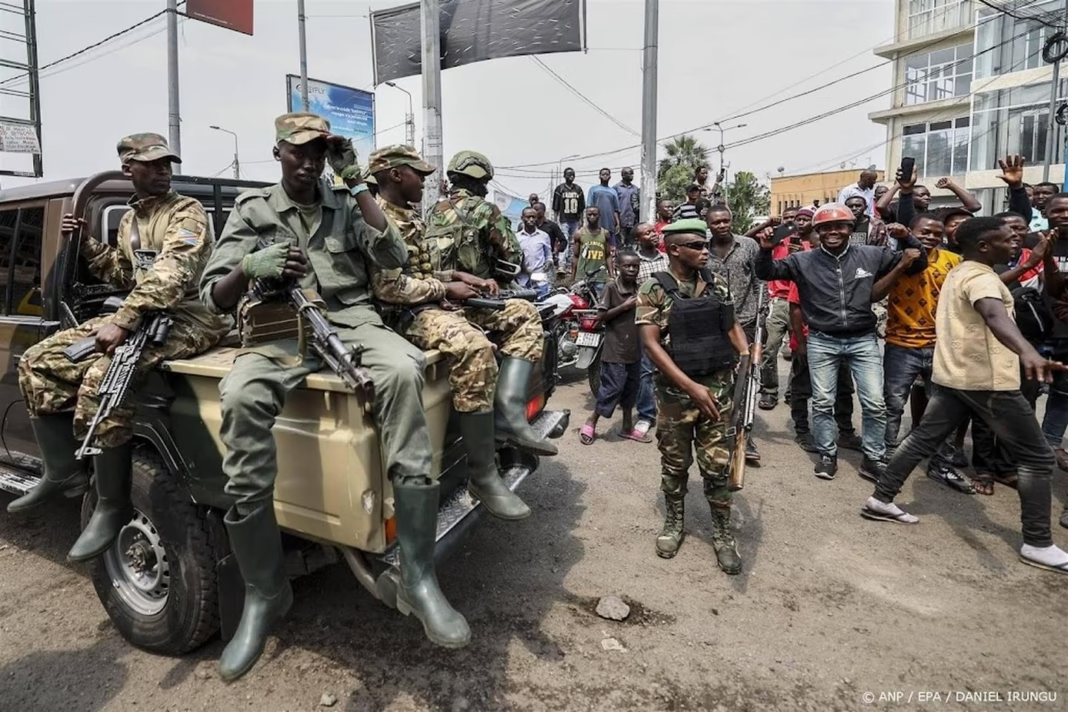

Ottawa, Canada – The Group of Seven (G7) foreign ministers issued a strong statement condemning the ongoing offensive by the Rwanda-backed M23 rebel group in the eastern region of the Democratic Republic of the Congo (DRC). The G7, which comprises Canada, France, Germany, Italy, Japan, the United Kingdom, and the United States, voiced their concerns over the escalation of violence, displacement of civilians, and severe violations of human rights and international humanitarian law linked to the offensive.
The G7 ministers emphasized that the M23’s offensive represents a direct affront to the territorial integrity of the DRC and warned of its devastating impact on both the country and the broader region. In their statement, the G7 underscored the dire consequences of the conflict, including the displacement of thousands of people, the destruction of communities, and the widespread suffering caused by the violence.
The G7 called for the immediate withdrawal of M23 forces, as well as the Rwanda Defense Force (RDF), from all areas they currently control in the DRC. The foreign ministers reaffirmed their commitment to supporting efforts aimed at bringing peace and stability to the region. They also reiterated their call for respect for the sovereignty and territorial integrity of the DRC.
The situation in eastern DRC has been deteriorating for several years, with M23’s resurgence in recent months. The group, composed primarily of Tutsi fighters, has been accused of launching attacks against government forces and civilians, further complicating an already fragile security situation. Rwanda has been accused by some international observers and governments of backing M23, despite its denials of direct involvement.
This latest condemnation by the G7 follows mounting calls from international organizations and human rights groups for an end to the violence and a concerted effort to address the root causes of the conflict. The G7 has previously called for a peaceful resolution to the crisis and has pledged continued support for regional peacekeeping efforts and diplomatic dialogue.
The DRC, a resource-rich but conflict-ridden country, has faced decades of instability, with various armed groups vying for control over its territory. The international community has long sought to address the complex dynamics of the region, but peace remains elusive as both internal and external actors contribute to the volatility.
As the situation continues to unfold, the G7’s statement reflects a growing concern over the humanitarian crisis in eastern DRC, with the group urging all parties to halt hostilities and engage in a peaceful dialogue to resolve the conflict.