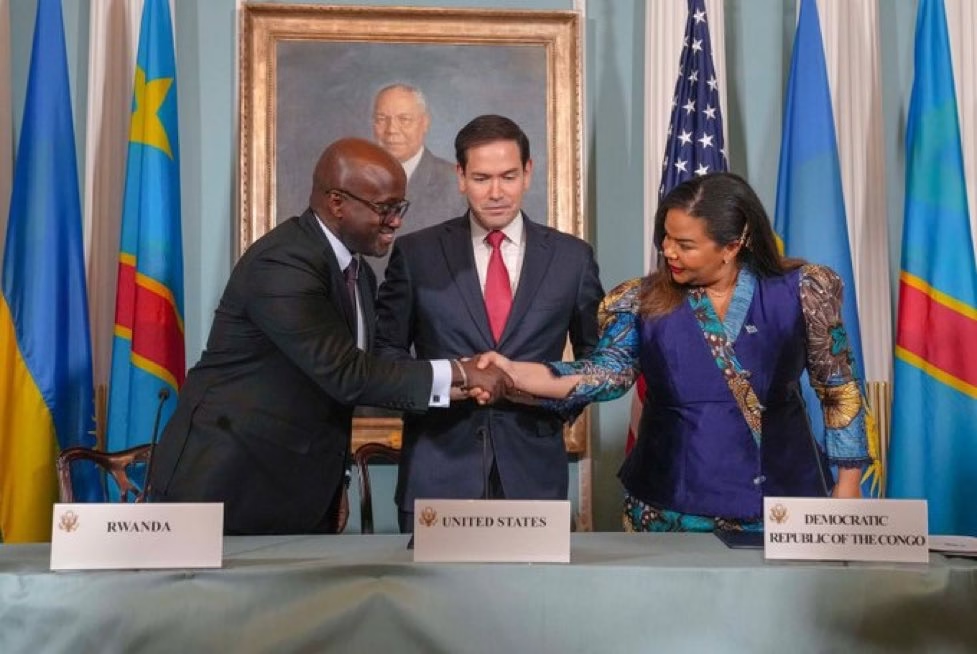

WASHINGTON — Rwanda and the Democratic Republic of Congo signed a U.S.-brokered peace agreement in Washington on June 27, pledging to halt years of cross-border violence and usher in a fragile stability.
At a ceremony at the U.S. State Department, the two nations’ foreign ministers made key commitments to withdraw foreign troops, disarm militias and foster regional economic cooperation—moves aimed at resolving one of Africa’s most prolonged conflicts.
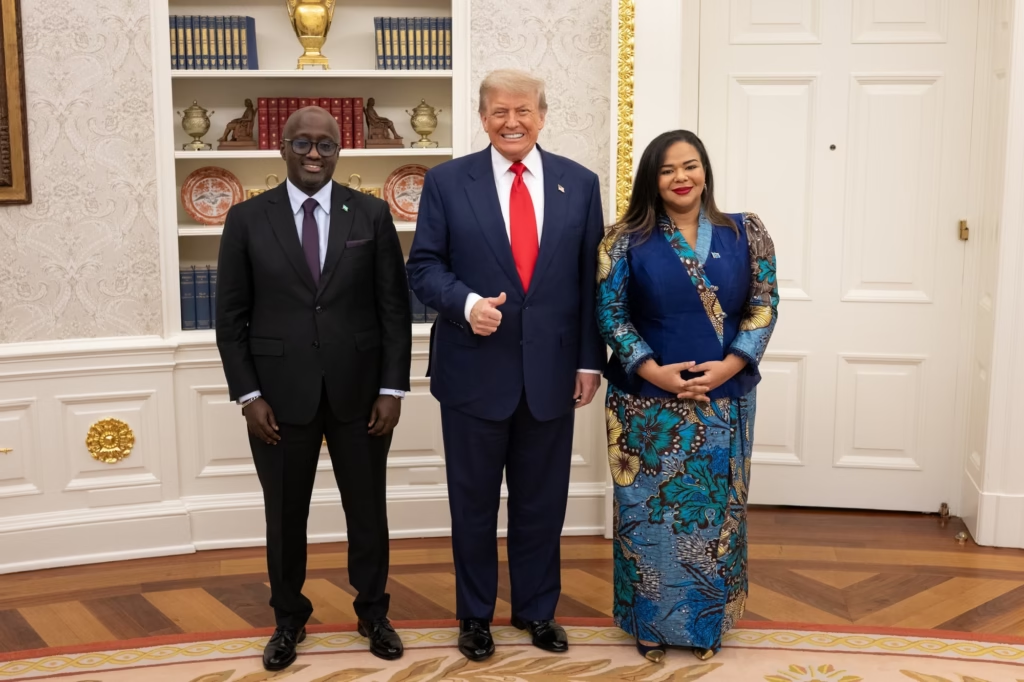
“They were going at it for many years, and with machetes – it is one of the worst, one of the worst wars that anyone has ever seen,” U.S. President Donald Trump said ahead of the signing. “And I just happened to have somebody that was able to get it settled. We’re getting, for the United States, a lot of the mineral rights from the Congo as part of it”.
Rwandan Foreign Minister Olivier Nduhungirehe hailed the agreement as “a turning point”, while his Congolese counterpart, Therese Kayikwamba Wagner, warned that “our work truly begins,” adding that those who have suffered the most “are expecting this agreement to be respected, and we cannot fail them”.
U.N. Secretary-General António Guterres also welcomed the deal, calling it “a significant step toward stability” and urging both countries to honor their commitments .
Under the agreement, Rwanda has agreed to withdraw its troops from eastern DRC within 90 days, while both countries pledged to cease support for armed groups—specifically M23 and the Democratic Forces for the Liberation of Rwanda (FDLR). A joint security coordination mechanism will be established within 30 days to oversee the process.
The pact also commits both nations to launch a regional economic integration framework within 90 days, with an emphasis on critical minerals such as cobalt, lithium, copper, tantalum and gold—resources central to global supply chains.
Experts have cautioned that past peace efforts faltered due to weak enforcement and narrow focus on economic interests. Jason Stearns, a political scientist, called the deal “the best chance we have at a peace process for the moment despite all the challenges and flaws,” while emphasizing that the U.S., “as they are the godfather of this deal, [must] make sure both sides abide by the terms”.
Critics also question the deal’s inclusivity—most notably its exclusion of the M23 rebels—and its scant focus on justice, reparations for victims or direct rebel engagement.