
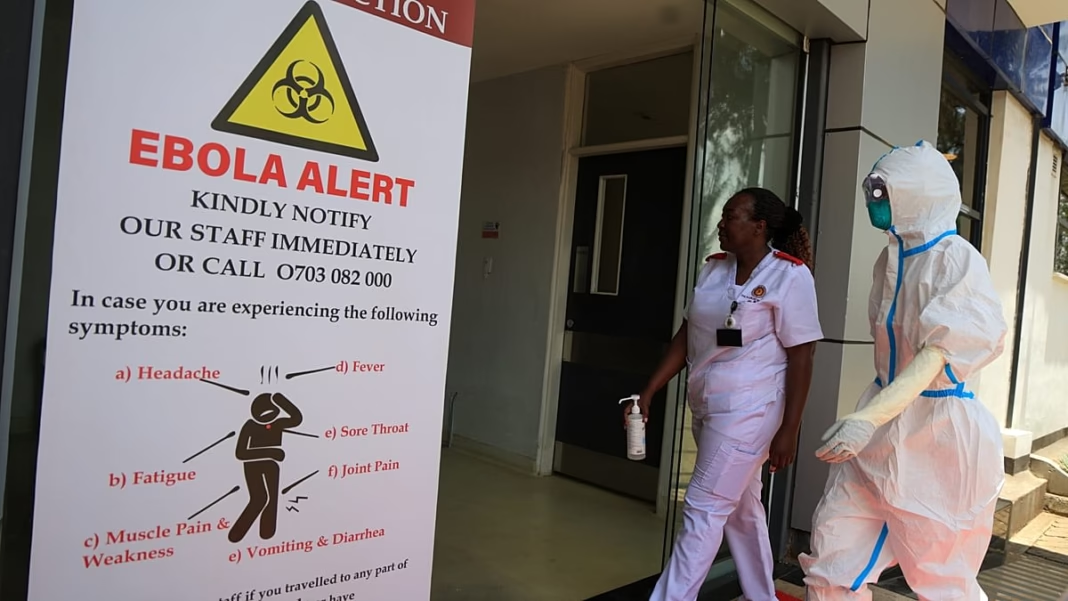

Kenya has confirmed four additional cases of Ebola, including three health workers who treated the country’s first patient, bringing the total number of confirmed cases to seven, the Ministry of Health said Saturday.
The fourth new case is a male relative of the first patient, who died on Oct. 5 after arriving in Kenya from the Democratic Republic of Congo, where an outbreak of the Bundibugyo strain of Ebola is ongoing.
All four newly confirmed patients were in quarantine when they developed symptoms and tested positive, according to the ministry. They are receiving supportive care at a designated treatment facility.
The three health workers, two men and one woman, aged 29, 35 and 32, respectively had treated the first patient at a hospital on Oct. 3 and 4. They had been in quarantine since Oct. 9. The male relative had been quarantined since Oct. 6.
“The patients are currently receiving supportive care from our trained health workers,” the ministry said in a statement.
Kenyan authorities have identified 130 contacts linked to the first patient. Of those, 128 had been traced and placed in quarantine, while efforts continued to locate the remaining two, the ministry said.
The ministry said the latest cases were detected while the patients were already in quarantine, allowing health authorities to isolate them and monitor their condition.
“The risk to the general public remains low as there is no evidence of community transmission,” the ministry said.
The new infections are the first known cases of transmission within Kenya. The country’s first patient was a Kenyan man who had been living in the Democratic Republic of Congo before traveling through Uganda and arriving in Nairobi on Oct. 3. He died two days later.
The cases are linked to the wider Ebola outbreak in Congo, which has reported more than 9,000 cases and more than 4,000 deaths, according to recent reports.
The Bundibugyo strain is a rare type of Ebola virus for which there is no approved vaccine or specific treatment. Care focuses on supportive treatment to manage symptoms and complications.
Kenyan authorities have strengthened surveillance and contact tracing as they work to contain further spread. The ministry said there were no restrictions on travel, trade or public gatherings as of Saturday.