
Nearly 2,700 Burundian children abandoned school during the 2025-2026 academic year to seek work in Tanzania, where traffickers lure and exploit young people with false employment promises, according to a U.S. State Department report.
The report, released in 2026, identifies Tanzania as the main destination for Burundian migrant workers in 2025, replacing Gulf Arab countries such as Saudi Arabia and Oman. It warns that adults and children face forced labor risks, particularly in agriculture.
“Authorities report that nearly 2,700 children abandoned school during the 2025-2026 academic year to seek work in Tanzania, where traffickers lure and exploit them with false employment promises,” the 2026 Trafficking in Persons Report says.
The figure highlights the risks facing children who leave education to pursue employment across the border. The report does not establish that every child who left school was trafficked.
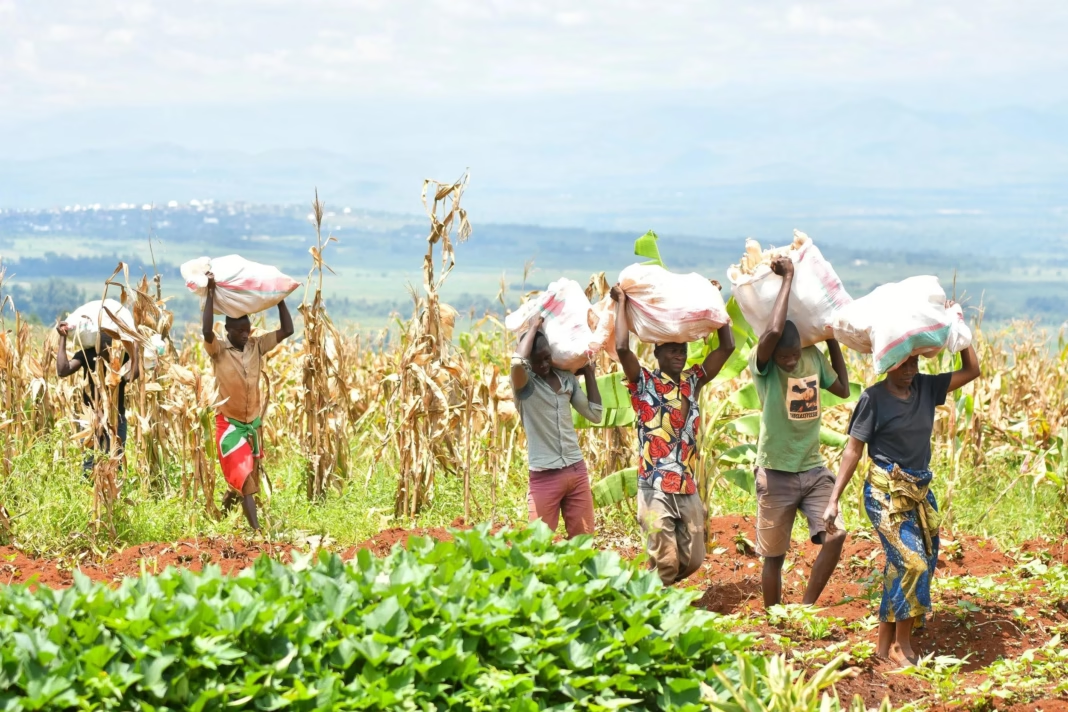
“Traffickers exploit Burundian adults and children in forced labor in agricultural work, particularly in Tanzania,” the report says. It adds that observers have reported children being recruited fraudulently and often expelled before receiving wages for their work.
Tanzania replaces Gulf states as main destination
The report identifies a shift in the destinations of Burundian migrant workers.
“In 2025, Tanzania replaced Gulf Arab countries like Saudi Arabia and Oman as the primary destination for Burundian migrant workers,” it says.
It describes recruitment networks that exploit personal relationships and false promises to secure victims for forced labor and sexual exploitation.
“Traffickers recruit victims from their hometowns through transnational networks, using relatives, neighbors, and friends under false pretenses for labor and sex trafficking,” the report says.
Recruiters are also increasingly using digital platforms to reach potential victims.
“Traffickers increasingly use digital technologies to recruit Burundian victims, primarily through messaging and social media platforms as well as informal online job portals,” the report says.
Women and girls are also vulnerable to fraudulent recruitment for domestic work, according to the report.
Burundi expands recruitment safeguards
Burundi has taken steps to regulate overseas employment, including licensing recruitment agencies and providing financial assistance to citizens facing emergencies abroad.
The report says nearly 20,000 Burundian citizens were deployed abroad through 60 licensed recruitment agencies, including about 2,000 domestic workers sent to Gulf countries.
Authorities also established an emergency fund of 3 billion Burundian francs, equivalent to about $1 million, and formally warned 34 unlicensed recruitment agencies, according to the report.
Recruitment agencies are prohibited from charging workers fees, the report says.
However, the report’s findings on trafficking investigations and convictions raise questions about the effectiveness of enforcement.
Trafficking cases and convictions decline
Burundian authorities investigated 72 trafficking cases involving 249 suspects in 2025, down from 279 cases in 2024, the report says. Authorities prosecuted 106 suspects and convicted 16 traffickers in 2025. All 16 convictions were for forced labor.
In 2024, authorities prosecuted 318 suspects and convicted 47 traffickers, according to the report. The government did not report investigating, prosecuting or convicting any government employees allegedly complicit in trafficking crimes during the reporting period.
The State Department kept Burundi in Tier 2, a classification for countries that do not fully meet the minimum standards for eliminating trafficking but are making significant efforts to do so.
The report warns that trafficking risks persist despite measures to regulate recruitment and support citizens working abroad.