
Burundian authorities have arrested 13 people suspected of espionage, document forgery and supporting armed groups operating in eastern Democratic Republic of Congo, alleging that the network used counterfeit documents and fundraising channels to facilitate the groups’ activities across the region.
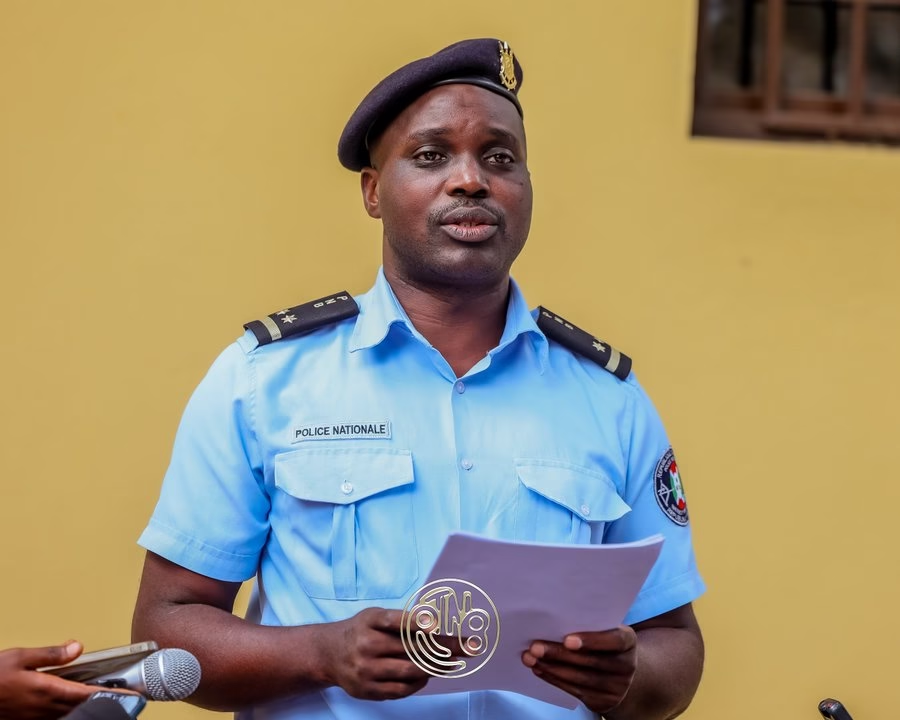
Pierre Nkurikiye, spokesperson for the ministry responsible for public security, said the suspects included Burundians and members of the Banyamulenge community.
Authorities allege that forged documents linked to the investigation concerned Burundi, Rwanda, Tanzania and Uganda. Police also reported seizing 215 counterfeit stamps, along with printers, photocopiers, typewriters and numerous documents.
The information released did not detail the evidence against each suspect or establish whether the 13 had been formally charged.
Arrests conducted in three waves
Nkurikiye said the arrests were carried out in three waves.
“The first involved a pastor arrested on September 8, 2026, at Bujumbura International Airport while heading to Rwanda, followed by his wife, who was apprehended on September 14,” he said.
He said the second wave focused on religious leaders and other people suspected of involvement in the alleged network.
“The second wave targeted, in particular, religious leaders linked to the Carmel Church and Stone Evangelical Church, as well as several individuals suspected of complicity,” Nkurikiye said.
Authorities allege that some religious structures were used as cover for espionage and activities supporting armed groups. The information released did not specify the evidence linking the churches or their individual members to the alleged offenses.
The third wave focused on people suspected of producing counterfeit documents. Police said searches led to the seizure of 215 counterfeit stamps and equipment used for printing and reproducing documents.
Authorities have not provided a detailed inventory of the seized materials or identified the institutions the counterfeit stamps purported to represent.
Police allege links to armed groups
Nkurikiye said the documents were intended to facilitate the movements of fighters associated with the Alliance Fleuve Congo (AFC), the March 23 Movement (M23), Red-Tabara and Twirwaneho across countries in the region.
The information provided did not identify specific fighters who allegedly used the documents, name border crossings involved or present independently verifiable evidence of the alleged links between the suspects and the armed groups.
Authorities also alleged that money was raised through WhatsApp groups using coded language, with the funds intended to support the groups’ activities. They did not disclose the amounts involved, identify the alleged recipients or provide details of the transactions.
The case raises questions about the security of official documents, cross-border movements and the financing of armed groups operating in the Great Lakes region.
Further details about the suspects’ legal status, the evidence supporting the allegations and responses from the named religious institutions or armed groups were not included in the information released.