
U.S. Embassy Bujumbura Chargé d’Affaires Ambassador Melanie Higgins met this week with Chris Showalter, chief executive officer of Lifezone Metals, to discuss proposed plans for a joint U.S.–Burundi initiative to develop the Musongati nickel deposit, according to a post from the embassy on X formerly known as Twitter.
The discussions focused on ways to strengthen critical mineral supply chains that are vital to U.S. economic and national security, while also expanding economic ties between the United States and Burundi, officials said. The meeting underscores the US administration’s broader effort to secure diversified sources of critical minerals used in clean energy technologies amid global competition.
In recent years, the U.S. government has emphasized partnerships with allied nations and private sector firms to build resilient supply chains for minerals such as nickel, copper and cobalt. These minerals are essential for electric vehicle batteries, renewable energy storage and other strategic technologies. Diversifying supply away from dominant producers and reducing reliance on concentrated markets has been a stated policy objective of the U.S. government.
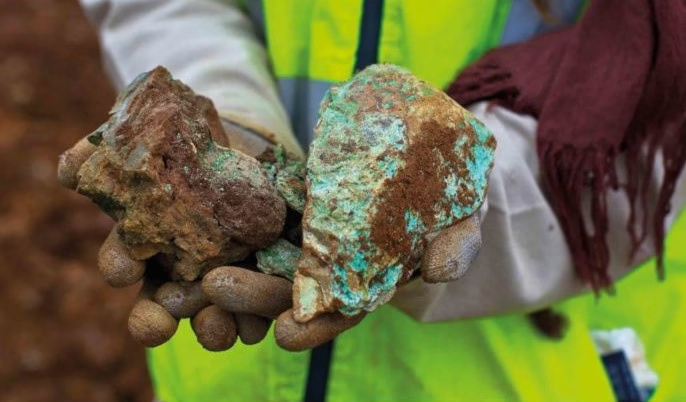
The Musongati deposit in southeastern Burundi is among the country’s most significant mineral resources, containing laterite nickel as well as associated copper and cobalt mineralization. The deposit lies within the broader East African Nickel Belt, a geological zone that extends across parts of Burundi and neighboring Tanzania. Efforts to explore and develop nickel resources at Musongati date back decades, with historical exploration showing substantial mineral potential.
Lifezone Metals, a publicly traded company focused on battery-metals supply, has been active in advancing nickel projects across Africa, including the Kabanga nickel project in Tanzania. That project has drawn U.S. government interest and support through engagement with the U.S. International Development Finance Corporation as part of initiatives to secure critical minerals for the global energy transition.
In their meeting, the US embassy in Burundi said that “Higgins and Showalter discussed how a partnership involving U.S. and Burundian stakeholders could help responsibly develop the Musongati nickel deposit.” The U.S. Embassy said the talks align with broader U.S. efforts to foster sustainable development and contribute to economic growth in mineral-rich countries.
“Burundi’s mining sector has historically contributed little to the formal economy but holds significant potential if well-structured investment and infrastructure support are mobilized,” said economic analyst in Bujumbura said.