
International Monetary Fund says Burundi’s rapidly expanding gold sector is becoming a major driver of economic recovery, helping boost exports, ease pressure on foreign currency markets and strengthen government revenues, while warning that reforms are still needed to improve transparency and oversight.
In a statement released following its 2026 Article IV consultation mission to Burundi, the IMF said gold exports rose sharply over the past year, supported by higher international prices and increased production volumes.
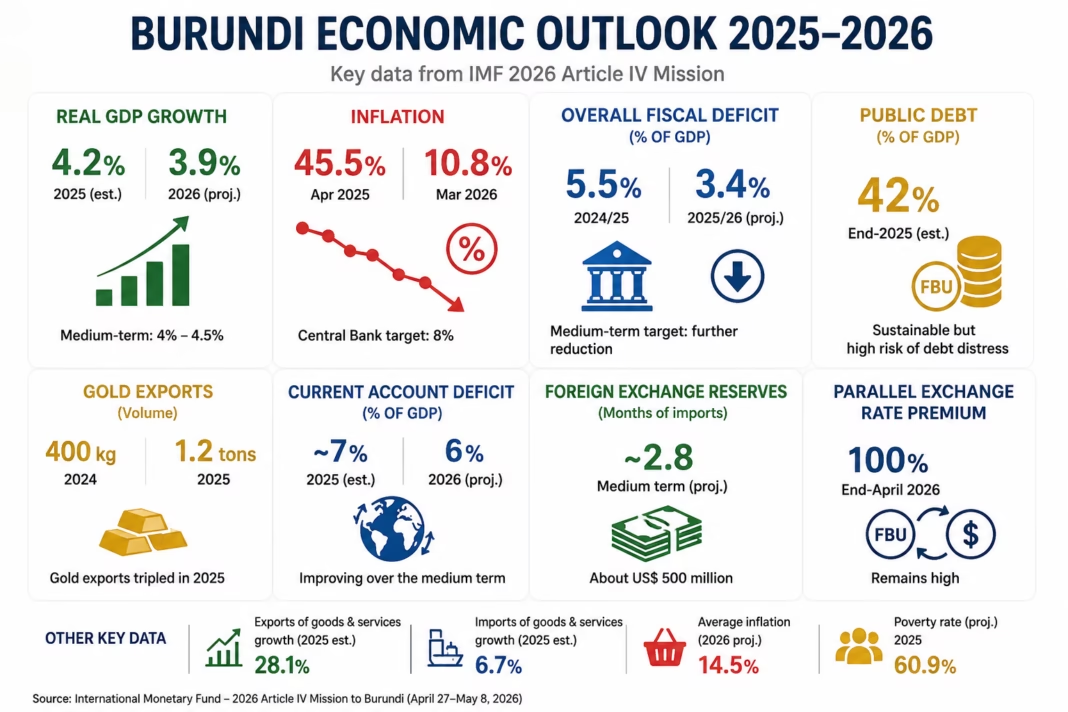
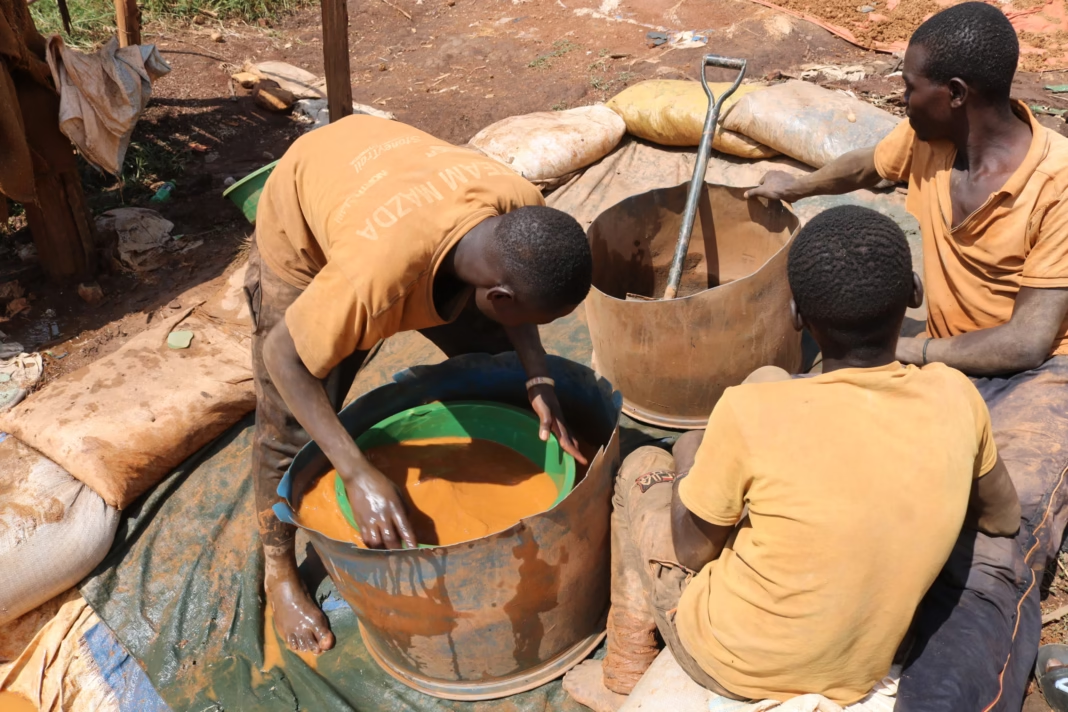
According to the Fund, Burundi’s gold exports increased from about 400 kilograms in 2024 to approximately 1.2 tons in 2025, contributing to a significant rise in export earnings and foreign exchange inflows.
“Higher international prices for gold and coffee, Burundi’s main exports, as well as increased volumes … led to a marked increase in export revenue and foreign exchange inflows,” the IMF mission said.
The IMF noted that the surge in mineral export revenues helped moderate pressure on Burundi’s foreign exchange market, where businesses and consumers have struggled for years with hard currency shortages and a widening gap between official and parallel market exchange rates.
Although the parallel market premium has declined in recent months, the IMF said it remained high at around 100 percent at the end of April 2026, reflecting continued distortions in the currency market.
The Washington-based lender said the improved export performance contributed to stronger economic growth, with Burundi’s real GDP estimated to have expanded by 4.2 percent in 2025, up from slower growth rates in previous years.
The IMF attributed the improvement to what it described as stabilization efforts by Burundian authorities, tighter fiscal discipline and favorable global commodity prices.
The Fund also said inflation had fallen significantly, declining from 45.5 percent in April 2025 to 10.8 percent in March 2026, partly due to reduced reliance on central bank financing and improved coordination between fiscal and monetary policies.
Despite the positive momentum, the IMF cautioned that Burundi’s economy remains vulnerable to external shocks and domestic reform delays.
The institution said strengthening governance in the mining sector would be critical if Burundi is to fully benefit from rising gold exports.
“In the gold sector, progress in formalization, increased transparency by joining the EITI, and establishment of a stable fiscal regime coupled with effective regulatory oversight would help ensure that mineral resources contribute fully to fiscal revenues, foreign exchange inflows, and sustainable development,” the IMF said.
The IMF encouraged authorities to continue improving traceability systems and revenue collection mechanisms in the mining industry, arguing that stronger oversight could help maximize the sector’s contribution to long-term economic stability.
Burundi has increasingly turned to gold exports as a source of foreign exchange in recent years, especially as the country faces persistent trade imbalances and limited access to external financing.
The IMF projected that Burundi’s current account deficit would narrow to around 6 percent of GDP in 2026, helped largely by continued strength in gold exports.
However, the Fund warned that global geopolitical tensions — particularly instability linked to the conflict in the Middle East — could threaten commodity prices and reverse some of Burundi’s recent gains.
The IMF also reiterated concerns over Burundi’s debt vulnerabilities, estimating public debt at around 42 percent of GDP at the end of 2025 while classifying the country as facing a “high risk of debt distress,” despite debt remaining sustainable under current projections.
The Fund said sustaining economic gains would require continued fiscal discipline, cautious borrowing and carefully sequenced reforms, including changes to Burundi’s foreign exchange regime.
The IMF mission to Burundi was led by economist Alexandre Chailloux and involved discussions with government officials, central bank authorities and representatives from the public and private sectors.