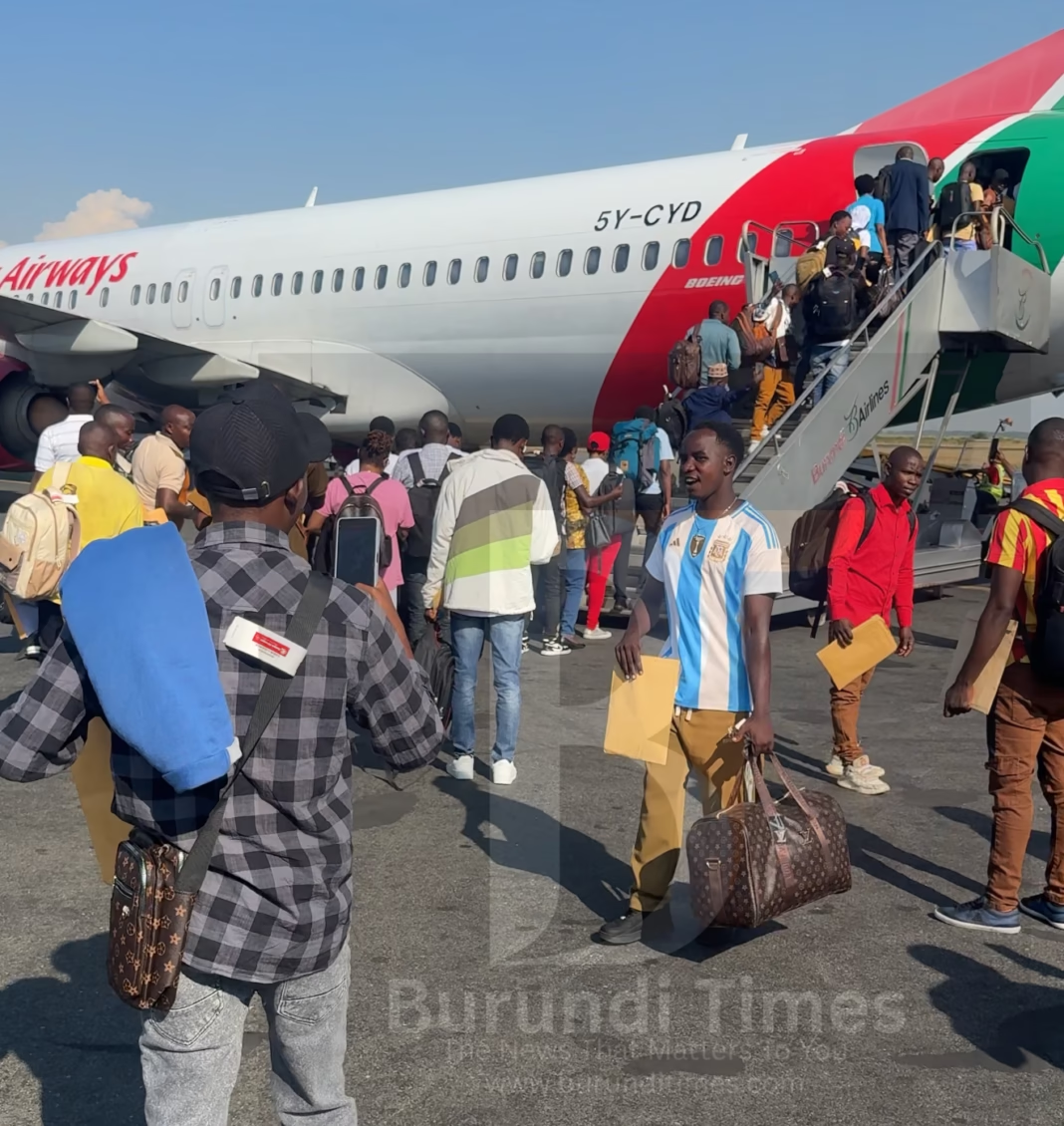

As Kenya Airways flight from Bujumbura prepared for departure last week, the usual mix of business travellers and tourists was overshadowed by another group whose journey carried a different weight.
Dozens of young Burundians most appearing to be between 16 and 35 years old queued patiently at Melchior Ndadaye International Airport, bound for Nairobi and then onward to Dubai. Some wore matching white T-shirts and white headscarves for girls, others black trousers and modest travel bags. Many looked nervous. Most looked lost in thought.
For them, the Gulf represented something increasingly difficult to find at home, hope. “I am going to find life,” said a young man from Mubimbi commune, west of Bujumbura, speaking quietly before boarding.
“I don’t think about leaving my family behind because if I do that, I will become depressed. I left them at home in Mubimbi. There is no job. We cannot survive, so I would rather look for ways of surviving.”
He paused between sentences, appearing overwhelmed by the moment. Asked what work he would do in Dubai, he hesitated. He did not know. Like many others on the flight, he said he had paid an agent millions of Burundian francs. Between nine million and 12 million Burundi francs is what they pay agents according to travellers interviewed to facilitate the journey.
Nearby, several young women with wedding rings on their fingers, dressed similarly in white headscarves and black trousers, waited together. “Life has become harder in Burundi,” one of them said. “We don’t have another option but to leave the country for a better future.” None wanted their names published.
A growing migration corridor
Labor migration to Gulf countries has become an increasingly visible phenomenon across East Africa over the past decade. The United Arab Emirates, whose economy relies heavily on foreign labor, hosts around 8.7 million migrant workers, accounting for more than 80% of its population, according to the International Labour Organization.
Although comprehensive figures for Burundian workers in the Gulf are scarce, officials and migration experts have observed a rise in departures, particularly among young people seeking employment in domestic work, hospitality, security services and construction.
The trend reflects wider economic pressures in Burundi, one of the world’s poorest countries. Youth unemployment and underemployment remain persistent challenges, while inflation and shortages of foreign currency have strained household incomes.
Remittances sent home by Burundians abroad have become increasingly important. World Bank data show personal remittances received by Burundi reached nearly 7.8% of GDP in 2024, highlighting the growing role played by citizens working overseas.
“I was a farmer”
Another passenger waiting to board said he came from Kayanza Province. Speaking with a pronounced Kenyan Kiswahili accent and struggling to speak Kirundi, he explained that he had once farmed back home. Before deciding to head to Dubai, he said he had spent time in Kenya working as a street vendor. Now, he was pursuing what he described as “the best option possible.”
Asked how long it took to travel from his village to Bujumbura, he hesitated and gave contradictory answers. His uncertainty mirrored that of many around him. Some clutched folders containing travel documents. Others repeatedly checked their phones. A few sat quietly, staring through the departure lounge windows in Jomo Kenyatta International Airpot.
There was excitement, but also anxiety. For many, Dubai remained less a destination than an idea a place where opportunities might exist, even if they could not yet define them.
A country watching its youth depart
Burundi’s population is among the youngest in Africa. According to the United Nations, nearly two-thirds of Burundians are under the age of 25. For many young people, agriculture traditionally the backbone of the economy no longer offers enough income to sustain families. Migration has increasingly become an economic strategy, parents sell land. Relatives contribute savings, families pool resources to finance the journey, hoping employment abroad will eventually repay the investment.
Economists note that remittances provide vital support for households and inject much needed foreign currency into the economy. Yet large scale emigration of young workers can create labor shortages and deprive countries of some of their most productive citizens.
Back at the airport, as boarding announcements echoed through the terminal at Jomo Kenyatta International Airport in Nairobi, the young travellers slowly disappeared toward the gate. Some laughed nervously. Others excited for the new adventure, few knew exactly what awaited them on the other side. But for many, uncertainty itself had become preferable to staying behind. And so, with little more than hope packed into their bags, they boarded a plane toward a future they could not yet see.