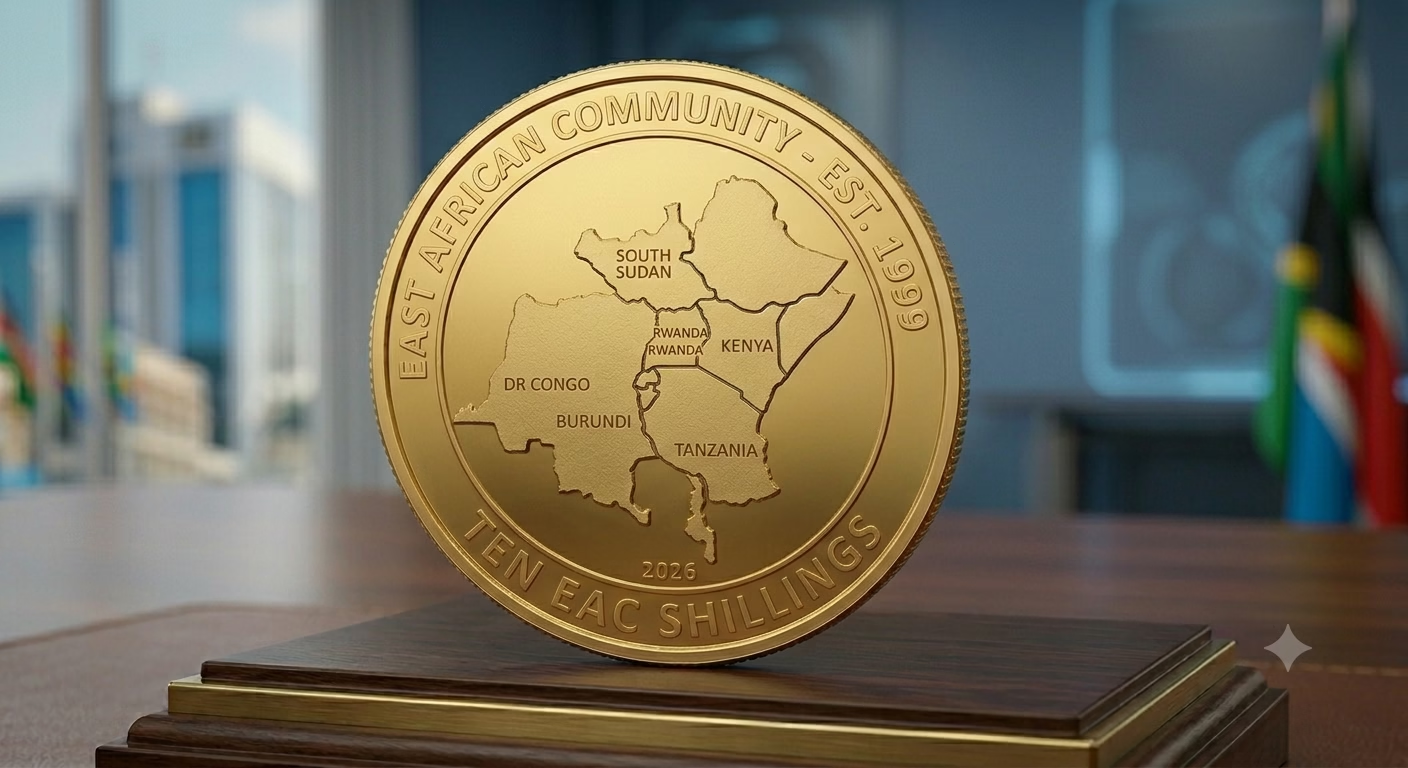

More than a decade after East African states signed a protocol committing themselves to a monetary union, the dream of a single currency remains unfinished, highlighting the difficulties of surrendering national economic sovereignty.
Yet regional leaders insist progress is being made.
While presenting the East African Community’s 2026/27 budget to the East African Legislative Assembly on Tuesday, EAC Council of Ministers Chairperson Rebecca Kadaga said member states were gradually moving toward convergence.
“Four of the Partner States have attained the headline inflation target of eight percent. Two have met the reserve cover requirement of 4.5 months of imports, three have achieved the fiscal deficit target of 3 percent of GDP, while four have complied with the public debt criterion of 50 percent of GDP,” Kadaga said. “These milestones demonstrate that the dream of the founders of our Community is steadily coming to reality.”
The East African Community, revived in 2000, envisioned four stages of integration: a customs union, common market, monetary union and eventually political federation.
The Monetary Union Protocol was signed in 2013, setting a 10-year roadmap that envisioned a single currency and an East African Central Bank. But the protocol itself has yet to enter into force and key milestones have repeatedly slipped.
Economists say the delays reflect structural differences among member states. Inflation rates, fiscal deficits, debt levels and foreign exchange reserves vary widely across the region. Political considerations have also complicated efforts to surrender control over monetary policy.
National governments remain cautious about giving up their currencies and central banks, particularly at a time when many are grappling with debt pressures and external shocks.
Nevertheless, integration has advanced in other areas. The customs union and common market are already operational, while the East African Monetary Institute expected to pave the way for a future central bank — remains under development.
Kadaga told lawmakers that the bloc’s new five-year development strategy places continued emphasis on “full implementation of the roadmap for the attainment of the East African Monetary Union.”
For businesses trading across East Africa, a single currency could reduce transaction costs and exchange-rate risks. But analysts say the experience of the euro zone shows that monetary unions require strong fiscal discipline and deep political commitment.
Twenty-five years after the rebirth of the EAC, East Africa has moved closer to economic integration, but the region’s most ambitious promise one currency shared by hundreds of millions of people remains a work in progress.