
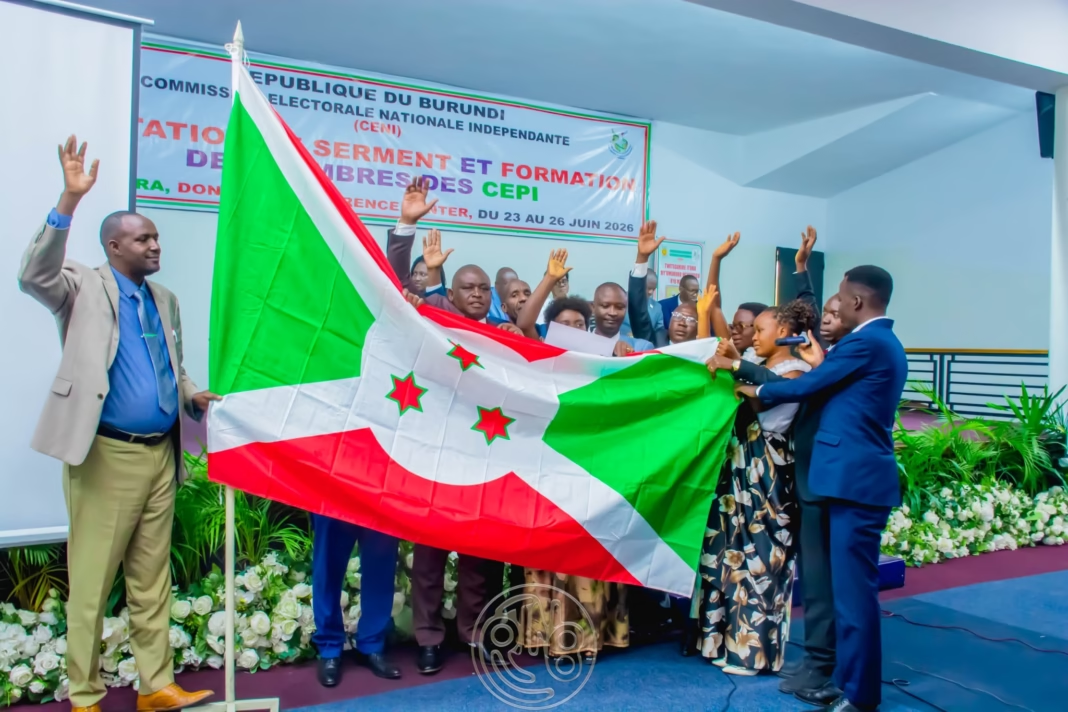

Fifty-two members of Burundi’s Independent Provincial Electoral Commissions (CEPI) were sworn in Tuesday in Bujumbura, marking a new stage in preparations for the country’s 2027 presidential election amid renewed calls for transparency and confidence in the electoral process.
The ceremony, attended by senior government officials, lawmakers, provincial governors, representatives of accredited political parties, religious leaders and civil society actors, formally installed the provincial representatives of the Independent National Electoral Commission (CENI), which is overseeing preparations for the vote.
Holding the national flag in their left hands and raising their right hands, the 52 officials tasked with managing electoral operations in Burundi’s five provinces pledged to carry out their duties “with commitment and impartiality” and to safeguard the integrity of the electoral process.
“This mission must be conducted with commitment and impartiality,” the officials swore, promising to ensure the smooth conduct of voting operations and the credibility of the results.
CENI President Prosper Ntahorwamiye announced that the newly appointed commissioners would undergo four days of technical training from June 23 to June 26 to strengthen their operational capacities ahead of the polls.
“No one can transmit what they do not master,” Ntahorwamiye said, urging the commissioners to act in strict accordance with the law and in the supreme interest of the nation.
The swearing-in officially launches operational preparations for the 2027 election, which electoral authorities have scheduled for May 3, 2027. The presidential campaign is expected to run from April 10 to April 30, according to the electoral calendar presented by CENI in May.
Preparations for the vote have accelerated in recent months. In April, President Évariste Ndayishimiye officially launched a nationwide voter education campaign in Gitega, calling for peaceful and orderly elections. CENI said at the time that electoral preparations were already underway and that training would be extended to political actors, security forces, judicial officials and journalists.
Earlier this year, CENI itself held internal training sessions on the 2027 presidential election and outlined a cascading approach under which members of the provincial commissions would later train communal electoral officials.
Under the electoral timetable unveiled in May, the establishment of provincial electoral commissions was scheduled for June, followed by consultations in July to set up communal electoral commissions responsible for organizing voting at the grassroots level.
While authorities have repeatedly pledged that the election will be free, transparent and inclusive, some opposition parties have already raised concerns about the composition of provincial electoral bodies, alleging that members close to the ruling CNDD-FDD party dominate some commissions. The government and CENI have maintained that the institutions are independent and committed to ensuring credible elections.
Burundi emerged from a political crisis triggered by the disputed 2015 elections and has sought to restore confidence in its democratic institutions. The credibility of the 2027 vote is likely to be closely watched by political parties, civil society organizations and international observers.
For the newly sworn-in commissioners, Tuesday’s ceremony represented more than a constitutional formality. It marked the beginning of what could become one of the most scrutinised electoral processes in Burundi in recent years.