
African football has reached a historic milestone at the 2026 FIFA World Cup, with seven nations advancing to the Round of 32 in the continent’s best-ever performance at the global tournament.
Morocco, South Africa, Senegal, Egypt, Ghana, Côte d’Ivoire and tournament debutants Cape Verde have all booked places in the knockout stage, surpassing Africa’s previous record of three teams reaching the last 16 under the old 32-team World Cup format.
The achievement comes in the first edition of FIFA’s expanded 48-team tournament, which increased Africa’s representation from five to 10 nations and opened the door for more teams to compete for a place in the knockout rounds.
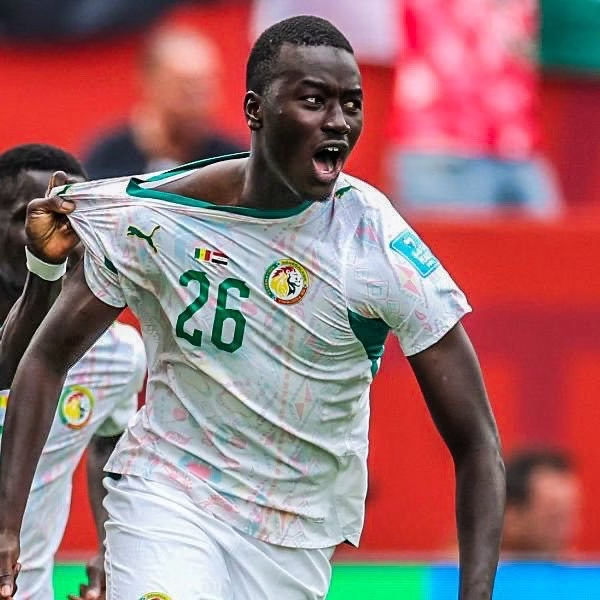
Senegal became the latest African side to qualify after a commanding 5-0 victory over Iraq in its final Group I match. The emphatic win propelled the Lions of Teranga into the Round of 32 as one of the tournament’s best third-placed teams.
Cape Verde continued its remarkable debut World Cup campaign by finishing second in Group H to set up a blockbuster knockout clash with defending champions Argentina. The island nation has emerged as one of the tournament’s surprise packages after remaining unbeaten in the group stage.
South Africa also wrote a new chapter in its football history by reaching the World Cup knockout stage for the first time. Bafana Bafana finished runners-up in Group A and will face co-host Canada in the Round of 32.
Morocco, the first African nation to reach a World Cup semifinal in Qatar in 2022, continued its impressive rise by advancing from Group C and will face the Netherlands. Egypt secured second place in Group G and earned a Round of 32 meeting with Australia, while Côte d’Ivoire finished runners-up in Group E to set up a clash with Norway.
Ghana also confirmed its place in the knockout phase after results elsewhere guaranteed qualification before its final Group L fixture, ensuring the Black Stars would join Africa’s growing list of representatives in the last 32.
The expanded tournament has transformed Africa’s fortunes. Under the previous 32-team format, only two teams from each group advanced to the knockout stage. The 2026 competition allows the top two teams from each of the 12 groups, along with the eight best third-placed finishers, to progress, creating more opportunities for emerging football nations.
Of Africa’s 10 World Cup representatives, Tunisia has been eliminated after finishing bottom of Group F. Algeria and DR Congo remain in contention for Round of 32 places pending the outcome of their final group matches.
Regardless of those results, Africa has already secured its most successful World Cup campaign, underlining the continent’s growing influence on the global game. The record-breaking run comes four years after Morocco’s historic semifinal appearance in Qatar, reinforcing expectations that African nations are increasingly capable of challenging football’s traditional powers on the world’s biggest stage.