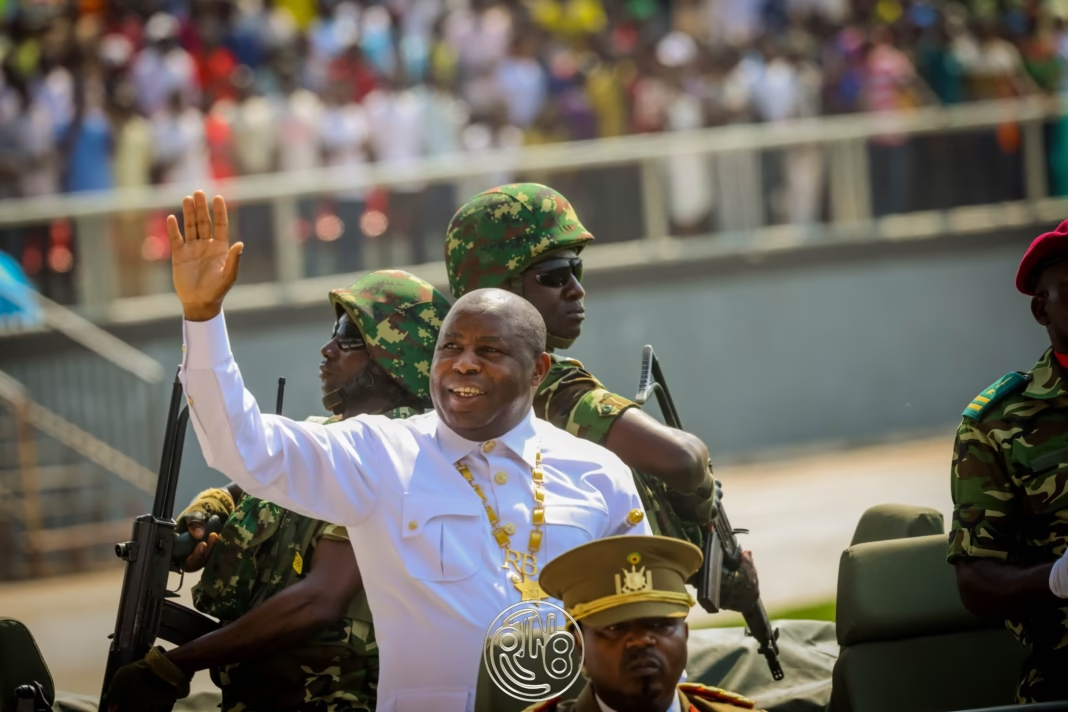
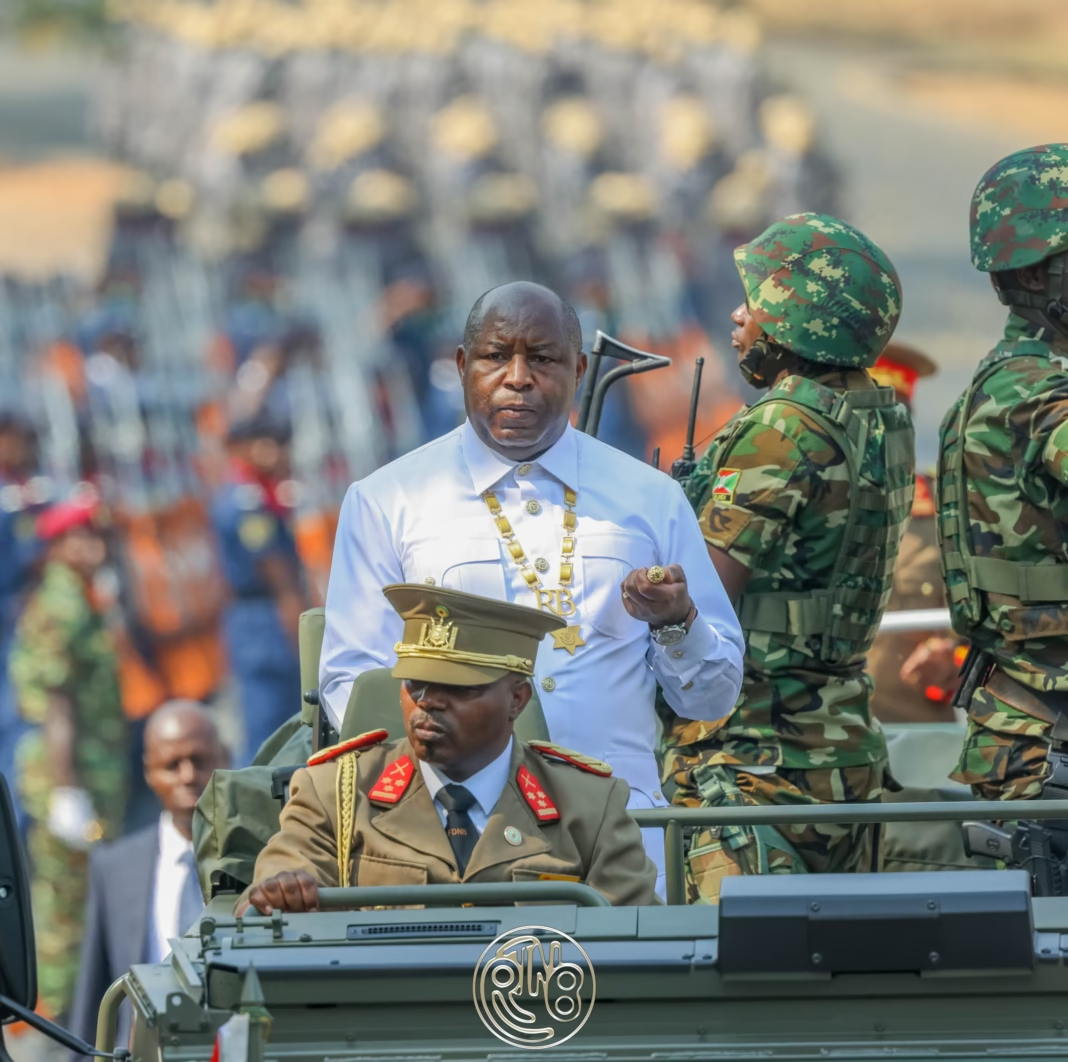

Burundi President Évariste Ndayishimiye used the country’s 64th Independence Day celebrations on Wednesday to deliver an unusually wide-ranging critique of political parties, religious institutions and civil society, urging Burundians to break what he described as a lingering colonial mentality that continues to impede national unity and economic development.
Speaking ahead of the 64th independence anniversary, Ndayishimiye framed Burundi’s struggle for true independence as unfinished, arguing that while the country secured political sovereignty from Belgium in 1962, psychological and economic dependence on former colonial powers persists.
“We must love our country and make others love it too,” Ndayishimiye said, referring to this year’s Independence Day theme. “Burundi no longer belongs to Germany or Belgium. It belongs to us, the Burundians.”
The address, departed from the traditional celebratory tone associated with Independence Day speeches, instead offering a sweeping historical narrative that blamed colonial rule for many of Burundi’s contemporary political, economic and social challenges.
Throughout the speech, the president repeatedly argued that colonial authorities dismantled Burundi’s traditional institutions, fostered ethnic divisions and cultivated a culture of dependence on foreign powers. Historians broadly agree that Burundi, together with neighbouring Rwanda, formed the Belgian-administered territory of Rwanda-Urundi following World War I after Germany lost control of its East African colonies.
Belgium governed the territory under a League of Nations mandate and later a United Nations trusteeship until Burundi gained independence on July 1, 1962. Scholars have documented how Belgian colonial policies reshaped political structures and reinforced ethnic classifications that later contributed to instability across the Great Lakes region, although interpretations vary regarding the extent of their long-term impact.
Ndayishimiye argued that the colonial legacy remains deeply rooted in Burundi’s institutions and public life. “Many Burundians were liberated from colonial rule, but their hearts remained under colonialism,” he said. “Some still believe Burundi belongs to the colonisers.” The president reserved some of his strongest criticism for Burundi’s political class, addressing several major political parties individually.
He urged members of the former ruling party UPRONA to reclaim what he described as the ideals of Prince Louis Rwagasore, the independence leader who founded the party and led Burundi to victory in legislative elections before being assassinated in October 1961, months before independence.
“Rwagasore is not only the hero of UPRONA,” Ndayishimiye said. “He is the hero of Burundi.”
Rwagasore is widely regarded as the father of Burundian independence, and his assassination remains one of the defining events in the country’s modern political history. Belgian courts later convicted several individuals linked to his killing, though historians continue to debate the broader political circumstances surrounding the assassination.
The president also addressed the opposition party FRODEBU, encouraging it to preserve what he described as its democratic legacy while portraying the struggle for democracy as part of the broader quest for national independence.
Turning to his own ruling party, CNDD-FDD, Ndayishimiye cautioned members against relying on foreign governments for solutions to Burundi’s problems.
“True independence will come only when Burundians stop looking abroad for their survival,” he said.
Perhaps the most politically sensitive section of the speech focused on the Catholic Church and organisations that identify themselves as politically neutral. Ndayishimiye accused some religious leaders and civil society organisations of continuing to behave as though they were accountable to former colonial powers rather than to Burundians.
“Your teachings should bring hope to the country,” he said. “They should not strengthen those who do not want Burundi to become a self-reliant nation.”
The Roman Catholic Church remains Burundi’s largest religious denomination and has historically played a significant role in education, health care and public life. Church leaders have at times criticized government policies and called for political dialogue, while successive governments have periodically accused some religious figures and civil society groups of interfering in political affairs.
Much of Ndayishimiye’s speech centred on economic self-reliance, a recurring theme of his presidency and of Burundi’s long-term development strategy. He argued that Burundi possesses significant natural resources, particularly mineral deposits, but has yet to fully benefit from them.
“The countries we admire today built themselves through hard work,” he said. “If we roll up our sleeves and work, one day they will admire us.”Burundi has increased efforts in recent years to develop its mining sector, including rare earth elements and other strategic minerals, as the government seeks to reduce dependence on foreign aid and agriculture. International financial institutions, however, continue to rank Burundi among the world’s lowest-income countries, citing structural economic challenges, limited infrastructure and vulnerability to climate shocks.
The president linked his call for economic transformation to Burundi’s Vision 2040 and Vision 2060 development agenda, which aims to make the country self-sufficient by 2040 and achieve middle-income status by 2060. He also appealed to young people, describing them as less burdened by what he called “the colonial mentality” and encouraging them to embrace entrepreneurship, cooperatives and productive work.
“We must guide our youth toward work that creates wealth,” he said.
Despite the speech’s sharp criticism of domestic institutions, Ndayishimiye concluded with an appeal for unity, arguing that Burundians must move beyond divisions inherited from the colonial era. “If we continue working together,” he said, “Burundi will become stronger, and we will strengthen both our political independence and our economic independence.”
The address underscored how questions of colonial history, national identity and economic sovereignty remain central to Burundi’s political discourse more than six decades after independence, even as the country continues to confront contemporary challenges of development, governance and regional integration.