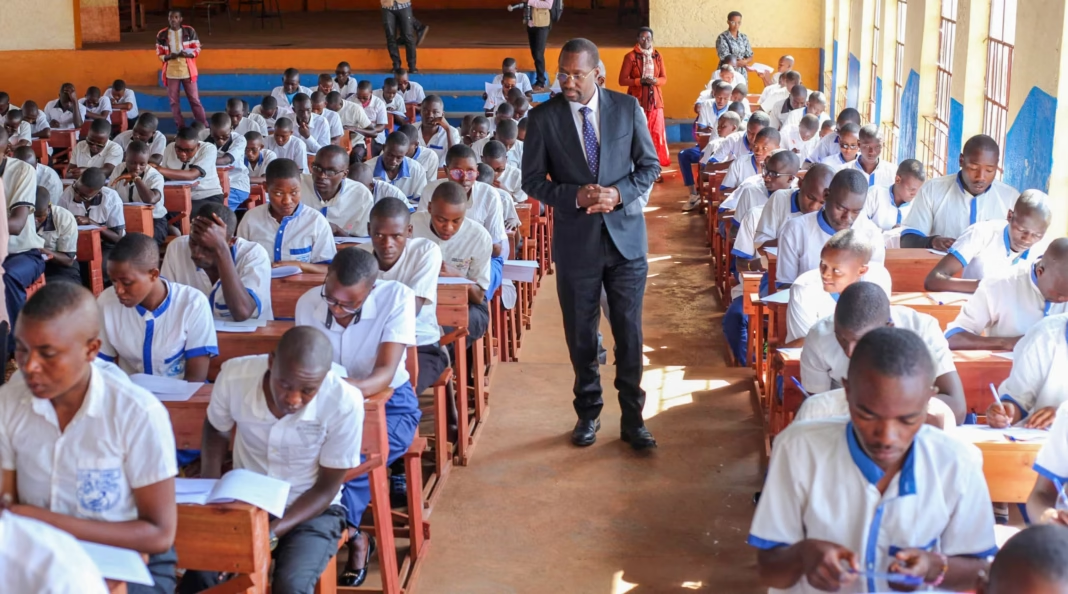

Burundi plans to recruit 5,000 teachers during the 2026-2027 fiscal year as the government seeks to ease staffing shortages in public schools and strengthen the country’s education system, Education Minister François Havyarimana announced Thursday.
The planned recruitment, unveiled during the Ministry of National Education and Scientific Research’s annual review of the education sector, would represent a significant increase from the 1,964 teachers recruited through competitive examinations during the 2025-2026 fiscal year.
The ministry said this year’s recruits were used to replace teachers who left public service and to fill vacancies based on merit rankings from the recruitment process.
The ministry did not specify which education levels or provinces would receive the additional teachers, nor did it provide a timetable for the recruitment.
The announcement comes against the backdrop of a widening teacher shortage that education officials have linked to both staffing gaps and an exodus of educators seeking better-paying jobs abroad. Earlier this year, Havyarimana acknowledged what he described as a “mass desertion” of teachers and university lecturers, citing low salaries as one of the main reasons educators were leaving the profession.
In Buhumuza Province alone, education authorities recently reported they still needed more than 2,300 teachers despite recent recruitment efforts, with officials saying dozens of teachers had left the country since the start of the school year to seek opportunities abroad. UNESCO has also identified Burundi among countries facing persistent teacher shortages driven by growing enrolment and the need for sustained recruitment.
“The ministry plans, among other priorities for the 2026-2027 fiscal year, to recruit 5,000 teachers,” Havyarimana told reporters.
Beyond teacher recruitment, the ministry outlined a series of measures aimed at improving learning conditions across the country.
According to the ministry, 207 classrooms were constructed and equipped during the past fiscal year, while 99 schools were connected to electricity under the government’s “Twige Neza” project. Two new public boarding schools—Al Maktoum High School in Rumonge Province and Melchior Ndadaye Technical High School in Nyabihanga Commune—were also opened, creating an additional 5,000 boarding places.
Officials said the government is continuing its nationwide “Zero Child Sitting Improperly in Class” campaign. As of June 30, nearly 45,000 school desks had been produced through contributions from the government, communes and development partners. Havyarimana, however, acknowledged that some desks failed to meet required technical standards and urged local authorities to correct the shortcomings before schools reopen.
The ministry also reported that more than 15,000 education sector personnel received professional training during the year, while 1,817 graduates of vocational education and training centres received startup kits to support self-employment.
In higher education, the government plans to restore accommodation for 4,000 university students, continue investing in vocational training centres and scientific research, and implement a long-term national education policy extending to 2060.
Growing pressure on the education system
Burundi has expanded access to education over the past two decades, increasing demand for qualified teachers and school infrastructure. International education agencies have repeatedly warned that many countries in sub-Saharan Africa, including Burundi, will need to accelerate teacher recruitment to keep pace with rising enrolment and improve learning outcomes. UNESCO has also noted an increasing reliance on volunteer teachers in Burundi as schools struggle to fill staffing gaps.
The ministry did not disclose the budget allocated for recruiting the additional 5,000 teachers or estimate how much the hiring would reduce the country’s overall teacher deficit. Nor did officials indicate how many of the planned recruits would replace teachers who have resigned, retired or migrated abroad.