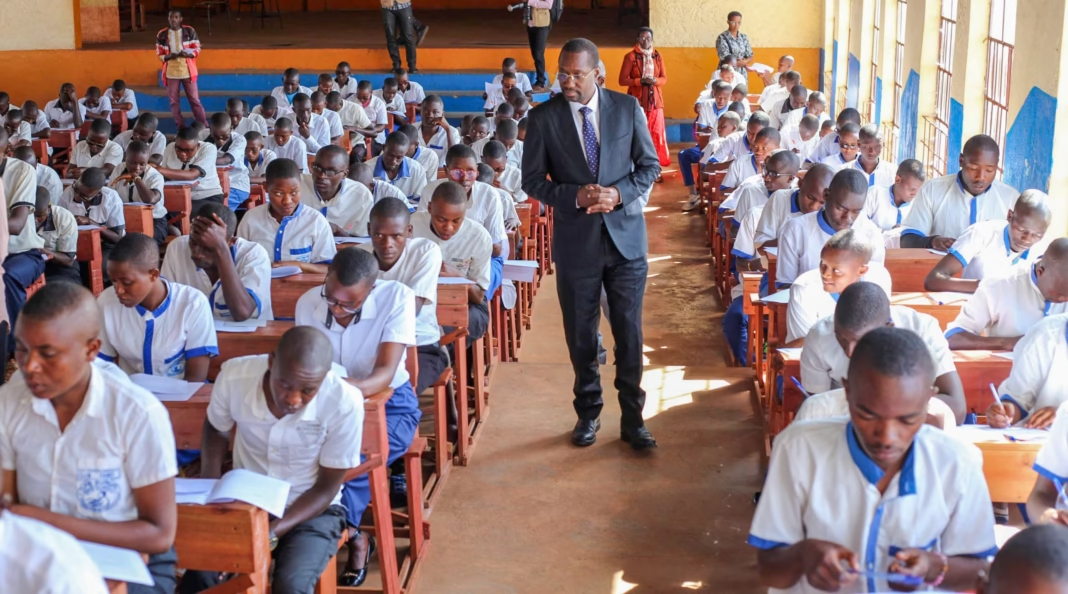
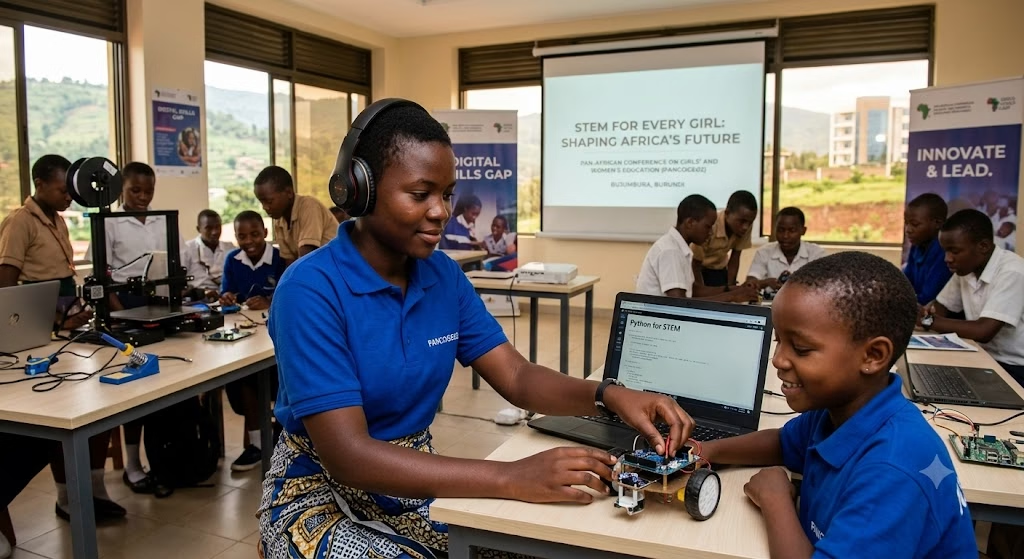

African governments and education partners are pushing for greater participation of girls in science, technology, engineering and mathematics (STEM) fields as the continent seeks to prepare young people for a digital economy, but unequal access to technology and persistent gender barriers continue to limit progress.
The challenge was at the centre of discussions at the second Pan-African Conference on Girls’ and Women’s Education (PANCOGEd2), held in Bujumbura, where more than 400 policymakers, education experts, young people and development partners from about 40 African countries gathered to discuss ways to expand girls’ access to quality education and future-oriented skills.
Participants highlighted digital education, STEM training, entrepreneurship and technical and vocational education as critical areas for ensuring girls are not excluded from emerging economic opportunities.
But experts warned that increasing girls’ enrollment in schools alone will not be enough unless African education systems also address the barriers that prevent many girls from moving into science, technology and innovation fields.
From Classroom Access to Future Skills
For years, African countries have focused on improving girls’ access to basic education. The next challenge, officials said, is ensuring girls acquire the skills required for jobs increasingly shaped by technology.
Burundi’s Minister of National Education and Scientific Research, François Havyarimana, told the conference that the country was working to strengthen girls’ participation in scientific fields, digital skills and entrepreneurship while addressing obstacles that affect their education pathways.
Burundi reported that girls now represent 50.5% of preschool enrolment and 51.5% of basic education enrolment. However, their representation declines at higher levels of education, with women accounting for 44.6% of higher education students. At the University of Burundi, women represent only 29.6% of students and 11.5% of doctoral candidates, according to figures presented during the conference.
The figures reflect a wider challenge across Africa: girls are increasingly entering classrooms, but fewer continue into advanced studies that often lead to careers in research, engineering and technology.
Digital Divide Remains Major Obstacle
Conference participants identified unequal access to digital tools and learning opportunities as one of the biggest threats to girls’ participation in the technology sector.
Many girls, particularly in rural and low-income communities, face barriers including limited access to computers, unreliable internet connectivity, shortages of trained teachers and social expectations that discourage them from pursuing science-related careers.
The African Union conference included discussions on digital transformation, gender-responsive education systems and skills development as part of efforts to accelerate progress for girls and women across the continent.
The issue has become increasingly urgent as African economies seek to expand technology-based industries, where demand for digital skills is growing.
Education specialists say the gender gap in STEM often develops before university, as girls may receive less encouragement to pursue mathematics, science and technology subjects during their school years.
Participants at PANCOGEd2 called for stronger investment in teacher training, safer learning environments and programs that expose girls to science and technology from an early age.
The conference also highlighted the importance of female role models in STEM fields, with young girls often lacking examples of women working as engineers, researchers, technology entrepreneurs or scientists.
Burundi’s Challenge: Keeping Girls in the Education Pipeline
While Burundi has achieved near gender parity in early education enrollment, the declining number of women at university and doctoral levels raises questions about the transition from basic education into specialized fields.
Government officials cited several factors affecting girls’ educational journeys, including poverty, early marriage, teenage pregnancy, gender-based violence and social stereotypes.
Burundi has introduced measures aimed at supporting girls’ continued education, including school reintegration programs for young mothers, initiatives encouraging girls to pursue science subjects and efforts to strengthen protection against violence in schools.
The conference concluded with the adoption of the Bujumbura Declaration and the PANCOGEd2 Call to Action, committing participating countries to accelerate progress on girls’ and women’s education.
African Union officials said governments must now move beyond commitments and focus on measurable investments that improve access, retention and learning outcomes.
“Africa’s girls and women are not waiting for new promises. They are waiting for action and results,” African Union Deputy Chairperson Selma Malika Haddadi said during the meeting.
The test for African governments will be whether commitments made in Bujumbura translate into more girls studying science, accessing digital tools and eventually taking part in the continent’s technology-driven economy.