
Burundi’s government has announced tougher enforcement of nationwide sanitation measures, introducing weekly inspections every Thursday and warning that people who violate hygiene regulations could face sanctions as authorities seek to strengthen a public clean-up campaign launched earlier this year.
The new measures were announced in a communiqué issued Tuesday by the Ministry of the Interior, Community Development and Public Security following a review by the Council of Ministers of the implementation of the country’s hygiene and sanitation ordinance.
The ministry said the review found that while “appreciable progress” had been made, implementation remained uneven across the country.
“The evaluation noted that appreciable progress has been recorded thanks to the efforts made by the concerned ministers and provincial governors,” the ministry said. “However, it was also observed that the implementation of hygiene and sanitation measures remains insufficient at the level of communal administrators, zone chiefs, hill chiefs and neighborhood chiefs.”
The communiqué also singled out some government institutions for failing to meet expected standards. “Certain state services, particularly those located along the main road corridors, have also failed to observe the expected level of compliance,” it said.
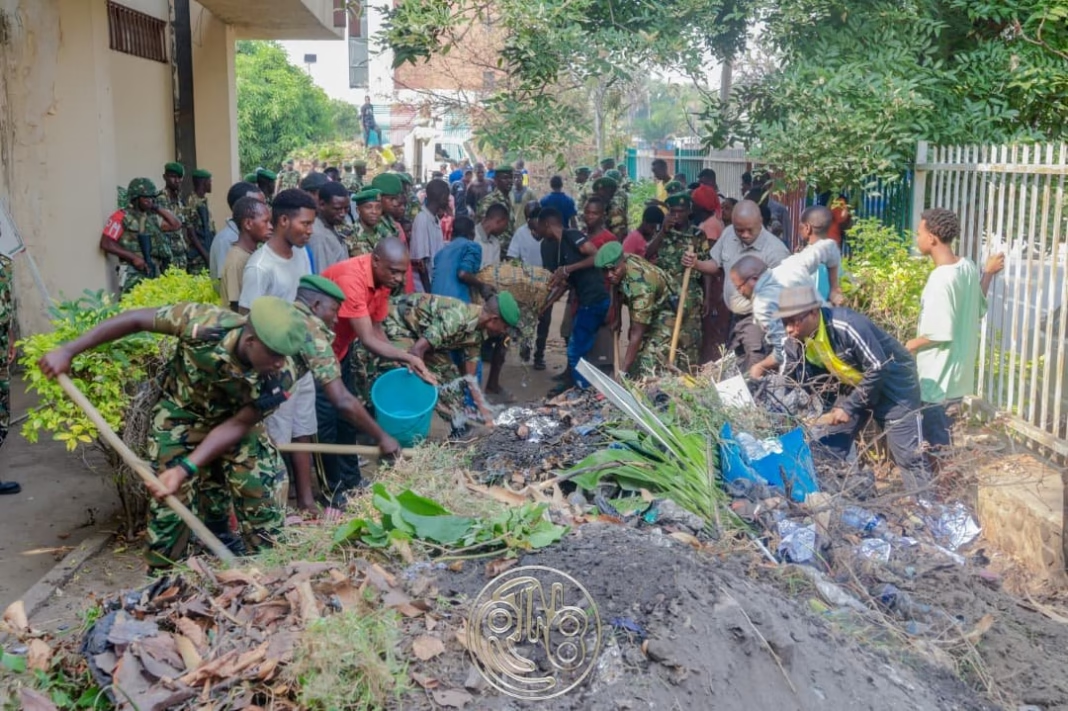
The announcement builds on the government’s recent campaign encouraging citizens to keep public spaces clean as part of broader efforts to improve public health and urban sanitation.
Under the new directive, every Thursday will now be dedicated to monitoring compliance with hygiene and sanitation rules nationwide.
“Thursday shall be dedicated to monitoring compliance with hygiene and sanitation measures,” the ministry said. “The day will be devoted to inspections, public awareness activities, as well as the application of sanctions provided for under existing laws against offenders.”
The ministry called on administrative authorities at every level to immediately strengthen oversight of sanitation regulations and urged public and private institutions to maintain clean surroundings, particularly around administrative buildings and along national and provincial roads.
Waste collection companies were also instructed to improve their operations.
“Companies responsible for household waste collection are called upon to improve their organization, efficiency and professionalism while preventing any conflict of interest likely to compromise the quality of services provided to the population.”
The government said the review was conducted within the framework of the African Union’s 2026 theme, which focuses on ensuring sustainable access to water and safe sanitation systems in line with the goals of Agenda 2063.
The ministry also framed sanitation as a civic responsibility rather than solely a government obligation. “Every citizen should consider hygiene and sanitation as a civic duty and a collective responsibility essential to protecting public health, preserving the environment and promoting the country’s sustainable development,” the communiqué said.
The ministry added that it would closely monitor implementation of the directives and regularly assess the results.
Questions over enforcement
The communiqué provides the clearest indication yet that the government is dissatisfied with how local authorities have implemented existing sanitation regulations, despite months of public campaigns encouraging cleaner neighborhoods and roadsides.
While the government has emphasized inspections and possible penalties, it has not specified what sanctions will be applied, how frequently inspections will occur beyond Thursdays, or whether local administrations will receive additional resources to improve waste management.
Urban planners and public health experts generally note that sustained improvements in sanitation depend not only on enforcement but also on reliable waste collection services, adequate drainage infrastructure, public awareness and consistent investment by local governments.