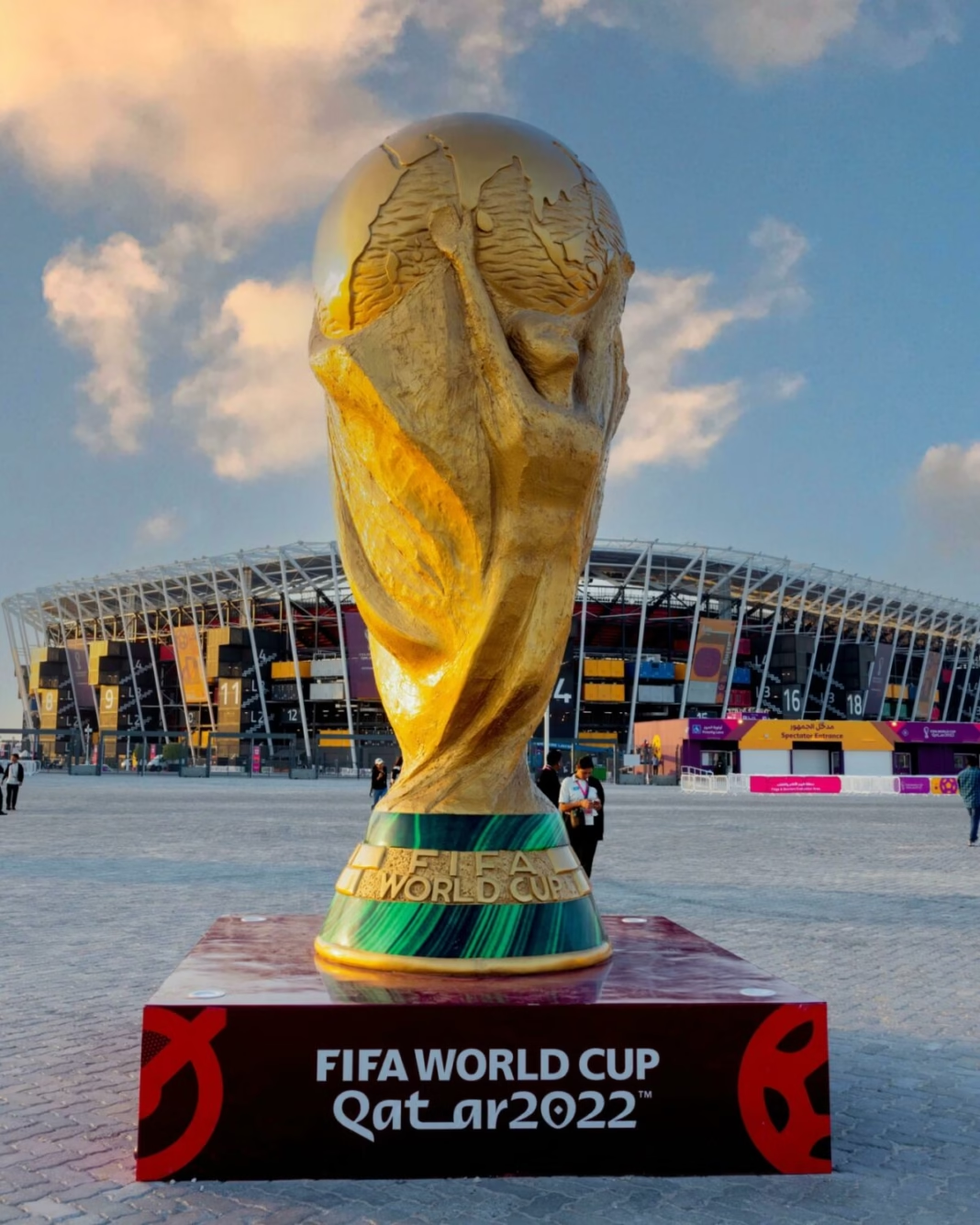

European football entered one of its deepest governance disputes in decades on Thursday after all 55 UEFA member associations unanimously agreed to boycott FIFA competitions if world football’s governing body proceeds with plans to sell minority stakes in the commercial rights of its flagship tournaments to private investors. The decision marks an unprecedented challenge to FIFA President Gianni Infantino’s proposal to reshape how the World Cup and other global competitions are financed and managed.
The boycott would cover FIFA competitions involving UEFA members, including the men’s and women’s World Cups, youth tournaments and the Club World Cup, should FIFA move ahead with the proposal without significant changes. Europe is home to many of the world’s highest-ranked national teams and generates a substantial share of global football revenues through broadcasting, sponsorship and commercial partnerships, making UEFA’s opposition a significant threat to FIFA’s plans.
The dispute stems from FIFA’s proposal to create a new commercial company, FIFA Forward Enterprise (FFE), that would manage the commercial rights to competitions such as the FIFA World Cup and Club World Cup. FIFA plans to sell a 20% minority stake in the entity, valuing it at about US$20 billion and aiming to raise US$4.2 billion from long-term investors while retaining control over sporting decisions. FIFA says the proceeds would allow it to expand development funding for its 211 member associations and increase investment in football worldwide.
UEFA has rejected that vision, arguing that football’s most prestigious competitions should not become investment products.
In a strongly worded statement issued earlier this week, European football’s governing body said the proposal “crosses a line that football’s governing institutions should never cross,” adding that “the World Cup is not for sale.” UEFA also criticized what it described as a lack of meaningful consultation before the proposal was presented to member associations.
Following Thursday’s emergency meeting, UEFA’s 55 national associations reaffirmed that position unanimously, declaring they would not participate in FIFA competitions if the commercialisation plan proceeds in its current form.
The opposition is no longer confined to Europe.
The Confederation of North, Central America and Caribbean Association Football (CONCACAF) announced after its own emergency discussions that it also rejects the proposal, citing concerns over governance, transparency and the speed with which FIFA sought approval. CONCACAF questioned whether outside investment is necessary given FIFA’s strong financial position following recent World Cup tournaments.
The controversy has become as much about governance as finance.
According to FIFA, the proposed commercial structure would enable the organisation to unlock new capital for football development while keeping sporting decisions firmly under FIFA’s control. The governing body says member associations could benefit from significantly increased funding under the proposal.
Critics, however, argue that introducing private equity into the commercial ownership of football’s biggest tournaments risks altering the relationship between the sport’s governing bodies and commercial investors. They also contend that such a fundamental change should only occur after broad consultation with confederations, national associations and other football stakeholders.
The dispute has rapidly evolved into one of the most significant institutional confrontations in international football since Gianni Infantino became FIFA president in 2016.
While FIFA has previously explored partnerships with private investors including an unsuccessful investment proposal in 2018 the current plan goes further by creating a dedicated commercial enterprise responsible for managing revenues generated by the World Cup and other global competitions.
The implications could extend well beyond Europe.
Should UEFA maintain its position, FIFA would face the prospect of staging future tournaments without many of the sport’s strongest national teams. Europe has produced the majority of recent men’s World Cup champions and remains football’s largest commercial market, making any prolonged boycott potentially damaging both competitively and financially.
For now, FIFA has not indicated that it intends to withdraw or substantially revise the proposal. Member associations are expected to consider the investment plan in the coming weeks before a formal decision is taken.
The standoff leaves world football at a crossroads.
At its heart is a question that extends beyond the sale of a minority commercial stake: whether football’s governing institutions can embrace new sources of private capital while preserving the independence and public stewardship of the sport’s most valuable competitions.
As negotiations continue, the prospect of a World Cup without Europe’s leading football nations once almost unthinkable—has become part of the debate over the future governance of the global game.