
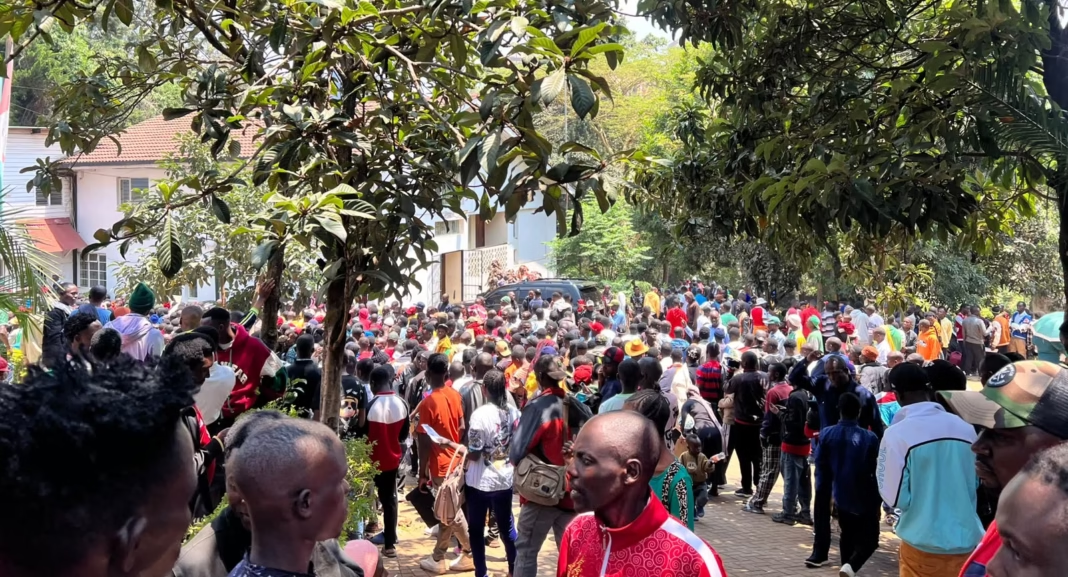

Hundreds of Burundians lined up outside their embassy in Nairobi on Monday seeking travel documents, as Kenya began enforcing President William Ruto’s directive against foreign nationals running small-scale businesses.
Long queues formed on Dennis Pritt Road, with many carrying luggage as they sought paperwork to return to Burundi amid mounting uncertainty over their status. Reuters reported that some of those gathered said they felt threatened and were leaving reluctantly.
The scenes unfolded as Ruto’s directive ordering authorities to shut down small businesses run by foreign nationals, following complaints from Kenyan traders about competition took effect. Kenyan officials have since clarified that the measures target foreigners operating without valid work permits or licenses.
For many at the embassy, though, the anxiety has outgrown the question of paperwork.
The rush has been widely reported in Kenyan media. Citizen Digital said hundreds sought documentation at the embassy, while The Star described large crowds inside the compound and at nearby cybercafés processing travel papers. Embassy officials told Citizen Digital that issuing travel documents to nationals with expired or missing passports is routine — though the scale of Monday’s turnout was not.
Fears of hostility
The rush has fueled broader concern about how Burundians are being treated in Kenya. Reuters reported that some outside the embassy said they’d received threats from neighbors following Ruto’s remarks, though the agency found no signs of a broad enforcement operation underway in Nairobi as of Monday.
Roselyn Akombe, a former commissioner with Kenya’s electoral body, urged Kenyan leaders to avoid rhetoric that could inflame xenophobic sentiment against Burundians and Rwandans in the country. Burundi’s Foreign Minister Édouard Bizimana went further, warning that continued anti-Burundian rhetoric could strain relations between the two neighbors.
The episode has put Kenya’s ties with its East African Community neighbors under fresh scrutiny particularly given the bloc’s Common Market protocol, which guarantees free movement of labor and services among member states, subject to national law.
For those outside the embassy Monday, the stakes were more immediate, securing the documents needed to leave a country some no longer felt safe calling home.